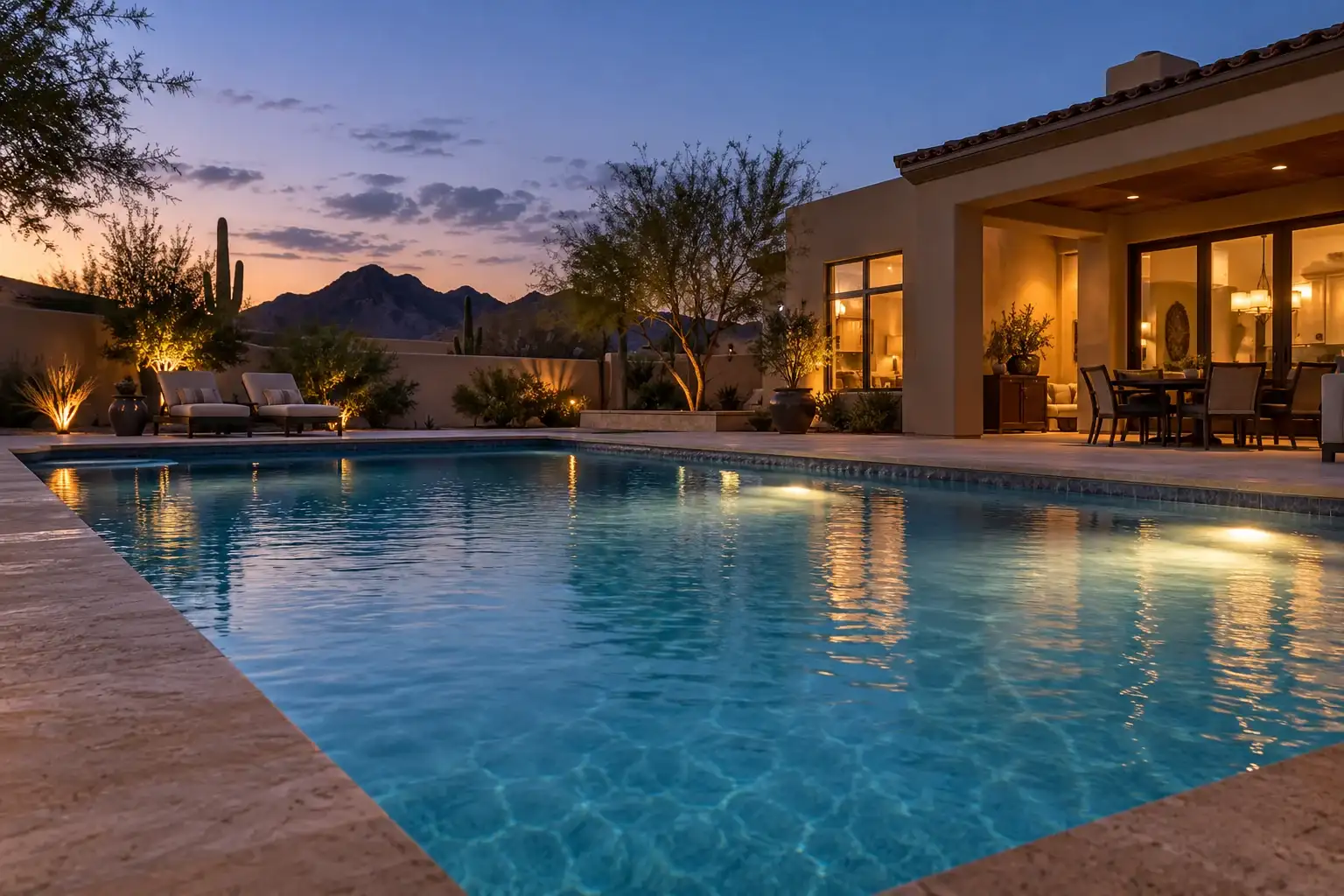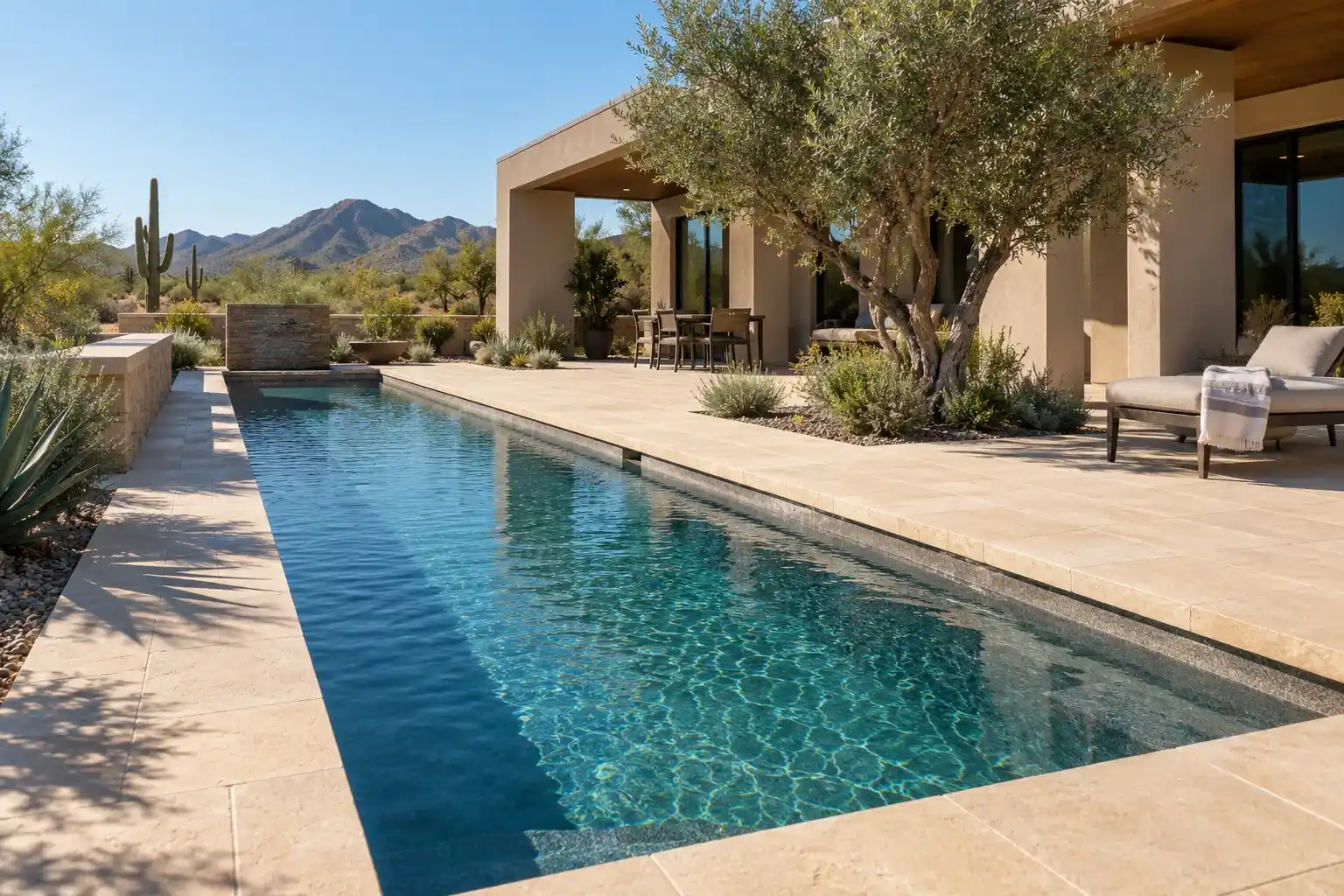
Pool resurfacing · DC Ranch, Scottsdale
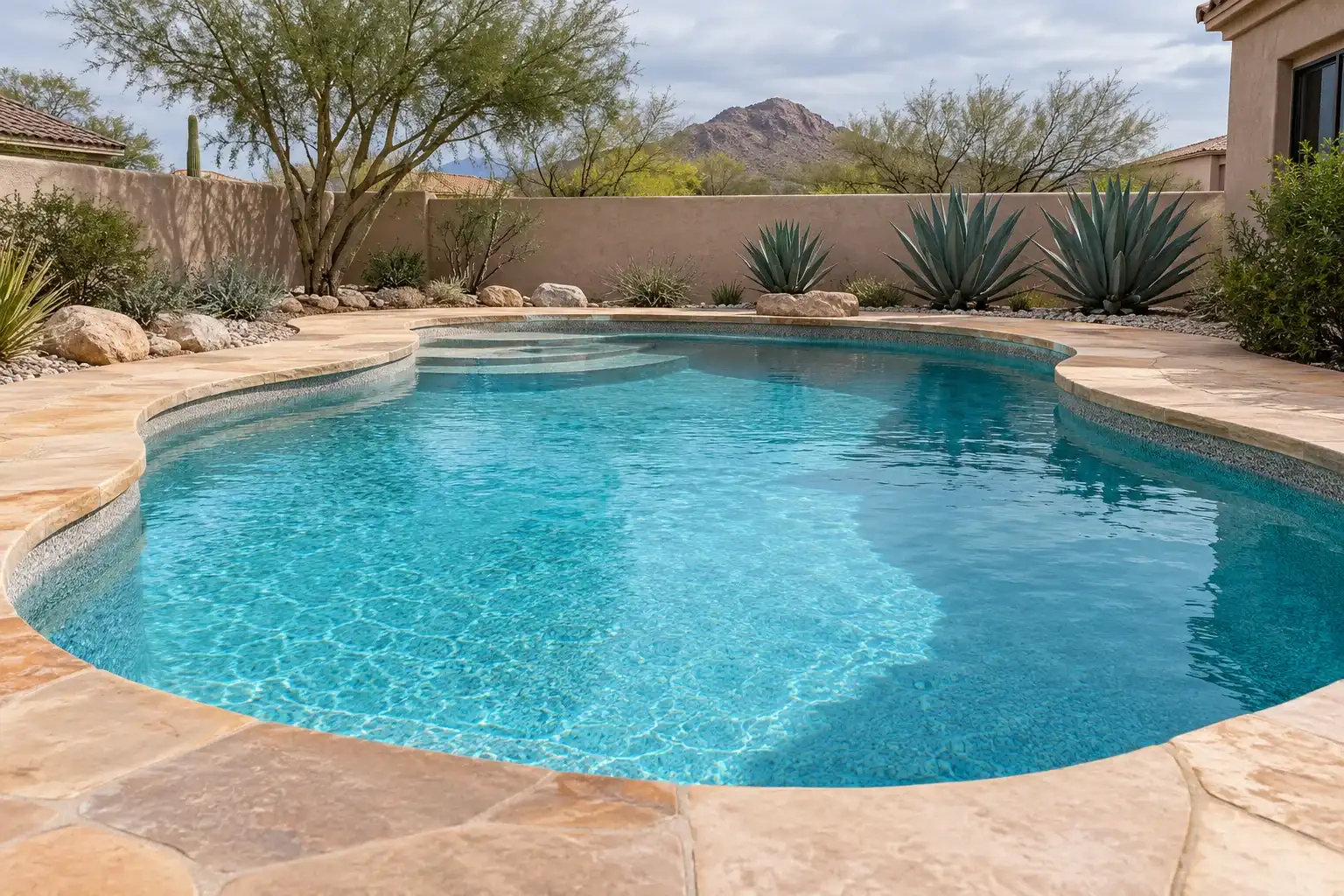
Pool resurfacing company for DC Ranch homes
Your DC Ranch pool is getting rough, stained or patchy? Tell us about your pool, and someone from our team will call you back to plan the pool resurfacing and the price.
- Plaster, quartz or pebble style
- Priced in writing first
- DC Ranch, Scottsdale
Timing
Why timing matters for DC Ranch pools
A plaster finish lasts about 10 years and an aggregate finish such as pebble can last 20 years or more, per a national 2026 cost guide. The first DC Ranch homeowners moved in during 1998, so a pool from the community's early years has more than 2 decades of sun and water behind it and may be near or past the typical life of its finish.
The other factor is simply the environment every DC Ranch pool shares with the rest of Scottsdale. Hard water tests at 13 to 17 grains per gallon depending on the zone, per the City of Scottsdale 2026 Water Quality Report (opens in a new tab), and that hardness combined with constant sun exposure can wear down a finish faster than it would somewhere with softer water. None of that is unique to DC Ranch, but it is unavoidable here the same as it is everywhere in the city.
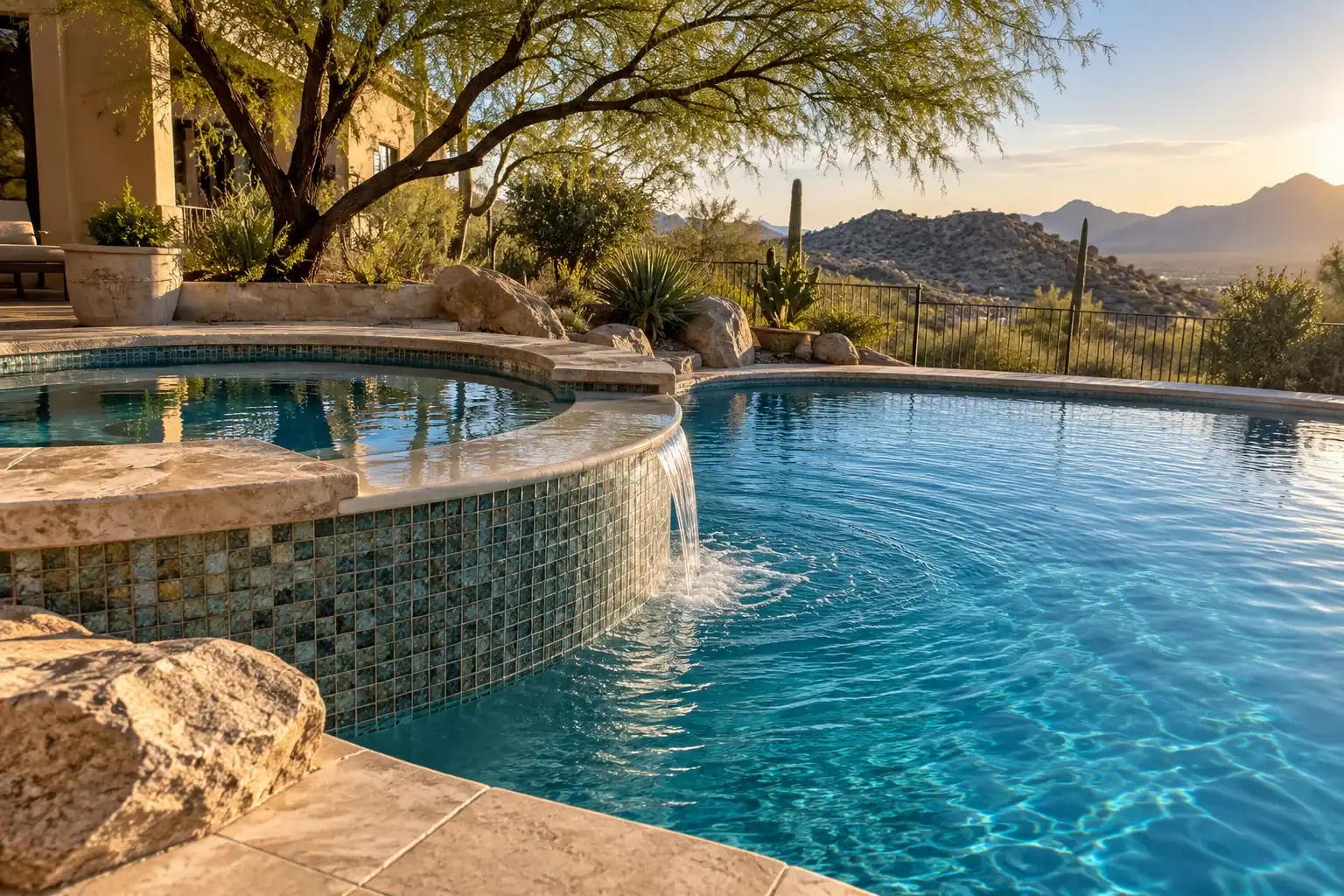
Pools on hillside or view lots can be built into more complex grading than a flat lot pool, with raised walls, stacked spas, or multi level decks. A national 2026 cost guide notes that a custom pool design and a pool that is hard to reach can raise the cost of resurfacing. That kind of layout can change access for equipment and add time to the chip out or prep stage, which is worth flagging up front so the price in writing accounts for it.
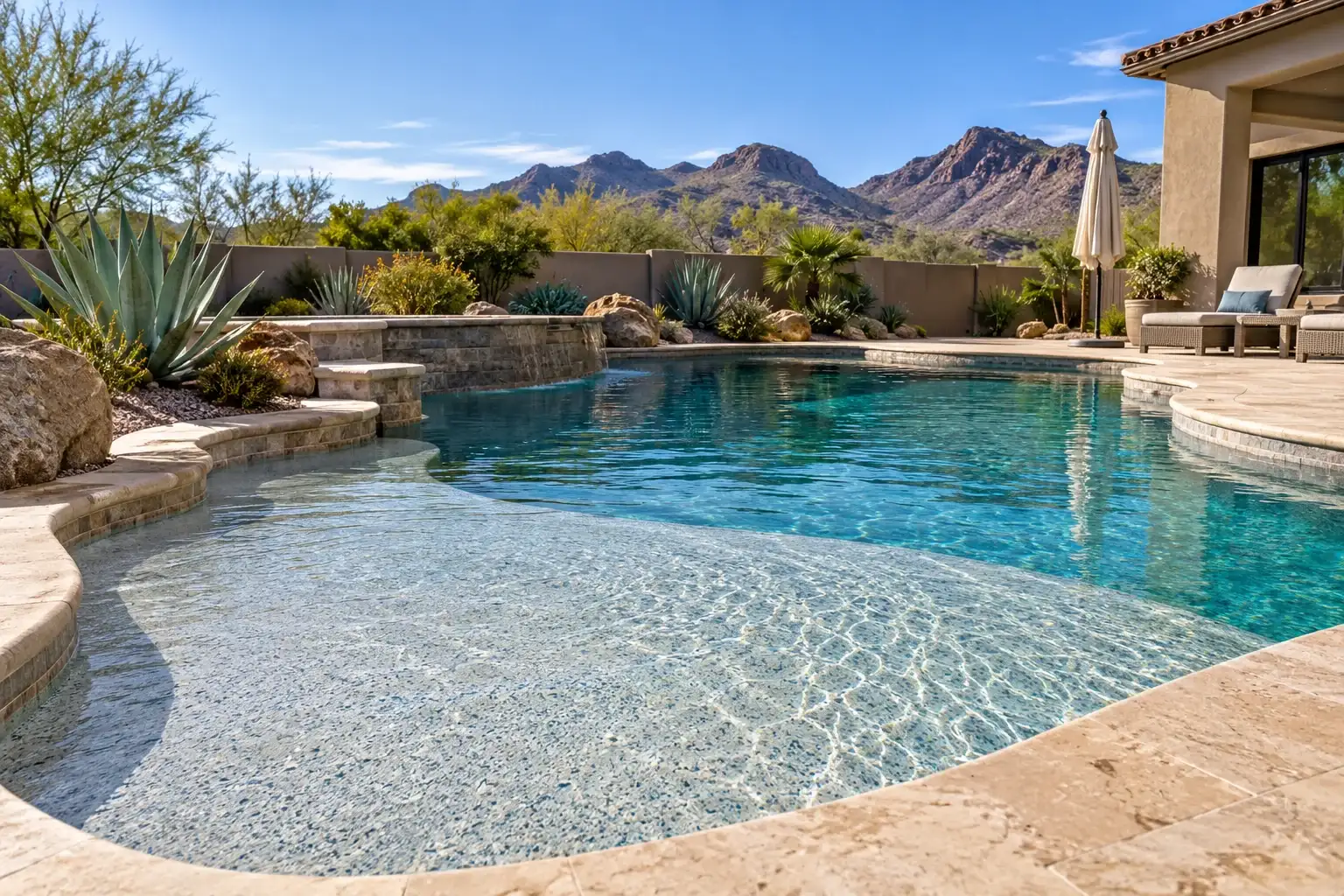
Costs
What a project costs
Nationally, pool resurfacing averages $11,000 in 2026 and most homeowners pay between $6,000 and $15,000, and material costs alone range from roughly $4 per square foot for plaster to $10 per square foot for a pebble style aggregate, per a national 2026 cost guide. For a Phoenix figure, a pool remodel averages $9,331 with most homeowners paying $5,732 to $12,976, per published 2026 cost data for the Phoenix metro. Full details live on the pool resurfacing cost page, and the pool resurfacing guide walks through how a project actually comes together from first call to finish.
Services
Services we offer in DC Ranch
See the Pool Resurfacing Scottsdale AZ home page for how the whole process works end to end, then choose a service below.
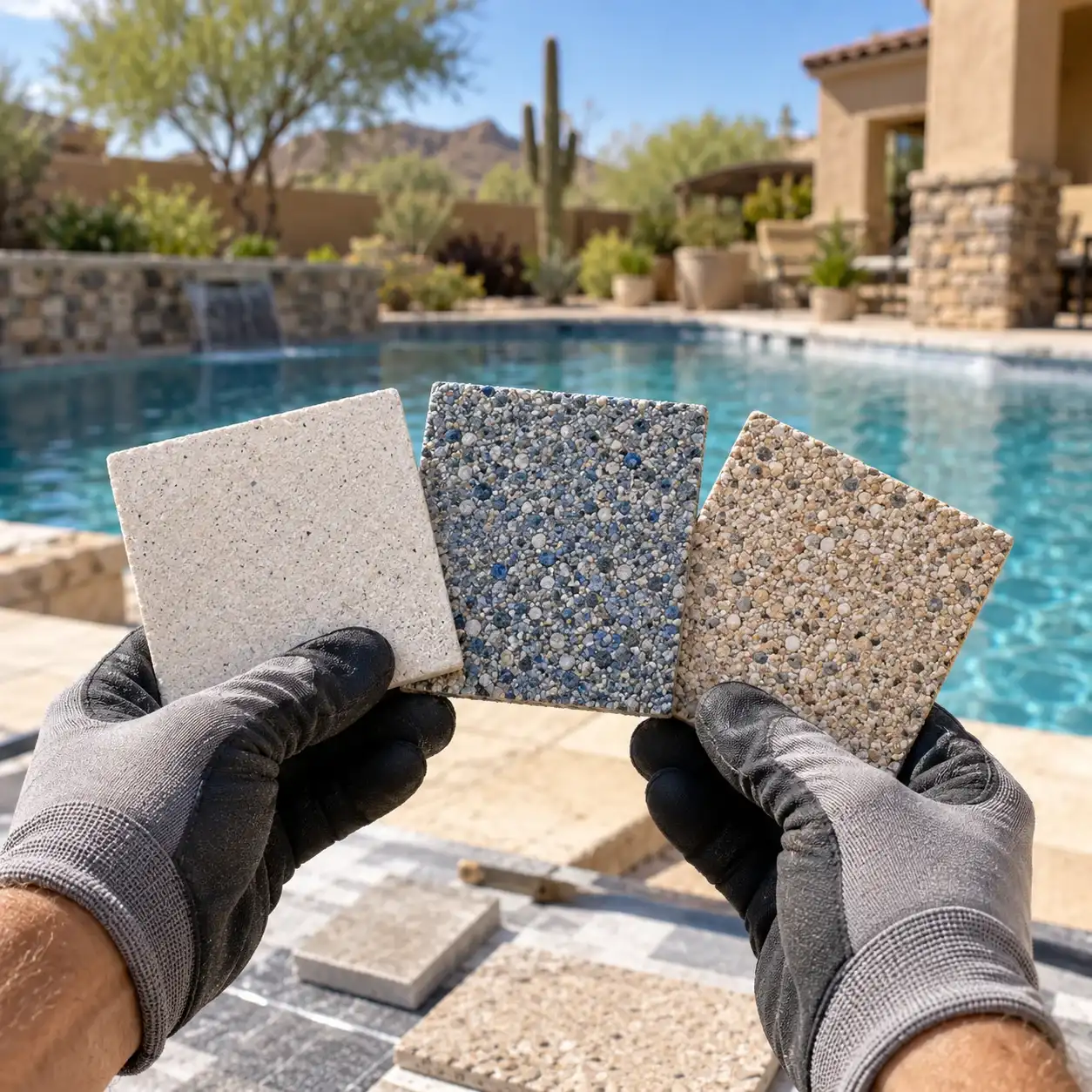
Pebble style pool finish
: A pebble style finish is made of small natural aggregate exposed at the surface instead of a smooth troweled coat.Quartz pool finish
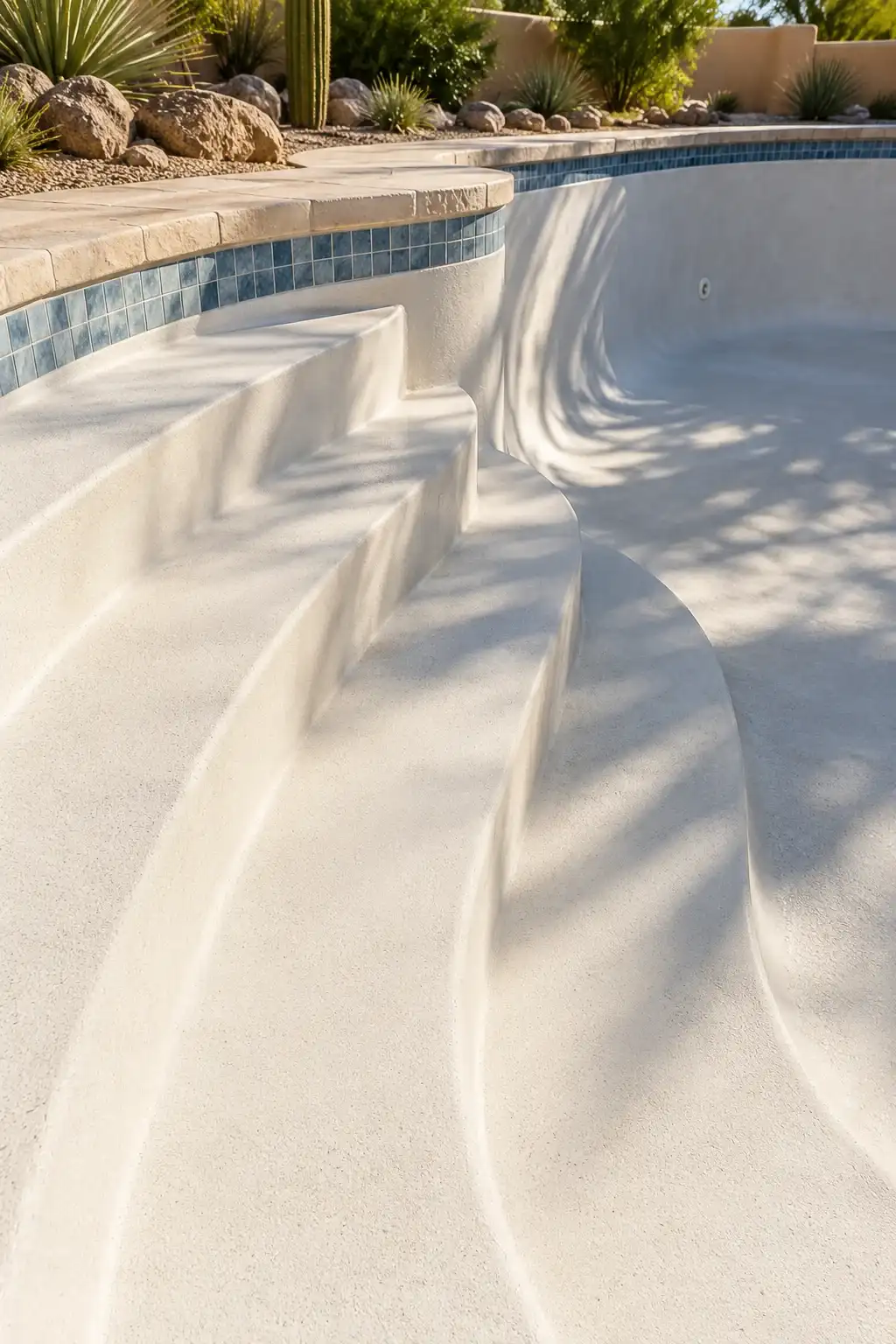
: A quartz pool finish blends fine quartz crystals into the surface coat of a Scottsdale pool instead of leaving the plaster plain and smooth.Pool replastering
: Plain plaster is usually the lowest cost finish option of the three main choices, and for a Scottsdale pool shell that is structurally sound, a straightforward replaster is often all that is needed.Pool remodeling
: A pool often wears in several places at once.Pool tile replacement
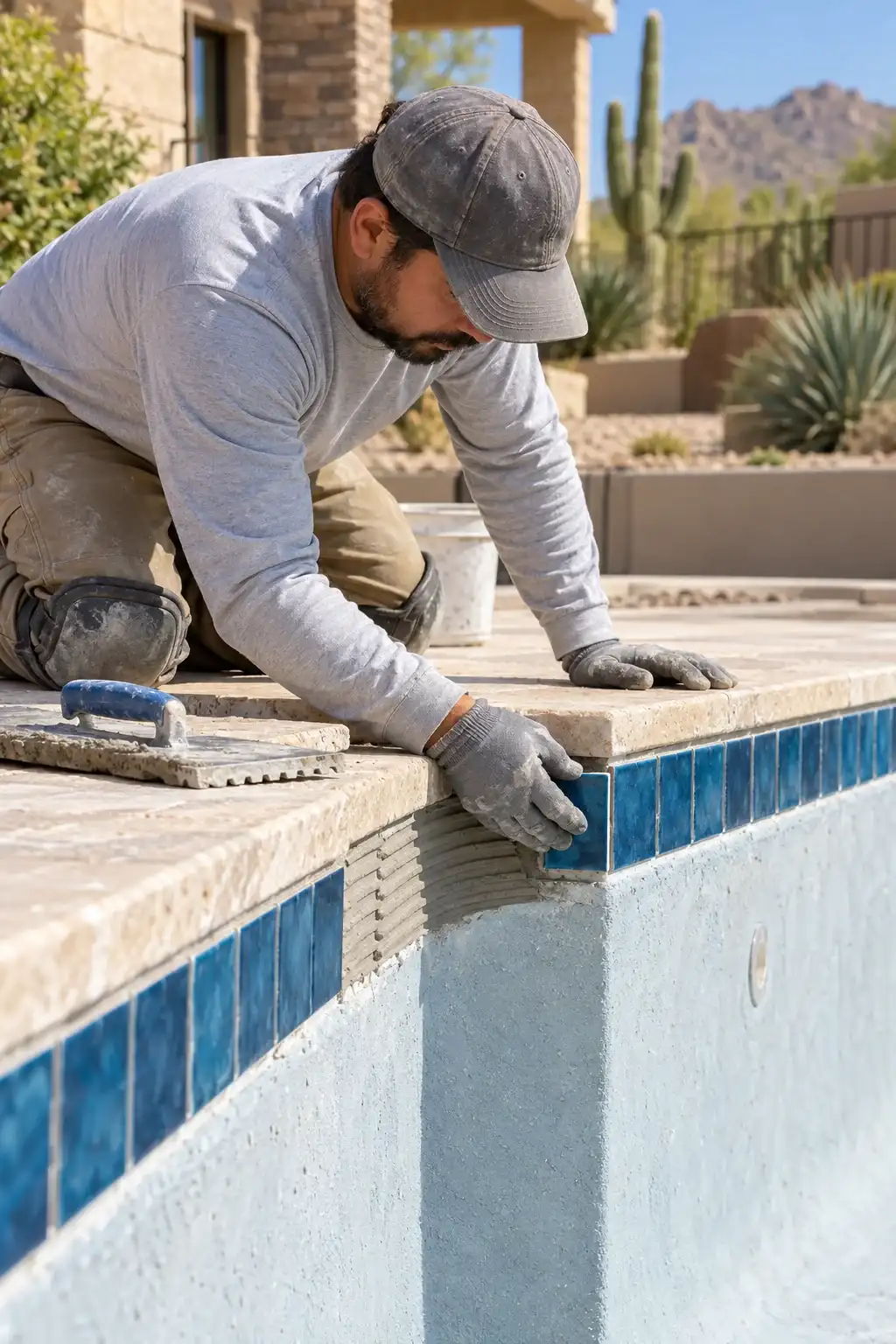
: The waterline tile band sits right where pool water evaporates and can leave mineral deposits behind.Resurfacing vs replastering vs remodeling
: These three words get used loosely, and that can lead Scottsdale homeowners to ask for the wrong job.
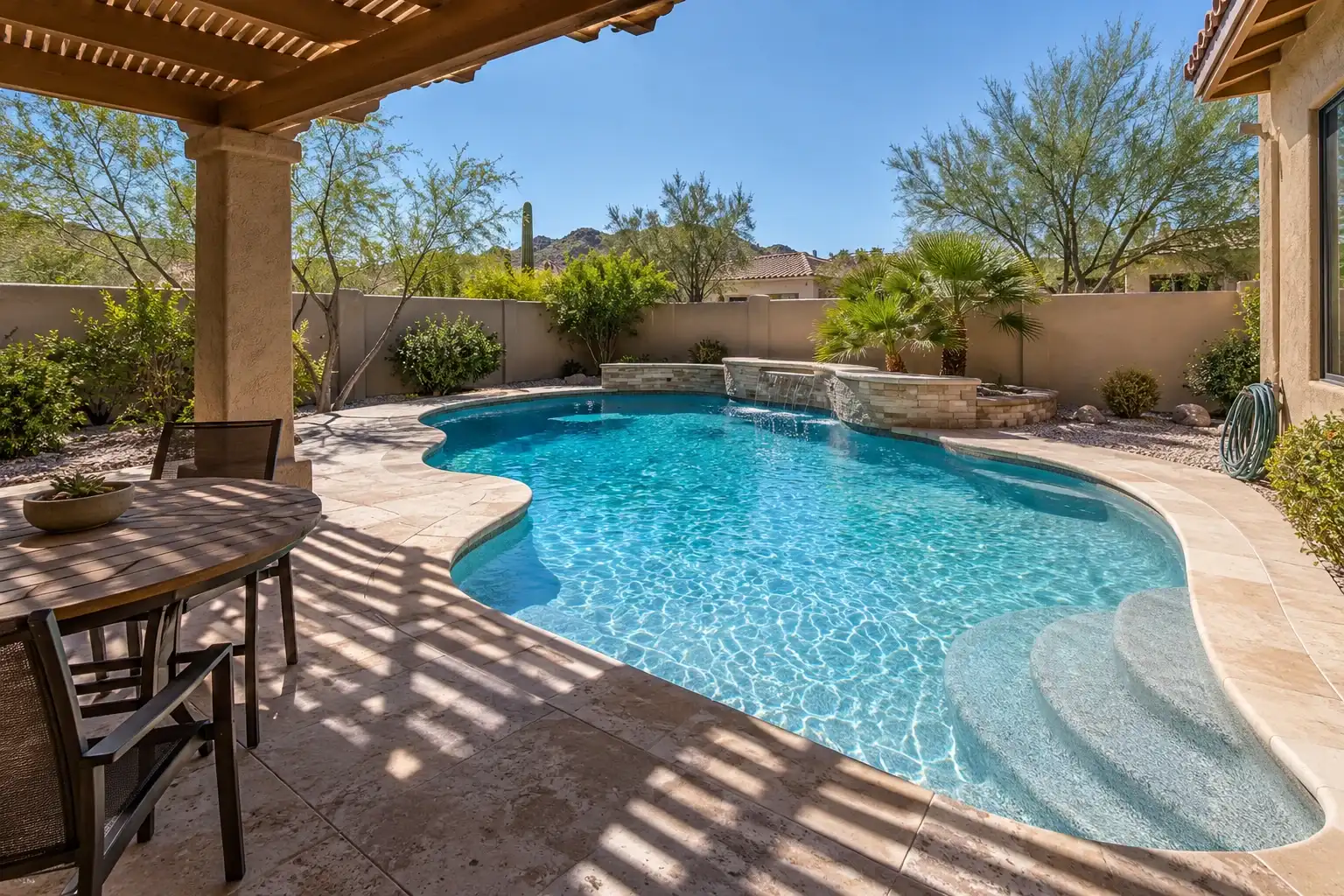
3 questions
Questions people ask
Still have a question? Call (747) 243-2089 and say what your pool is doing.
Is my DC Ranch pool old enough to need resurfacing?
It may be. If your home was built in DC Ranch's early years, from 1998 on, the original pool finish may be close to or past its typical lifespan. A plaster finish lasts about 10 years and an aggregate finish such as pebble can last 20 years or more, per a national 2026 cost guide.
What finish should I choose for a DC Ranch pool?
It depends on budget and how long you want the next finish to last. Pebble style aggregate tends to outlast standard plaster, while plaster is usually the lower upfront cost option, running about $4 per square foot in materials versus roughly $10 for pebble style, per a national 2026 cost guide.
How does Scottsdale's water affect DC Ranch pools specifically?
The same way it affects pools across the city. Municipal water tests 13 to 17 grains per gallon hard depending on the zone, per the city's water quality report, and that hardness can contribute to scale and surface wear over a finish's life regardless of neighborhood.
Keep reading