Service 01 of 05 · Scottsdale, AZ
Pebble style pool finish company in Scottsdale, AZ
You want a pebble style finish that holds up to Scottsdale sun and hard water? Tell us about your pool, and someone from our team will call you back to plan it.
- Pebble style pool finish
- Priced in writing first
What you get
A finish built to outlast the Arizona sun, not just look good on day one
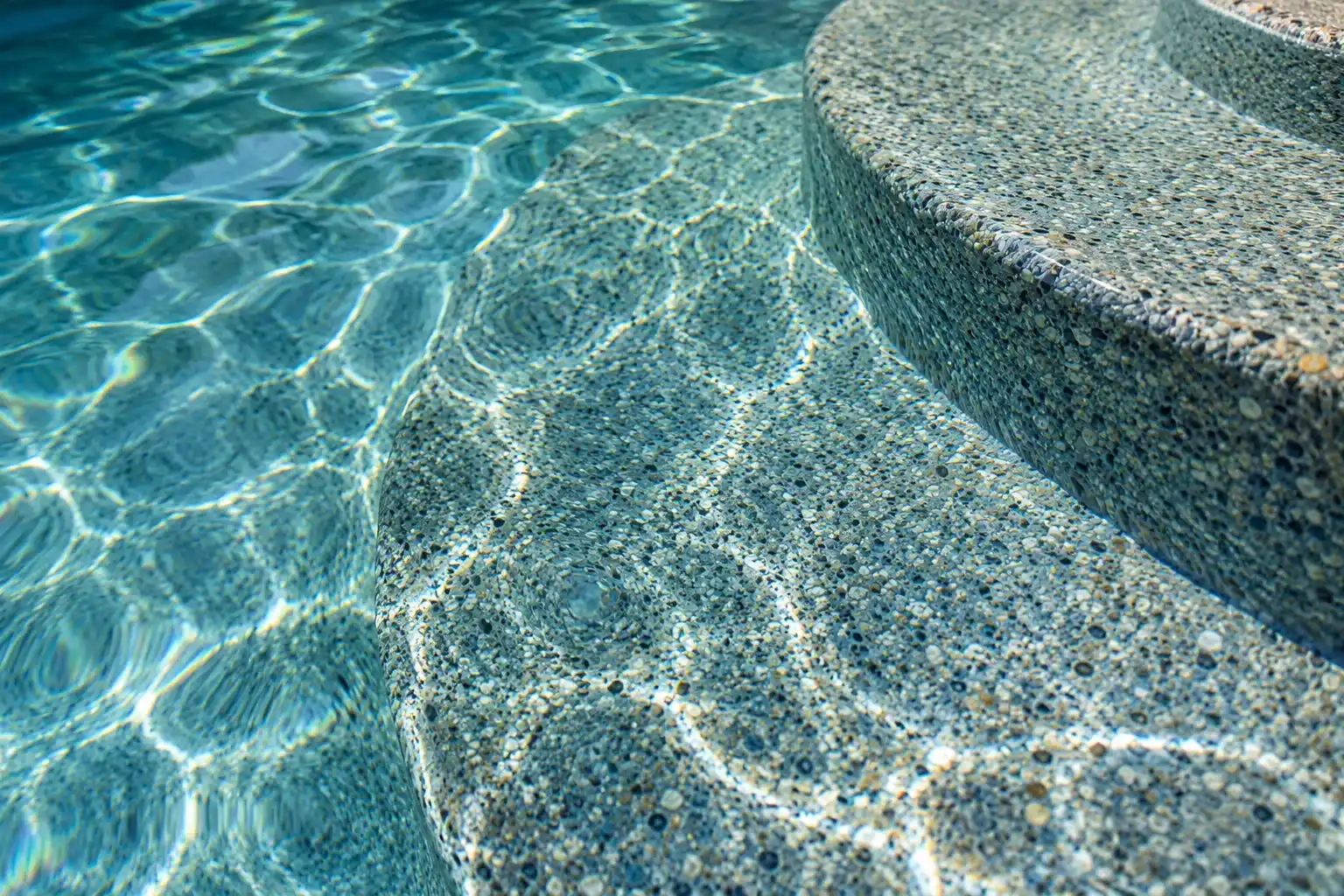
A pebble style finish is made of small natural aggregate exposed at the surface instead of a smooth troweled coat. That exposed texture changes how the finish holds up over years of Scottsdale heat, UV and pool chemistry. Our pool resurfacing services in Scottsdale also include plaster and quartz finishes, covered on the pool replastering and quartz pool finish pages.
- Pebble style finishes can last 20 years or more, well past a plain plaster cycle, according to published 2026 cost guides.
- The exposed aggregate surface can resist staining and etching better than a smooth plaster shell.
- Underfoot grip around steps, benches and the shallow end can be better than on a polished plaster surface.
- A wider range of natural color and texture blends than plain white plaster.
- Fewer chemistry related surface problems can show up over the life of the finish when the water is kept balanced.
Signs
6 signs your pool needs a pebble style finish
The current surface feels rough, pitted or gritty underfoot even right after a brush
Plaster is flaking, chipping or showing bare spots down to the shell
Stains keep coming back no matter how the water gets balanced
Your pool is already past the typical 10 year plaster cycle described in national 2026 cost data
You want a finish that is less maintenance sensitive to Scottsdale's hard tap water
You are planning a remodel anyway and want the longest lasting finish option on the table
3 steps
How it works
Tell us what your pool needs and whether you are set on a pebble style finish or still deciding
We call you back to go over the project, the finish, the budget and the timing
Your project gets planned, priced in writing and put on the calendar
Costs
What a pebble style finish costs in Scottsdale
| Item | Typical range | Source |
|---|---|---|
| Pebble aggregate material | about $10 per sq ft | National 2026 cost data |
| Labor | $45 to $65 per hour | National 2026 cost data |
| Drain, refill and cleaning before the new finish goes on | about $425 to $475 | National 2026 cost data |
| Whole job, national range | $6,000 to $15,000, national 2026 average near $11,000 | National 2026 cost data |
Pebble aggregate material runs close to $10 per square foot, more than the roughly $4 per square foot for plain plaster, and labor adds $45 to $65 an hour on top of that, according to national 2026 cost data. The $425 to $475 drain, refill and clean step from that same data applies before any new finish goes on, pebble included. See the pool resurfacing cost page for the full breakdown by pool size.
Pebble finish
Pebble style options
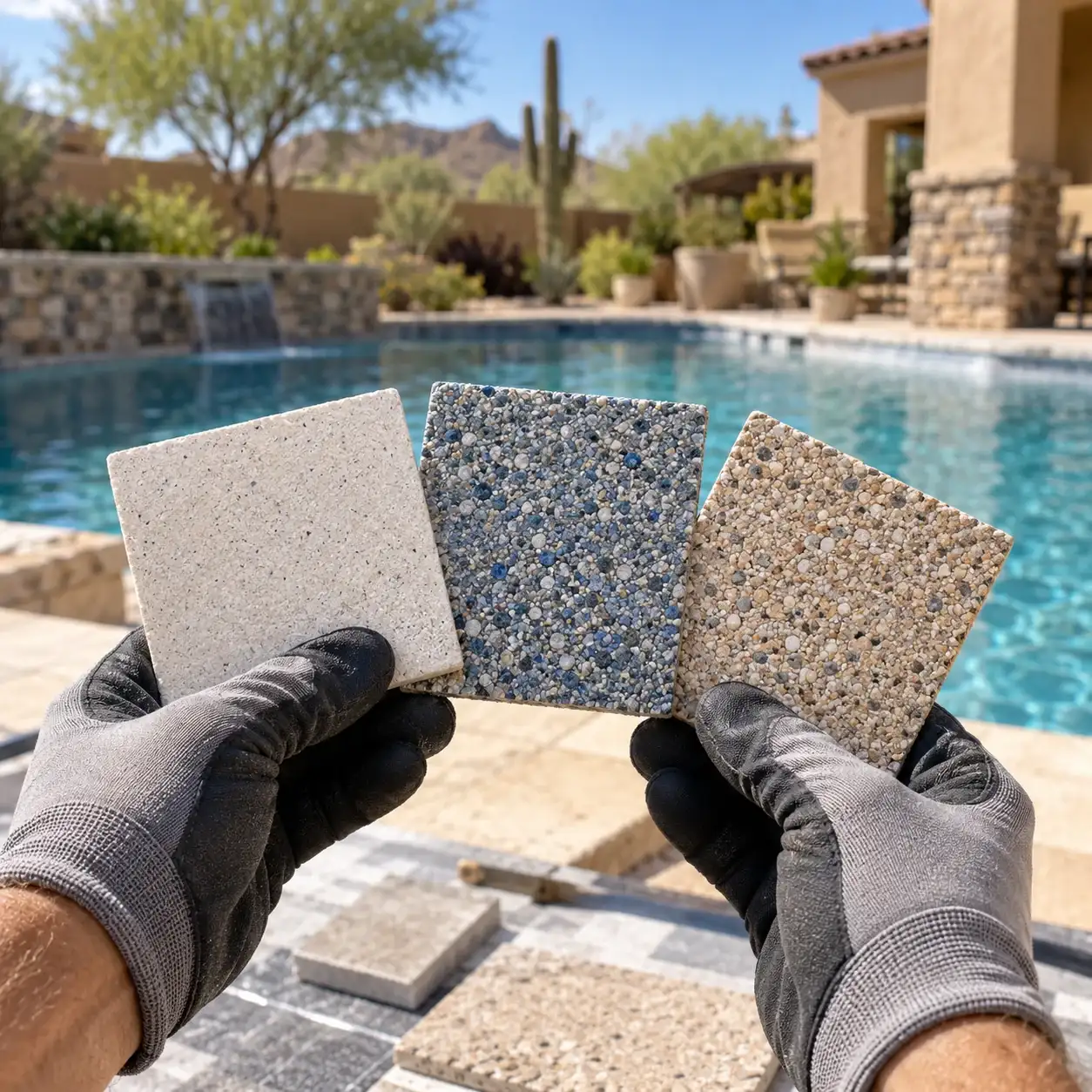
Pebble style finishes come in a range of aggregate sizes and natural color blends, from a finer, smoother exposed pebble to a coarser, more heavily textured surface. The right blend depends on how the pool gets used, how much texture bare feet can tolerate, and the look you want against your decking and coping. The blend can also shift labor time and finish detail.
Good to know
How the job gets scoped
Before a number goes on paper, the pool gets measured for square footage, the existing shell condition gets checked for cracks or hollow spots, and the drain, chip out and refill steps get planned around your schedule. A pool with a sound shell underneath an old plaster coat is a simpler job than one that needs chip out down to the gunite. That difference can move the final number a lot.
Costs
What changes the price
Pool size is one of the biggest drivers, since both material and labor scale with square footage. Shell condition matters a great deal too: a shell that only needs the old finish removed is cheaper than one with cracks or structural repair needed first. Adding waterline tile or new coping alongside the resurface moves the project into remodel territory and changes the total. Access to the pool for equipment and materials can also add labor time on tighter lots.
Pebble finish
How long a pebble resurface takes
National 2026 cost data puts a typical resurface at 5 to 7 days, and a pebble job can run longer than a plaster only job depending on the blend and the finish detail. The schedule runs through drain, chip out, surface prep and the pebble application. The pool is then refilled soon after the finish goes on, and a start-up period of water care follows the fill.
Pebble finish
Pairing a pebble finish with other upgrades
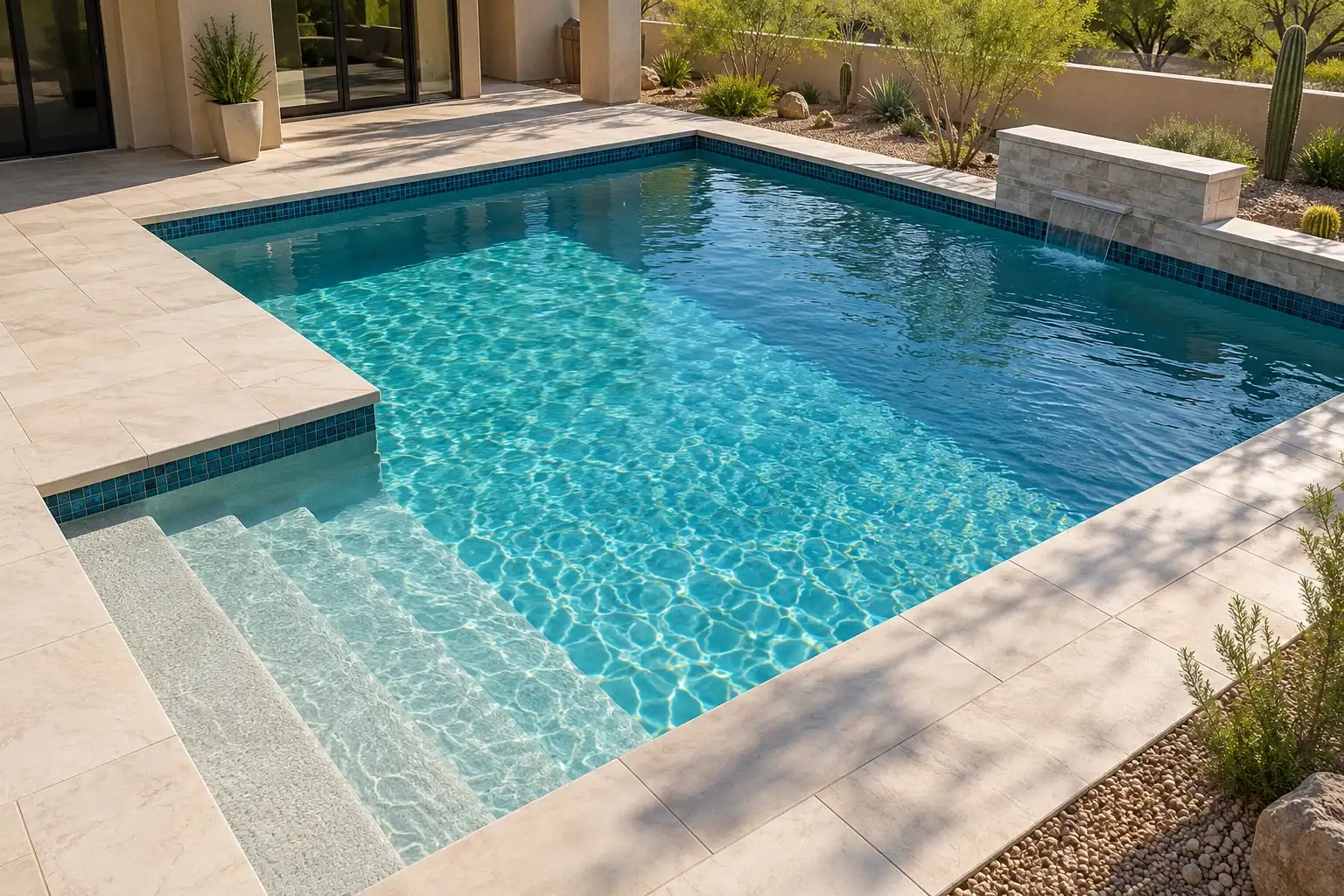
Because a pebble resurface already requires draining the pool, it is a practical time to also update waterline tile or coping if either is showing age, covered on the pool tile replacement and pool remodeling pages. Scottsdale's municipal water runs 13 to 17 grains per gallon depending on the area, according to the City of Scottsdale's water quality report, and hard water can show up as mineral buildup on tile and coping, which is one reason the two jobs are often scoped together.
Pebble finish
Scheduling a pebble resurface around the Scottsdale calendar
A pebble job can take longer than a plaster-only resurface, so timing against the calendar can matter more here than with a faster job. Arizona's monsoon season runs officially from June 15 through September 30, and storms can slow a job that has drained the pool and is waiting to refill. See the best time to resurface a pool in Scottsdale for how that timing question plays out across the year.
6 questions
Questions people ask
Still have a question? Call (747) 243-2089 and say what your pool is doing.
How long does a pebble style pool finish last?
Pebble style finishes can last 20 years or more, according to published 2026 cost guides, well past the roughly 10 year cycle plain plaster sees. Actual life depends on water chemistry, sun exposure and how the pool gets maintained in between.
Is a pebble finish rough on bare feet?
Some texture is normal since the aggregate is exposed at the surface rather than troweled smooth. Finer pebble blends feel softer underfoot than coarser blends, which is one of the choices to talk through before the project gets priced.
Does a pebble finish cost more than plaster?
Yes, pebble aggregate material runs close to $10 per square foot compared to roughly $4 per square foot for plain plaster, according to national 2026 cost data. Labor rates are the same range either way.
Can a pebble finish go over an existing plaster shell?
It depends on the condition of the shell underneath. A sound shell with a worn plaster coat is usually a simpler job, while cracks or hollow spots mean more prep before the new finish gets applied.
What colors come in a pebble style finish?
Pebble style finishes come in a range of natural stone color blends, from lighter sand tones to darker, deeper tones, plus a choice of aggregate size that changes the texture as much as the look.
Does Scottsdale's hard water affect a pebble finish differently than plaster?
Hard water challenges any finish's chemistry balance. The City of Scottsdale's water quality report lists Scottsdale's water at 13 to 17 grains per gallon depending on the area. How a given finish responds depends on the finish, the water chemistry and how the pool is kept.
Keep reading
- Quartz pool finish: A quartz pool finish blends fine quartz crystals into the surface coat of a Scottsdale pool instead of leaving the plaster plain and smooth.
- Pool replastering: Plain plaster is usually the lowest cost finish option of the three main choices, and for a Scottsdale pool shell that is structurally sound, a straightforward replaster is often all that is needed.
- Resurfacing vs replastering vs remodeling: These three words get used loosely, and that can lead Scottsdale homeowners to ask for the wrong job.
- Pool resurfacing cost calculator