Timing · Scottsdale, AZ
How often to resurface a pool in Arizona
Concrete pools are generally resurfaced on roughly a 10 year cycle, and pebble style finishes can last 20 years or more, according to published 2026 cost guides. Arizona's combination of intense sun, heat and hard municipal water can push a pool toward the shorter end of that range.
Good to know
The typical resurfacing cycle by finish type
Published 2026 cost guides put plaster finishes at about 10 years and pebble style finishes at 20 years or more, with quartz generally landing between the two. Published 2026 cost data for the Phoenix metro describes resurfacing a concrete pool every 10 to 15 years, which lines up with the plaster figure, since plaster is a common finish choice.
Arizona water and sun
Why Arizona pools can wear faster than the national average implies
Scottsdale's municipal water runs 13 to 17 grains per gallon depending on the area, according to the City of Scottsdale's water quality report (opens in a new tab), and hard water can make it harder to keep pool chemistry balanced over the life of a finish. National 2026 cost data says a plaster finish's lifespan can be affected by how well the water's chemical balance is maintained. Combine that with the direct sun exposure a Valley pool gets, and a finish can show wear sooner than the typical figures suggest.
Signs
Signs your pool is closer to the end of its cycle than you think
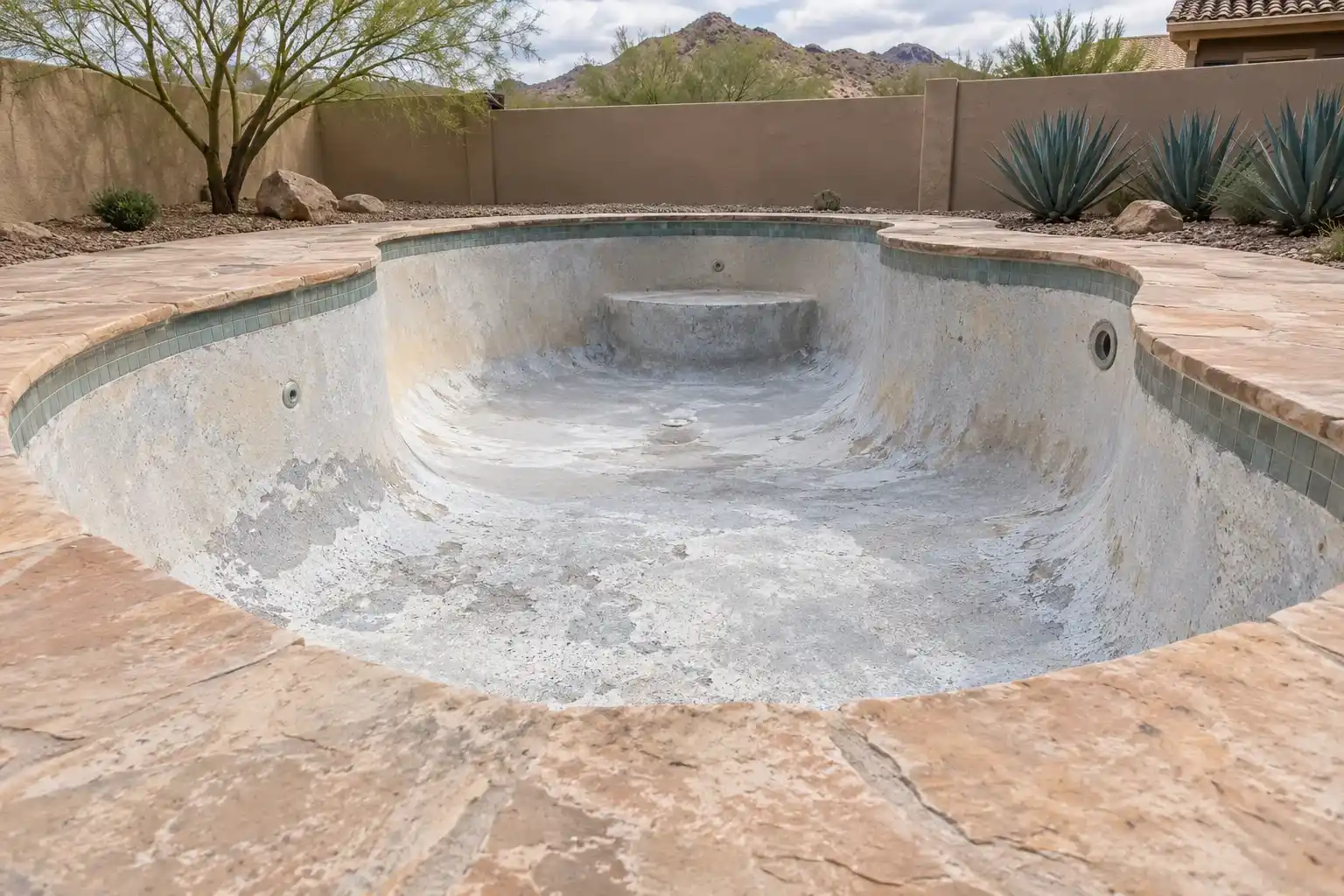
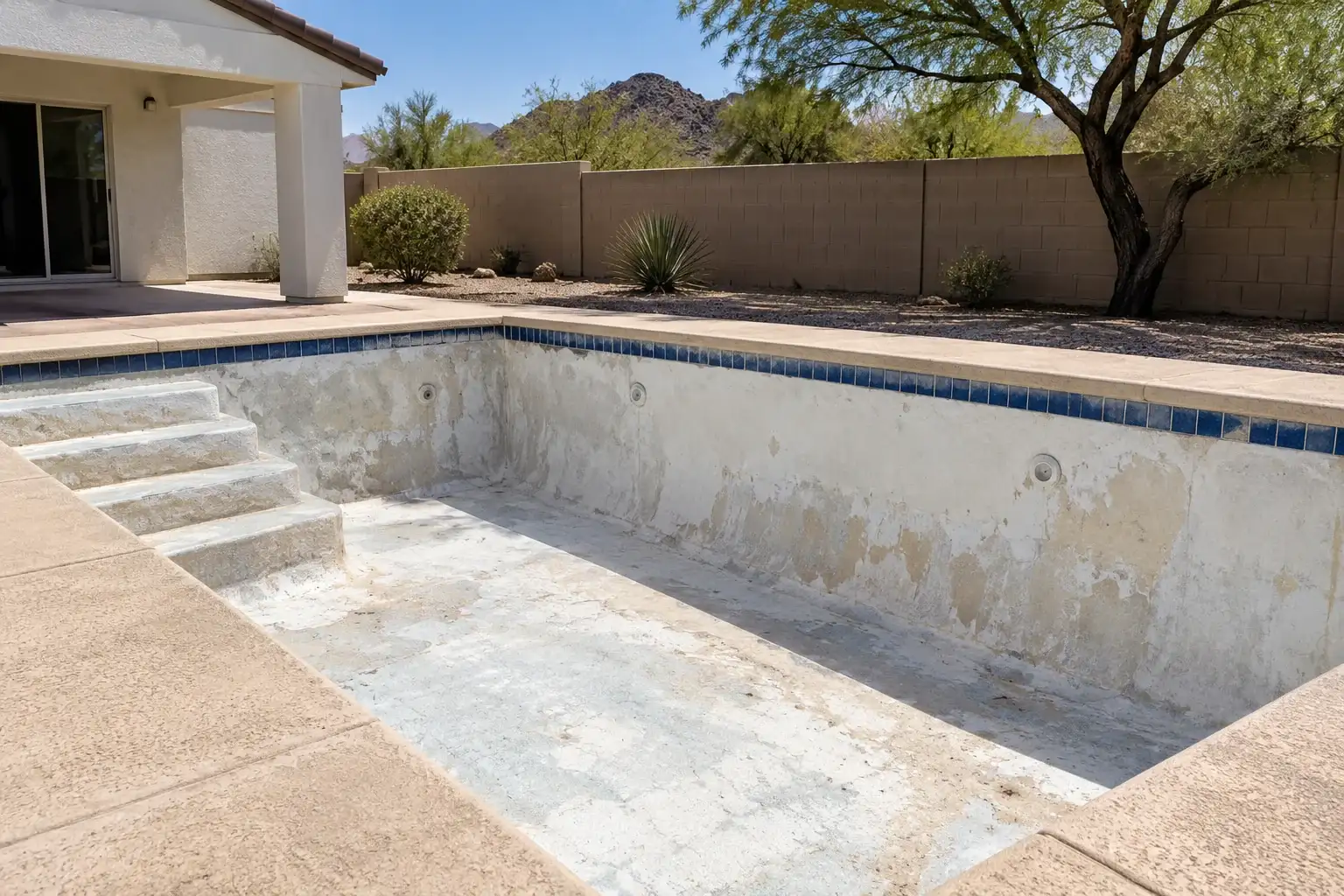
A finish nearing the end of its cycle usually shows a rough or pitted feel underfoot, visible staining that will not clean off, or small cracks and chips in the surface. None of those signs come with a fixed countdown, but a pool already past its typical finish lifespan is more likely to be showing them. Once those signs show up, tell us about your pool and someone from our team will call you back to plan the fix, whether it is a pebble style, quartz or plaster finish.
Costs
What a resurface costs when the time comes
Most homeowners nationally pay $6,000 to $15,000 to resurface a pool, averaging near $11,000, according to national 2026 cost data. Material costs vary by finish, from about $4 per square foot for plaster up to about $10 per square foot for a pebble style finish, with labor running $45 to $65 an hour in that same data. The pool resurfacing cost page breaks this down further by pool size.
Timing
Timing a resurface around Arizona's calendar
Arizona's monsoon season runs officially June 15 through September 30, according to the National Weather Service and Arizona State Parks, which is a factor worth planning around once a resurface is close. The best time to resurface a pool page covers that scheduling angle in more detail.
5 questions
Questions people ask
Still have a question? Call (747) 243-2089 and say what your pool is doing.
How often does a pool need resurfacing in Arizona?
Concrete pools are generally resurfaced on a roughly 10 year cycle, with pebble style finishes lasting 20 years or more, according to published 2026 cost guides. Arizona's heat, sun and hard water can push pools toward the shorter end of that range.
Does hard water shorten a pool finish's lifespan?
Hard water can make chemistry harder to keep balanced, and Scottsdale's water runs 13 to 17 grains per gallon depending on the area, according to the City of Scottsdale's water quality report. National 2026 cost data says a plaster finish's lifespan can be affected by how well the water's chemical balance is maintained.
Which finish lasts the longest in Arizona heat?
Pebble style finishes can last 20 years or more, the longest of the three main finish types, according to published 2026 cost guides, compared to about 10 years for plaster. Quartz is generally expected to land in between.
Is 10 years really the limit for plaster?
It is the typical figure in national 2026 cost data, not a fixed deadline. Some plaster finishes last longer and some show wear sooner, depending on water chemistry, sun exposure and maintenance.
Does monsoon season affect how often a pool needs resurfacing?
Not directly, but Arizona's monsoon season, which runs June 15 through September 30 according to the National Weather Service, is worth factoring into when a resurface gets scheduled once the finish is due.