Guide · Scottsdale, Arizona
The Scottsdale Pool Resurfacing Guide
Pool resurfacing in Scottsdale replaces the worn interior finish of your pool with new plaster, quartz or a pebble style surface. A national 2026 cost guide names pool size, the finish and the location as the main drivers of the price.
- Plaster
- Quartz
- Pebble style
Good to know
What pool resurfacing actually replaces
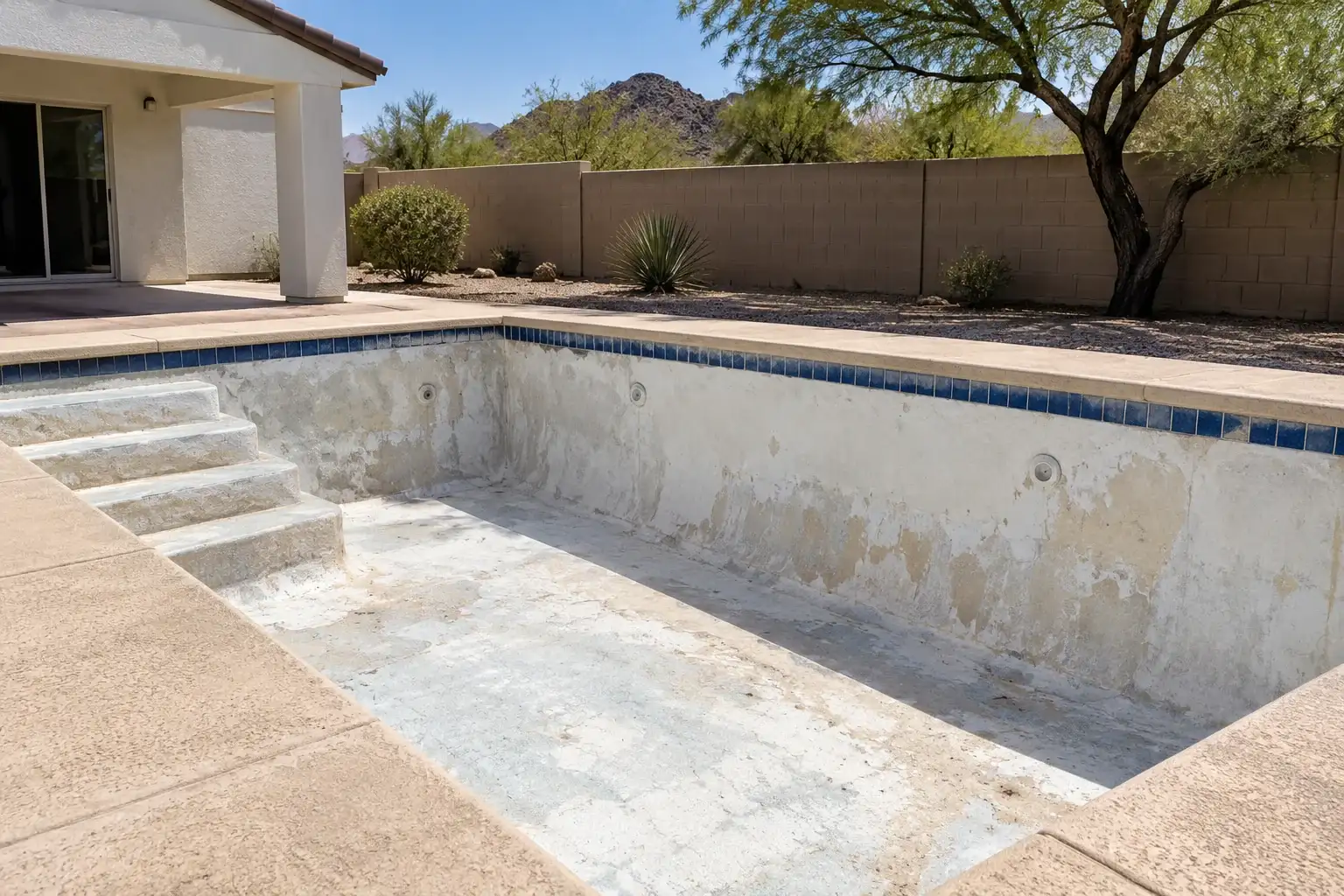
A pool's interior finish, the layer you touch, is separate from the structural shell underneath it. Resurfacing removes the old finish, repairs anything wrong with the shell itself, and applies a new finish. It is not the same job as patching a crack or replacing a pump. When people say "my pool needs resurfacing" they usually mean the finish has worn through to the point that patching no longer makes sense.
Pools in Arizona commonly get 1 of 3 interior finishes:
- White plaster, a mix of cement and marble dust. Lowest upfront material cost, at roughly $4 per square foot according to a national 2026 cost guide, with a typical lifespan of about 10 years (5 to 10 years on average).
- Quartz aggregate finish, plaster blended with ground quartz, which can offer more color options and wear resistance than plain plaster, usually at a cost between plaster and a pebble style finish.
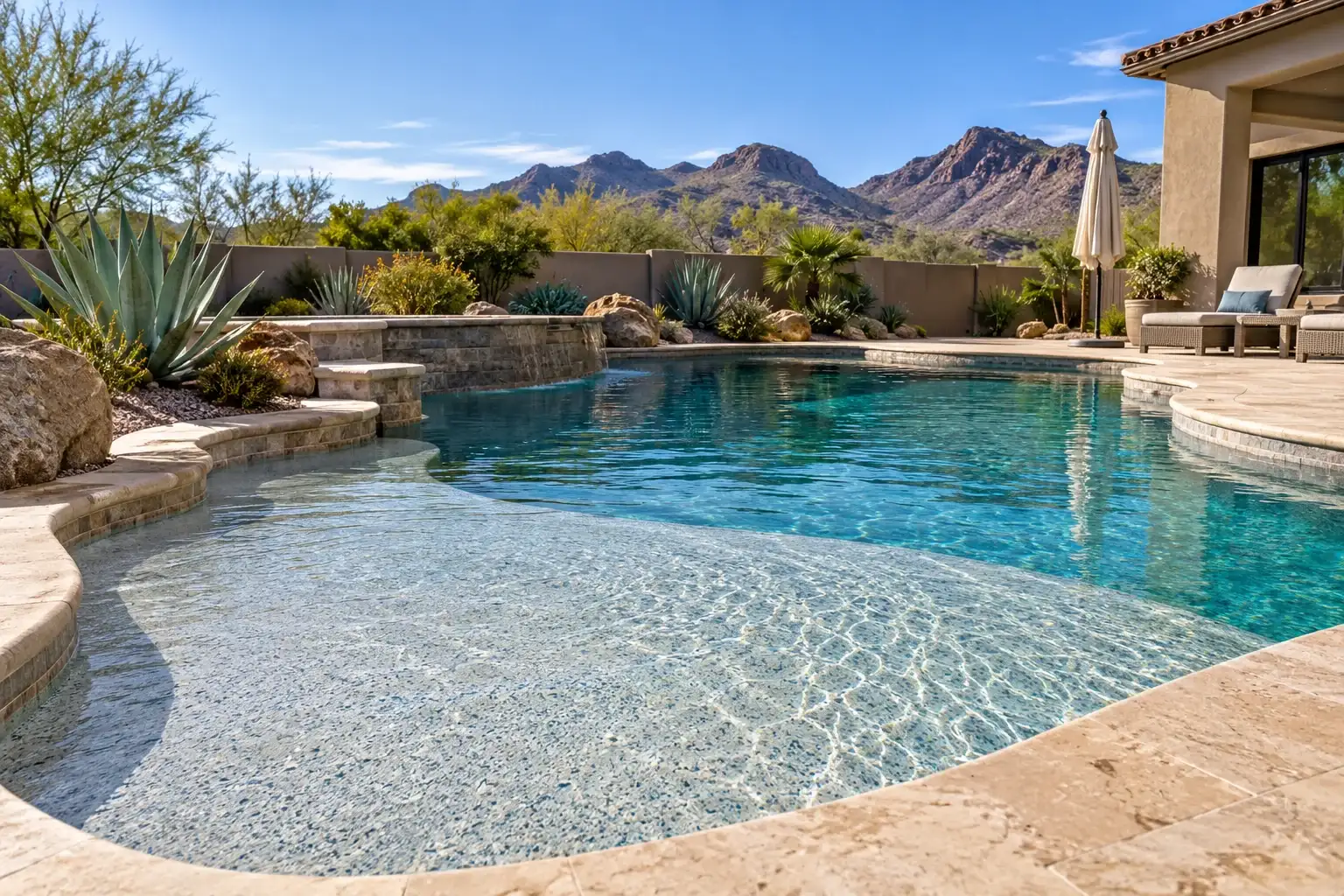
- Pebble style finish, small stones set into the surface for a textured, durable finish. Material cost runs around $10 per square foot per the same cost guide, and aggregate finishes such as pebbles can last 20 or more years.
A fourth option, decorative tile, covers all or part of the shell and can cost far more per square foot (the same cost guide lists glass tile from $1 to $35 per square foot depending on the tile), so it is usually used as an accent rather than a full interior.
Arizona water and sun
Why Arizona pools wear out their finish faster
2 things can push an Arizona pool's finish toward the end of its life sooner.
First, sun. Scottsdale pools sit in direct sun for much of the year, and UV exposure can fade color and wear on pool surfaces over time.
Second, water hardness. The City of Scottsdale 2026 Water Quality Report (opens in a new tab) puts municipal water hardness at 13 to 15 grains per gallon south of Indian School Road and 13 to 17 from Indian School Road north. Hard water carries more dissolved calcium and magnesium, and that mineral content can contribute to scaling, staining and surface wear on a pool finish over years of exposure. A softener on household water usually serves the indoor plumbing, so a pool filled from an outdoor spigot can still get the hard supply.
Put those 2 together and the finish can show its age sooner. A national 2026 cost guide puts a good plaster finish at 5 to 10 years on average, and says how well the water chemistry is kept affects how long it lasts.
Timing
How long a resurface takes
A standalone resurface, no tile or coping changes, takes about 5 to 7 days according to a national 2026 cost guide, and up to 14 days in an area prone to bad weather or in a remote location. Adding new waterline tile or coping to the same job can extend that window, since those trades can work in sequence rather than side by side with the resurfacing.
The visible work (chip-out, prep, new finish) is only part of the timeline. Scheduling, getting materials in (especially specialty pebble or tile colors), and any permit lead time can add to the total, which is one reason planning ahead of the season you actually want to swim in matters. See the best time of year to resurface for how that timing plays out across a Scottsdale calendar year.
6 steps
What a resurfacing job actually involves
A resurface follows roughly the same sequence regardless of which finish you choose:
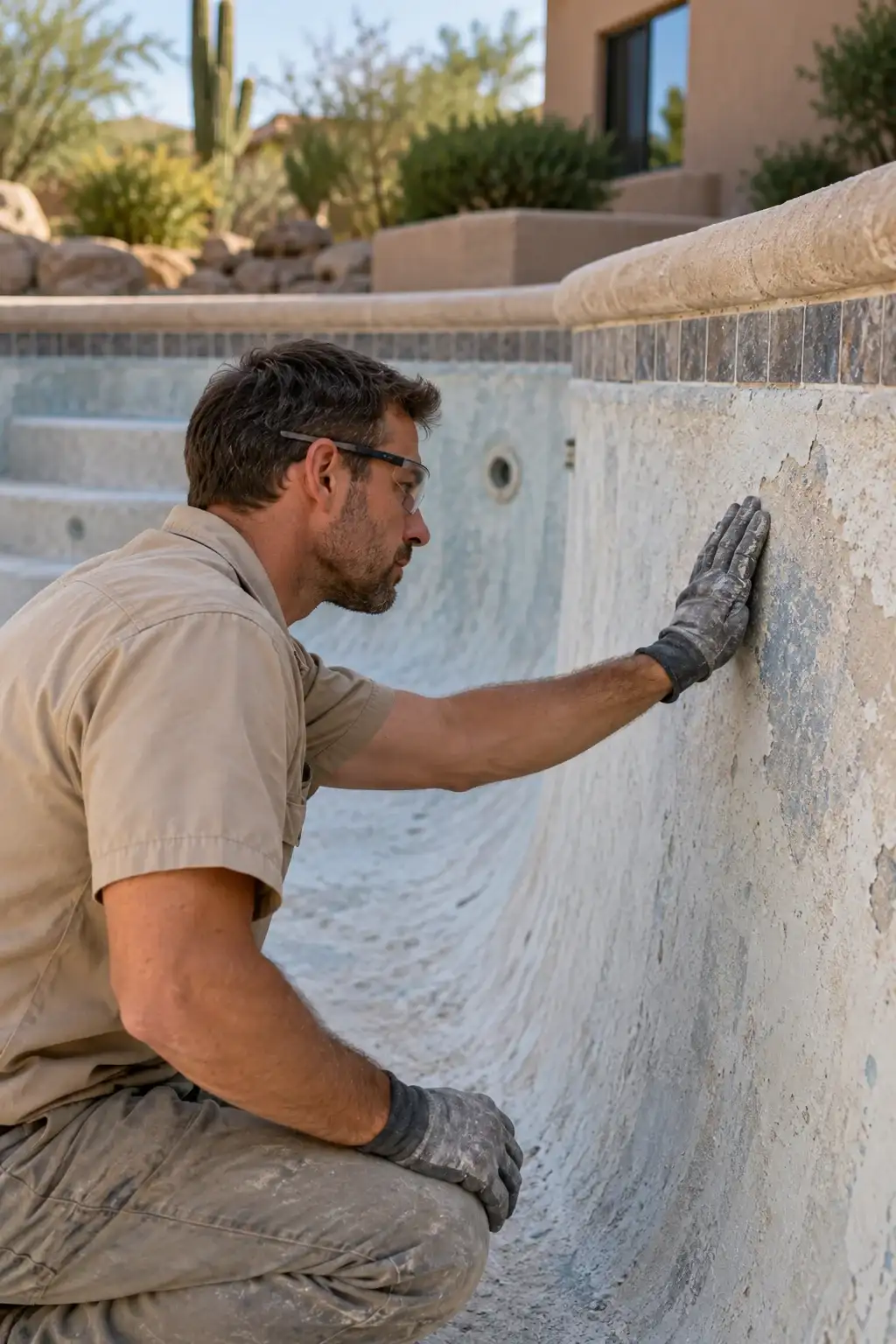
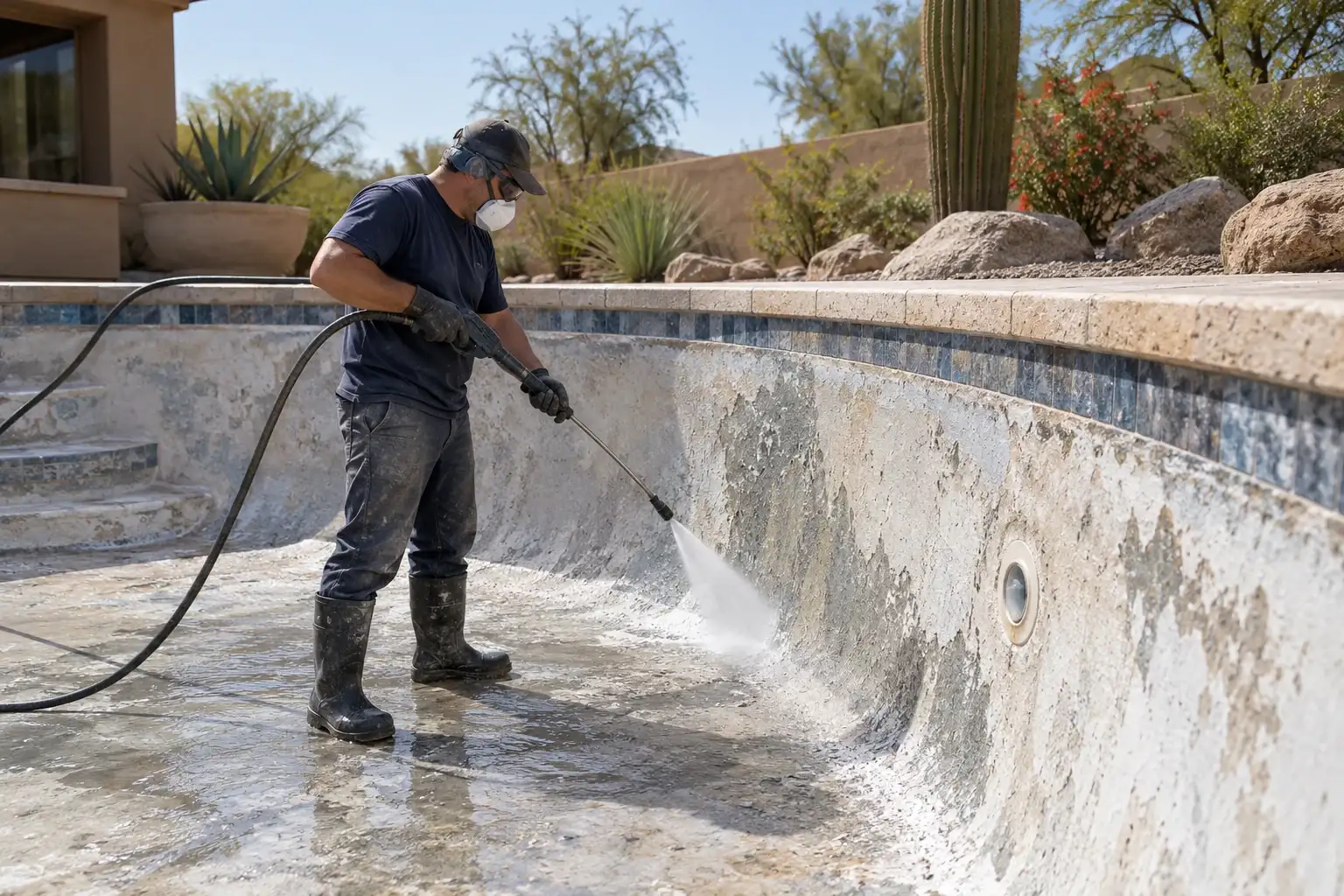
Drain the pool. Nothing about the shell or the old finish can be properly inspected or prepped underwater.
Chip out the old finish down to the shell where the scope calls for it. New material is not applied over old, failing material, since that can shorten the life of the new finish.
Inspect the shell for cracks, hollow spots or structural issues, and repair anything found before moving forward.
Prepare the surface, with an acid wash where the scope calls for one, so the new finish adheres properly.
Apply the new finish and begin filling the pool promptly afterward, since many finishes need to stay wet once application starts.
Start up the water chemistry and follow a specific brushing schedule for the first several weeks, which can matter a great deal to how long the new finish lasts.
Skipping or rushing any of these steps, especially the prep and the startup chemistry, can cause a new finish to fail early.
Costs
What moves the price
4 things move a pool resurfacing price, based on published 2026 cost data:
- Pool size. Resurfacing is largely priced by square foot of surface. A national 2026 cost guide's size table puts a 16x32 ft pool around $3,400 and a 20x40 ft pool around $5,200, and the final price moves with finish, labor complexity and add-ons.
- Finish material. Plaster runs roughly $4 per square foot, a pebble style finish about $10 per square foot, and tile accents anywhere from $1 to $35 per square foot, per the same cost guide.
- Shell condition. A pool that needs a full chip-out and crack repair costs more than one with light surface wear and no structural issues.
- Add-ons. New waterline tile and new coping, done at the same time as a resurface, add their own material and labor costs on top of the surface work itself.
Labor for pool refinishing work runs $45 to $65 per hour according to the same 2026 cost guide, and draining, cleaning and refilling the pool before work begins adds about $425 to $475. Use the cost calculator to combine your own pool size, finish and add-ons into a range, or see the full breakdown on the cost page.
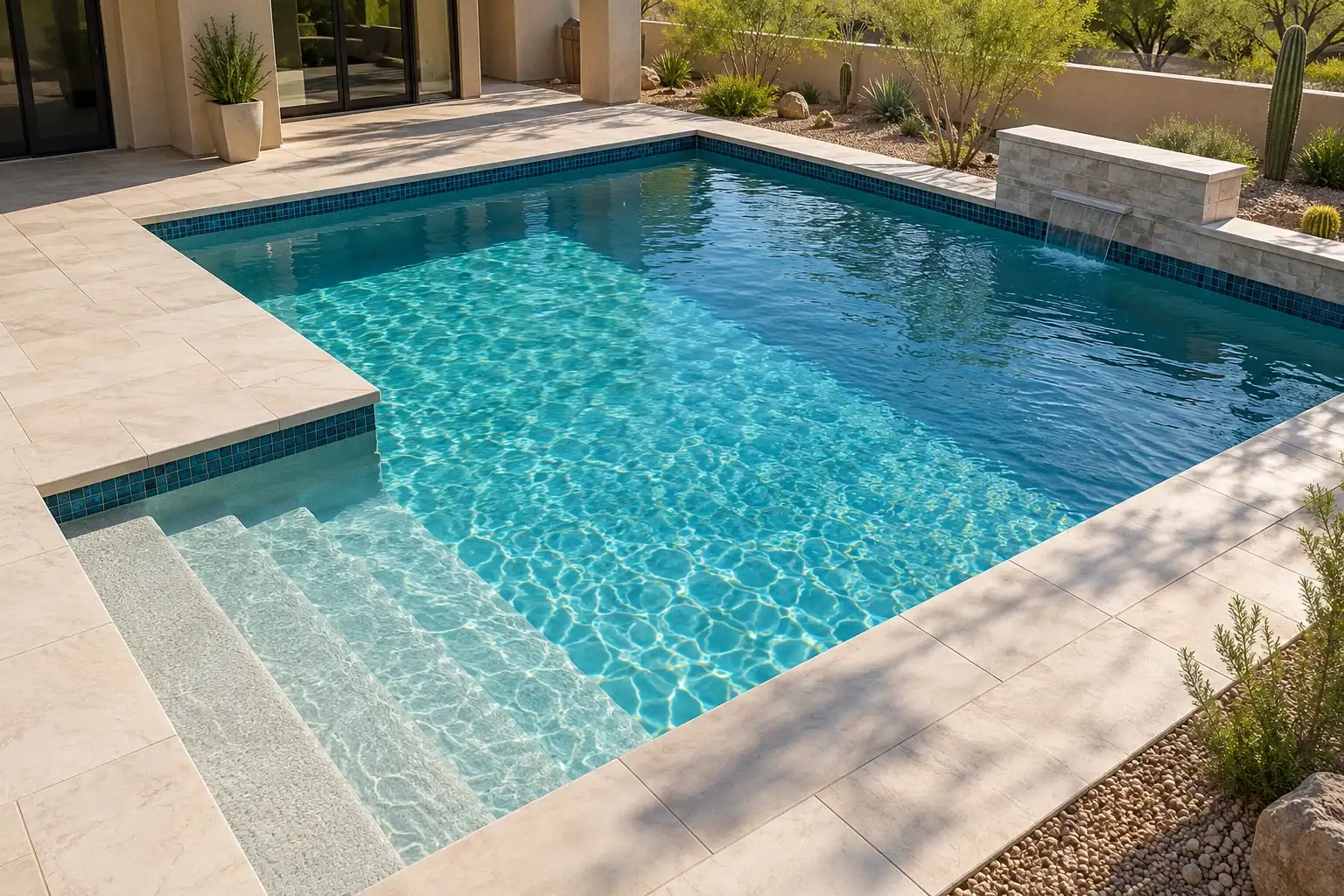
Plaster
Resurfacing vs replastering vs remodeling, and why the terms get mixed up
Homeowners often use these 3 words interchangeably.
- Replastering specifically means putting new plaster on the shell. It is one TYPE of resurface, not a separate category of work.
- Resurfacing is the broader term for replacing the interior finish, whether that finish ends up being plaster, quartz or a pebble style surface.
- Remodeling usually means resurfacing plus other changes, new tile, new coping, new steps or benches, sometimes a reshaped shallow end or added features.
If a quote says "replaster" but you were picturing a pebble finish, or a quote says "remodel" and you only wanted the surface redone, that mismatch is worth clearing up when the project is planned. See the full comparison page for a side by side look.
Tile and coping
Tile and coping: when they get added to a resurface
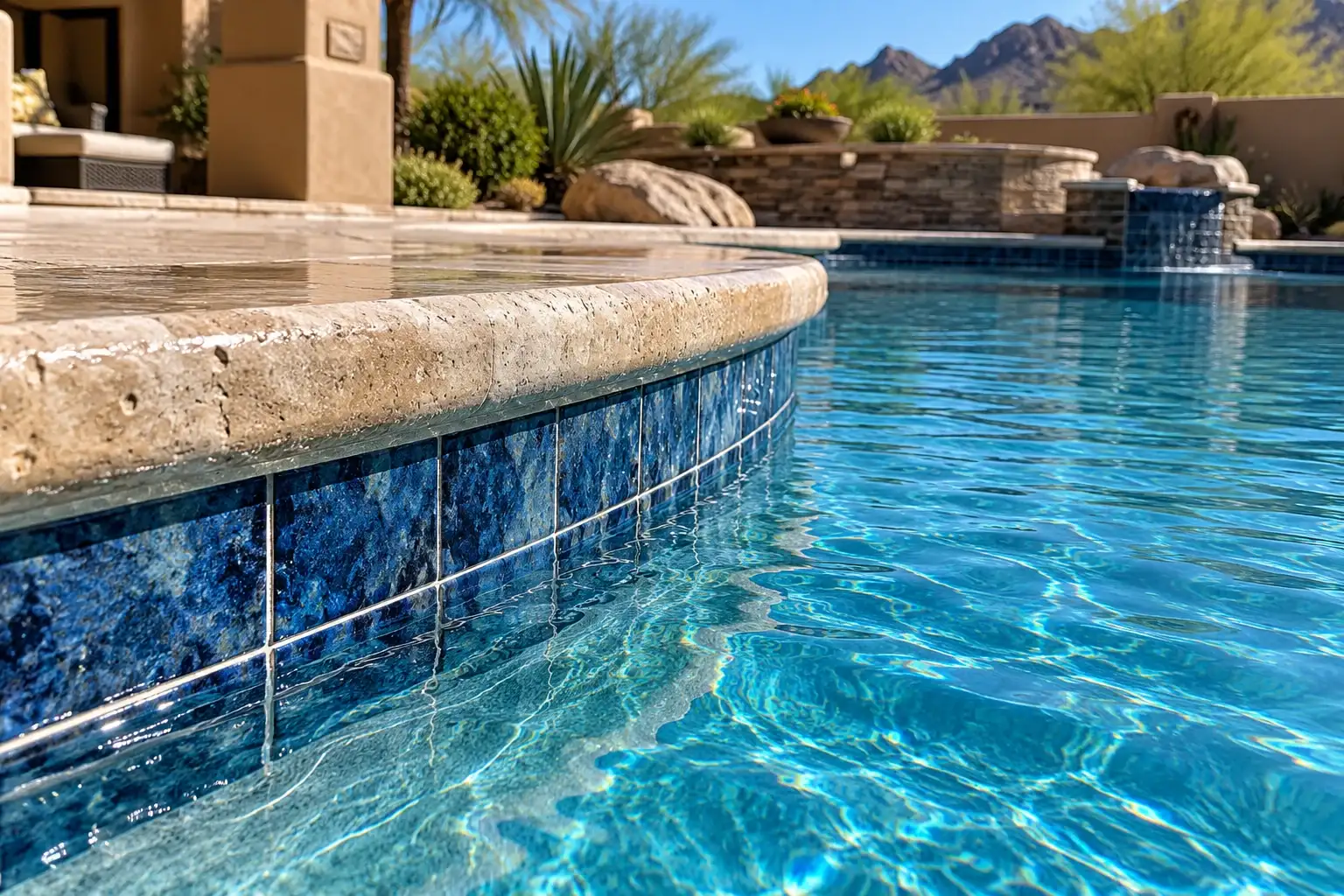
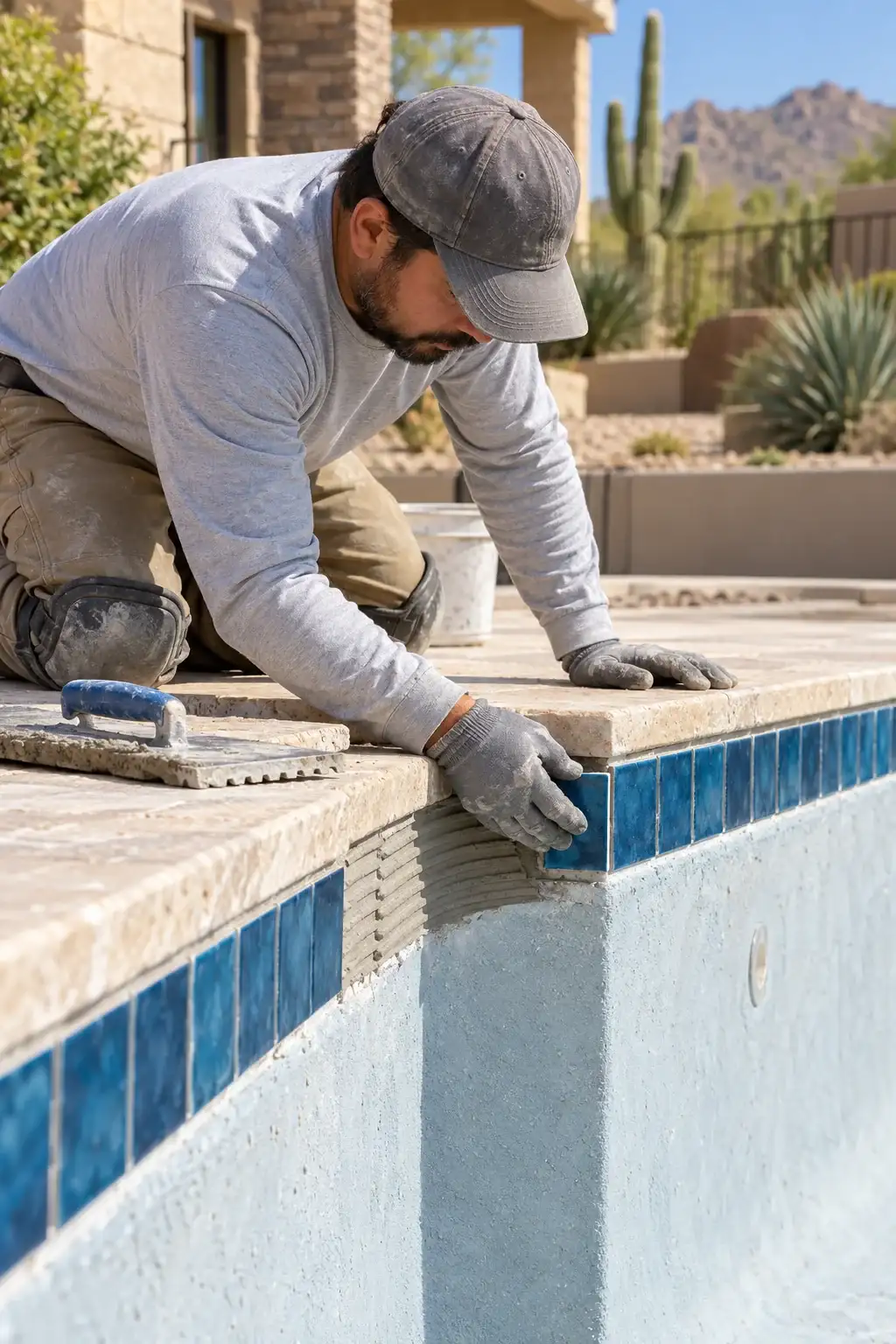
Waterline tile sits at the water's surface line and takes the brunt of scale buildup from hard water evaporating at the edge, which is why it often looks dated or stained well before the rest of the pool does. Coping is the material capping the edge of the shell where the deck meets the pool.
Both can be replaced on their own, without a full resurface, as a pool tile replacement job. They are also commonly bundled into a resurface since the pool is already drained and accessible, and a national 2026 cost guide notes that bundling add-ons with a resurface may save money. See pool remodeling for how that bundling typically works.
Rules
Permits and contractor registration
Arizona requires a contractor license for work of $1,000 or more in labor and materials, or for any job that needs a local building permit (A.R.S. 32-1121 (opens in a new tab)). Pool work sits under specific classifications covering commercial, residential and combined pool contracting, and a typical resurfacing job clears that $1,000 threshold by a wide margin.
Pebble finish
Plaster vs quartz vs pebble, side by side
| White plaster | Quartz finish | Pebble style finish | |
|---|---|---|---|
| Material cost (per sq ft, 2026 data) | About $4 | Usually between plaster and pebble | About $10 |
| Typical feel | Smooth | Smooth to lightly textured | Textured |
| Color range | Mostly white, limited tints | Wider range than plaster | Widest range, natural stone look |
| Typical lifespan (2026 data) | About 10 years, 5 to 10 on average | No published figure | 20 or more years |
None of these is the "right" answer for every pool. A rental property or a pool you plan to sell within a few years may not need the longest-lasting, highest-cost option. A pool you plan to keep for 15 years is a different calculation. Tell us your situation, and someone from our team will call you back to go over which finish fits it.
Good to know
How pool age and shell condition change the scope
A 5-year-old pool with a worn finish and a sound shell is a straightforward resurface: drain, chip out, inspect, prep, refinish, fill. An older pool, especially one built before the 1990s, can be more likely to need shell repair as part of the job: hairline cracks that have widened over the years, popped tile from shell movement, or rebar that has become exposed where the old finish wore through completely.
None of that is unusual. What it does mean is that 2 pools of the same size can land at very different prices once the shell is actually opened up, which is why the price is set in writing after an in-person look at the pool, not from square footage alone.
Signs
What a full chip-out adds to the project
A finish in good enough condition for a light prep (acid wash, minor patching, then new finish) costs less in labor than a full chip-out, where the entire old finish comes off down to bare shell before any new material goes on. A full chip-out can become necessary when the old finish has delaminated in multiple spots, when there is visible calcium buildup that will not come off with standard prep, or when the project is switching from one finish type to a very different one (plaster to a pebble style finish, for example).
Expect a chip-out scope to add both time and labor cost compared to a same-finish refresh. The calculator includes a chip-out toggle so you can see roughly how much that step moves your estimate before you ever get a quote.
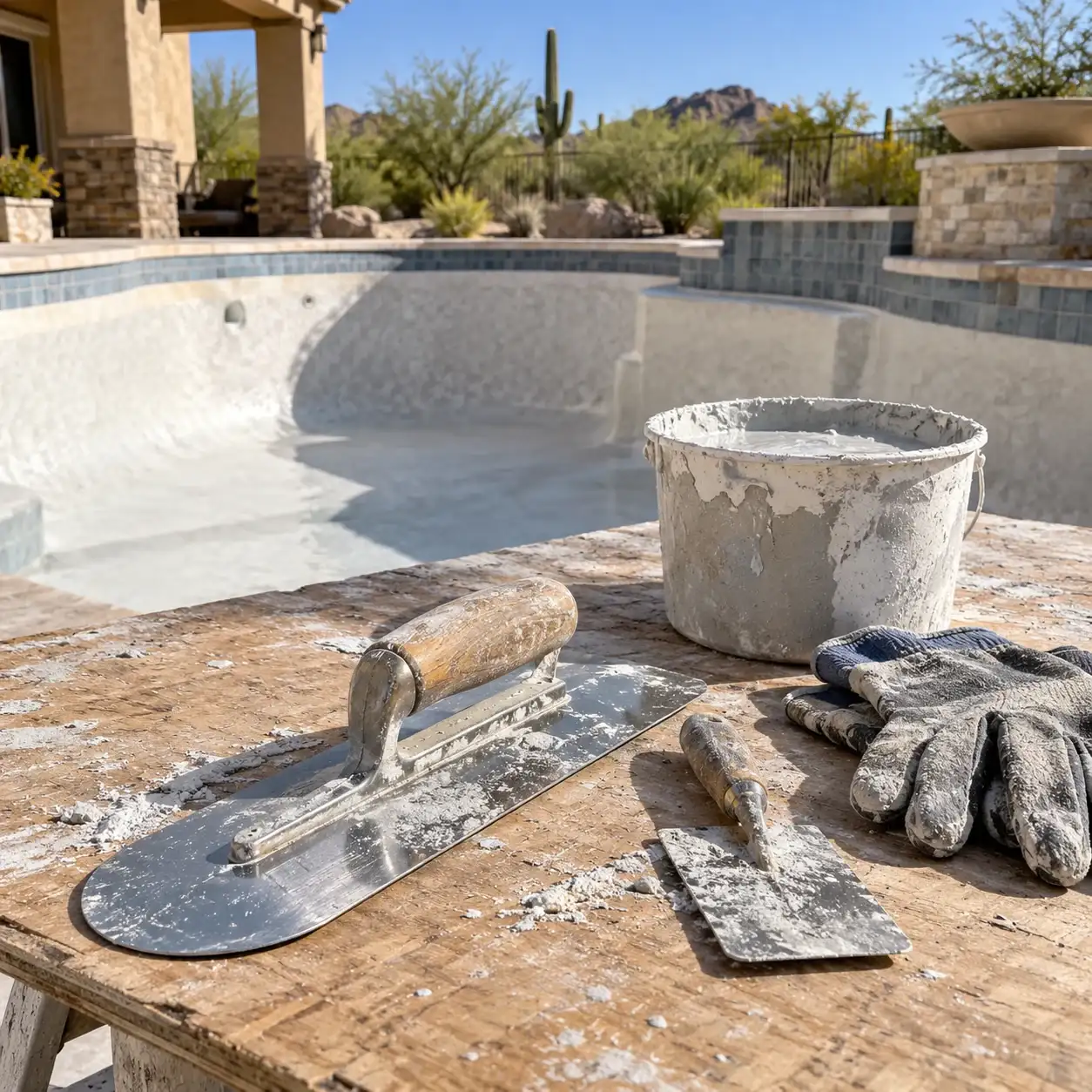
Tile and coping
Waterline tile wear: the tell that shows up before the rest of the pool
Waterline tile sits exactly where hard, mineral-heavy water evaporates day after day, leaving behind calcium deposits that can build up faster there than elsewhere in the pool. That is why tile often looks chalky, discolored or crusted with scale years before the plaster or pebble surface around it shows comparable wear.
If your tile looks far worse than the rest of your pool, that is not necessarily a sign the whole interior needs replacing yet. It may mean a tile-only job, covered on the tile replacement page, makes more sense than a full resurface right now.
Arizona water and sun
Water chemistry after the fill: why the first weeks matter
Early finish problems often trace back to what happened during the first several weeks after the pool was filled. New plaster, quartz and pebble finishes all need a specific chemistry startup and a regular brushing schedule while the surface cures, and skipping that step can lead to staining or an uneven finish on a brand new surface.
A startup that is handled as part of the job, with the brushing schedule explained, is the part of the work that protects the investment you just made.
Costs
Things worth thinking through before you request a quote
- What finish fits how you actually use the pool. A family that swims daily puts different wear on a surface than a pool used mainly for looks and the occasional dip.
- Whether tile or coping also need attention, since bundling them into the resurface is often more efficient than doing them separately later.
- Your realistic timeline. A resurface booked in late spring can compete for scheduling with everyone else trying to get their pool ready for summer, which is covered in more detail on the best time to resurface page.
- Your budget range, including the possibility that a shell inspection reveals more repair work than expected once the pool is drained.
6 questions
Questions people ask
Still have a question? Call (747) 243-2089 and say what your pool is doing.
How much does pool resurfacing cost in Scottsdale?
Most homeowners pay $6,000 to $15,000 according to a national 2026 cost guide, with the national average at $11,000. Pool size, finish and location drive most of the spread within that range.
What is the cheapest pool finish?
Plain white plaster has the lowest upfront cost of the 3 common finishes, roughly $4 per square foot in material. A national 2026 cost guide gives plaster about 10 years and aggregate finishes such as pebbles 20 or more, so plaster can cost more over time.
How often does a pool need to be resurfaced in Arizona?
About every 10 years for a concrete pool, according to published 2026 cost data for the Phoenix metro. A national 2026 cost guide puts a good plaster finish at 5 to 10 years on average and aggregate finishes such as pebbles at 20 or more years, and how well the water chemistry is kept matters too. See the full breakdown for the finish by finish timeline.
Can I resurface without replacing the tile?
Yes. If the existing tile is in good shape, a finish-only resurface is faster and less expensive than bundling in new tile and coping. The tile gets looked at during the initial inspection, and it can be replaced now or left for later.
Do I need a permit to resurface my pool?
Some resurfacing scopes require a permit, depending on the city and what work is included. We go over that with you once the scope is set.
Is now a good time to resurface, or should I wait?
See the best time of year to resurface a pool in Scottsdale for how scheduling around swim season and contractor availability typically plays out.