Blog · October 30, 2026 · 5 min read
Quartz vs Pebble Pool Finish in Scottsdale, AZ
Quartz and pebble finishes are both upgrades over plain plaster, and both fail when they are mixed or cured badly. In Scottsdale, the real difference comes down to texture, hardness, and how each one handles hard water and sun.
Good to know
The short answer
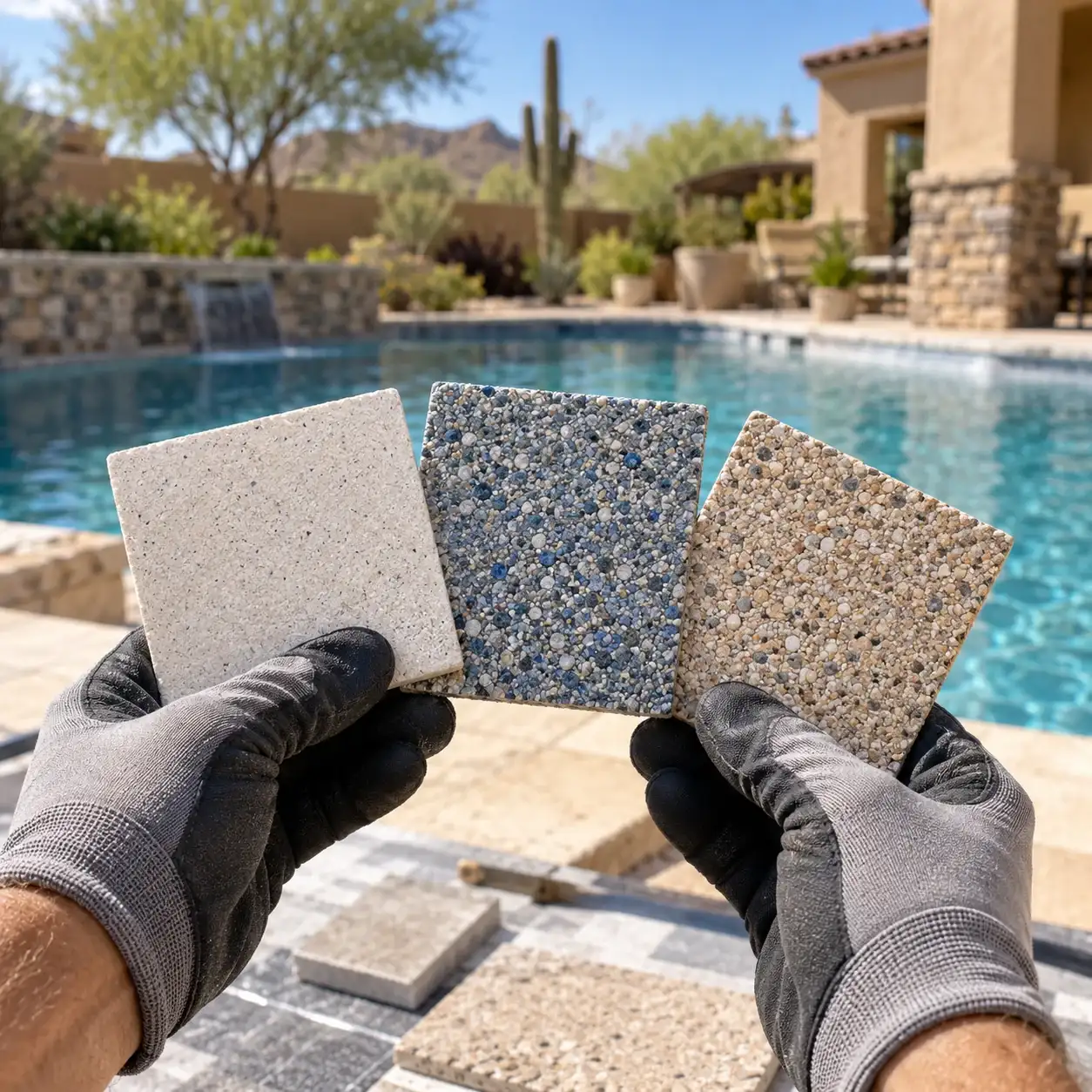
Pebble is the tougher surface: real stone pebbles embedded in cement and exposed, so the material that touches the water is rock, not paste. Quartz sits between plain plaster and pebble: colored quartz aggregate mixed into plaster, smoother underfoot, brighter in the water, and priced in the middle. In Scottsdale, both get beaten on by hard water and heavy sun, and both mottle when the mixing is sloppy or the fill happens early. The right call depends on the shell, the water chemistry, and how much texture your family will accept under bare feet.
Quartz finish
Quartz pool finish: what it actually is
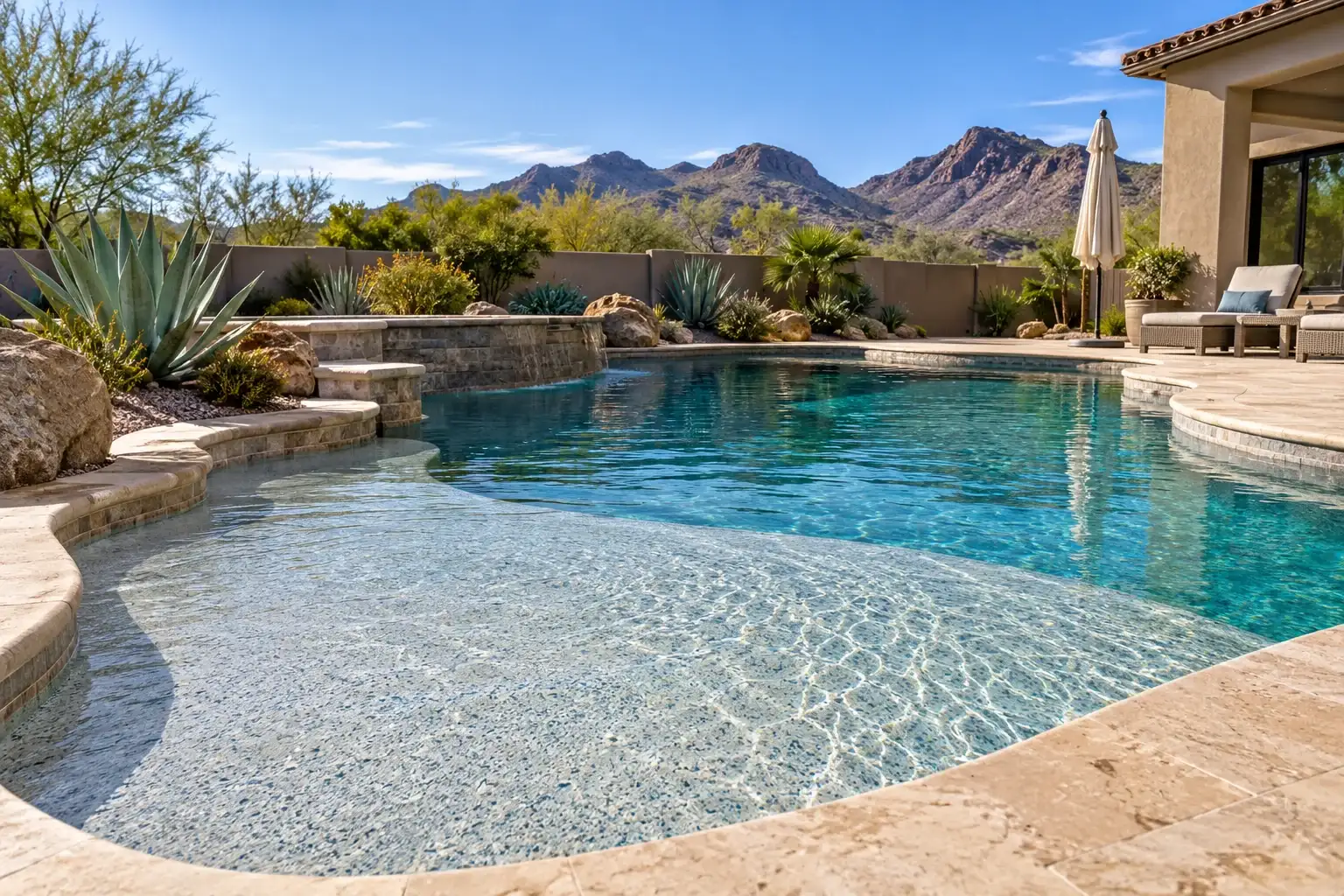
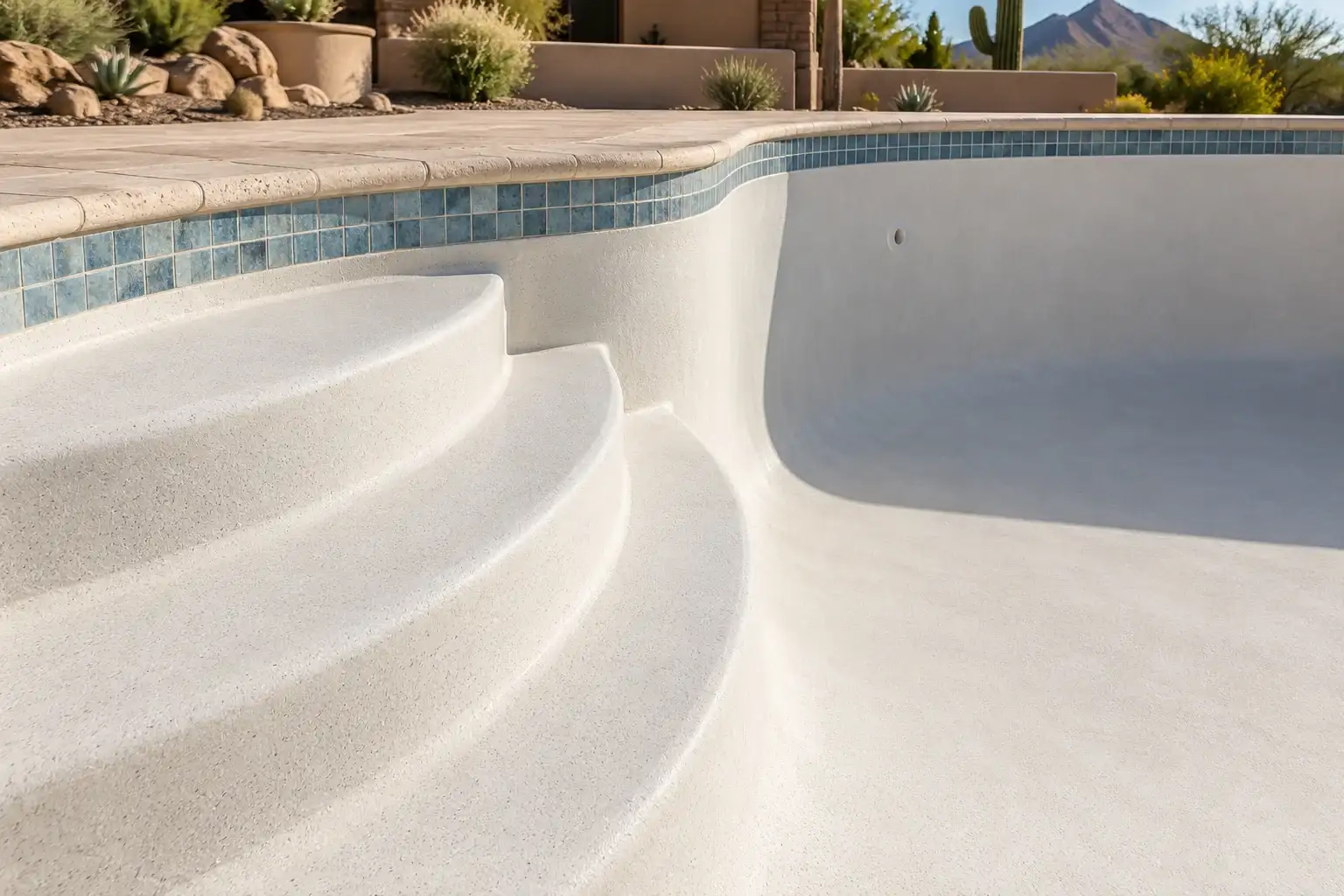
A quartz finish is plaster with a second aggregate mixed in. White portland cement and water get colored quartz crystals added to them, and the blend goes on with a trowel over the prepared shell. After the material sets, the top film of cement gets washed off so the quartz shows. That exposed quartz is the point. It is harder than the cement paste around it, so the surface etches and stains less than plain plaster while staying smoother than pebble.
The color in a quartz finish comes from the aggregate, not from a dye sitting on top. That is why a good quartz pool keeps its color as the surface wears. It is still a cement based surface, though. The paste between the quartz grains reacts to water chemistry the same way plaster does, just slower. In Scottsdale's hard water, that means scale still forms, and it still has to be brushed off or the surface gets crusty.
Pebble finish
Pebble pool finish: what it actually is
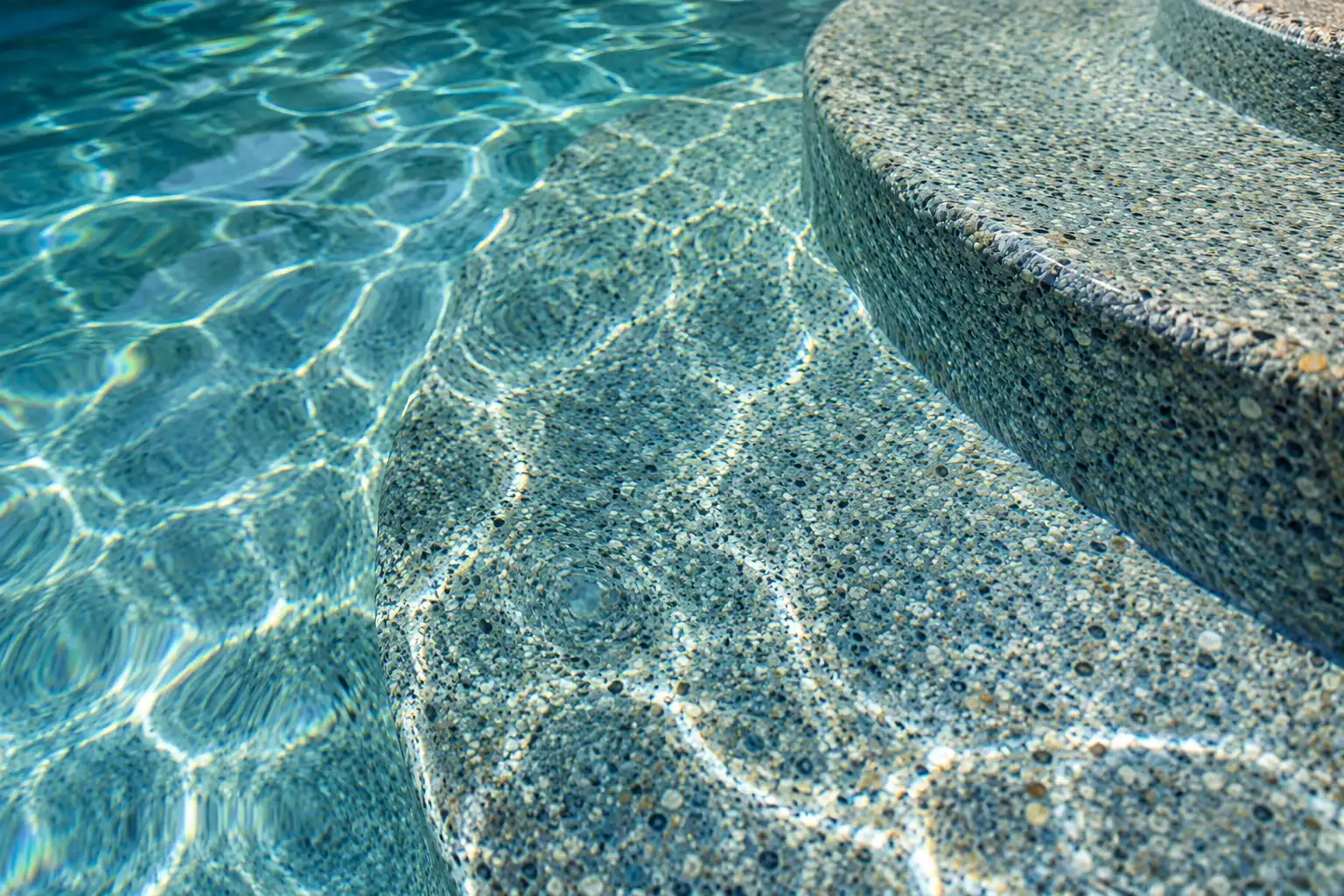
A pebble finish works the same way with bigger stones. Small river pebbles, graded for size, get mixed into the cement and troweled onto the shell. Then the surface gets washed or buffed to expose the pebbles, and what is left is a layer of stone held in cement, with the texture of a creek bed rather than a wall.
That texture is the trade. Pebble hides small imperfections in the shell, shrugs off stains that would sink into plaster, and outlasts almost every other interior material. It is the finish you see on the high-end Scottsdale builds, the DC Ranch and Silverleaf pools with dark water and stone decking. It is also rough. Kids who spend the summer on the steps get scuffed knees, and the texture holds a hard water scale line that has to be scrubbed, not wiped.
Signs
Where quartz fails here
Quartz fails in Scottsdale the same way every cement finish fails, just later. Hard water scale settles into the surface where the paste sits proud of the quartz, and once it crusts, brushing moves it but does not always remove it. Sun is the slower killer. A dark quartz mix on a west-facing Scottsdale pool absorbs a full afternoon of heat, and the hotter the surface runs, the more aggressive the chemistry gets at the waterline.
The bigger risk is workmanship. Quartz mottles when the mix is inconsistent from batch to batch, and mottling on a big pool shows. A pool in Gainey Ranch or McCormick Ranch is a lot of surface area to pour in one day. When the crew stretches the window, or fills the pool before the finish has cured, you get cloudy patches that no water chemistry will fix. It is the same failure as pebble, on a surface that shows it more politely.
Signs
Where pebble fails here
Pebble mottles too, and when it does, it is permanent. Inconsistent mixing from batch to batch, or a fill that happens too early, leaves streaks and clouds that sit there for the life of the finish. On a large Scottsdale pool, where the pour takes all day, that is a real risk, not an edge case.
Hard water is pebble's second problem. Scale climbs into the texture between the stones and sets up like grout. On a pool filled with Scottsdale tap water, the waterline band on a pebble finish needs regular scrubbing, and the rough surface gives the scale something to hold. Feet are the third problem. Some people love the texture, and some kids come out of the pool with raw toes, and neither side is wrong. Then there is movement. Where expansive clay under the yard swells and shrinks, a rigid pebble surface cracks at the stress lines instead of flexing with the shell.
Costs
What it costs and what drives the number
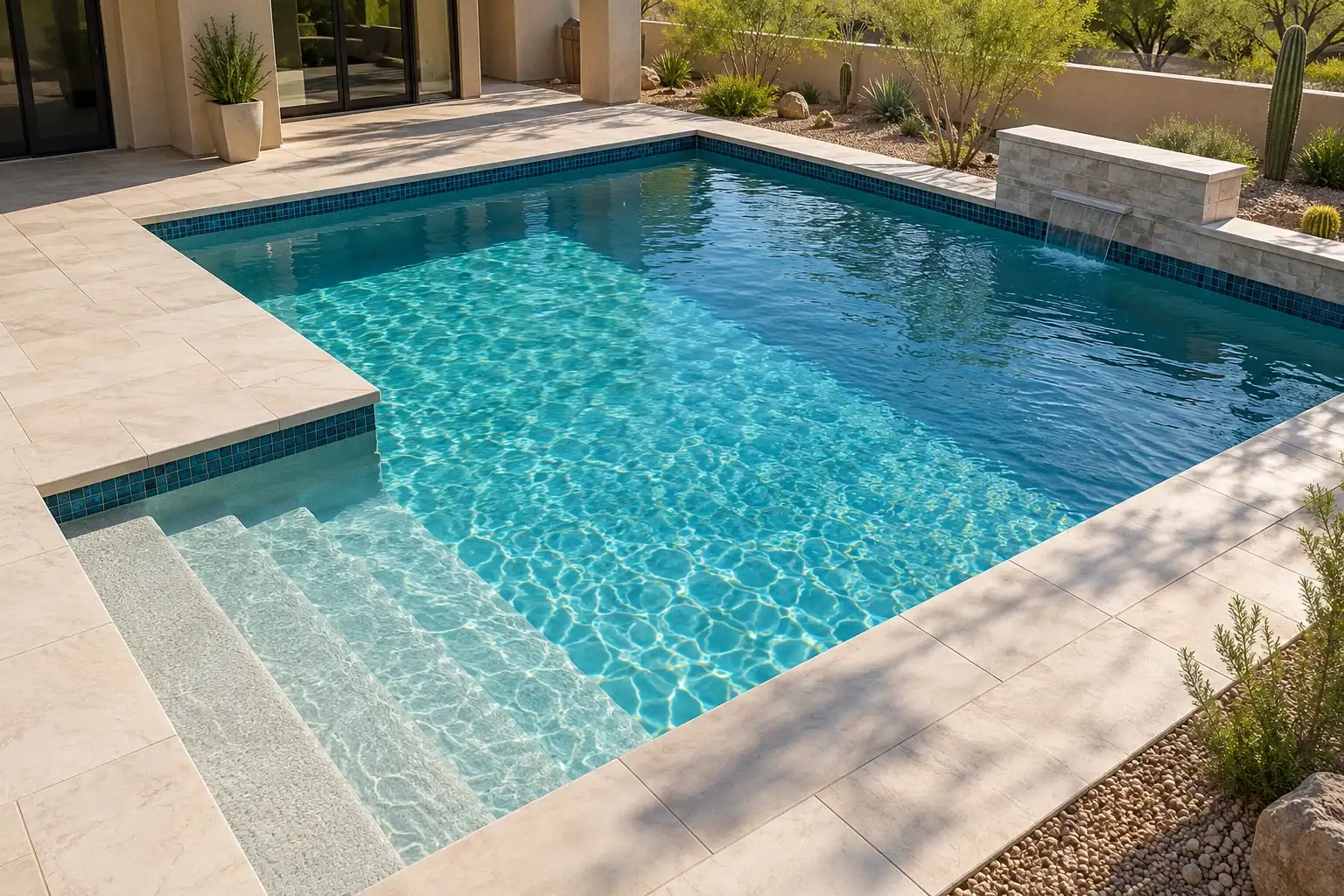
Pebble costs more than quartz, and quartz costs more than plain plaster, and the spread between them varies with the pool. Aggregate type drives the material cost, but surface area drives the job. A Scottsdale pool is large, so the gap between finishes gets multiplied across every square foot of wall and floor. Prep matters too. A full chip out costs more than a wash and key regardless of finish, and skipping it shortens the life of either one. Tile and coping ride on top of the same bill.
The honest way to read a bid is as a package, not a per-foot number. The cost calculator stacks the same drivers up in order, and the home page links the guides that explain each one.
Good to know
What good work looks like in Scottsdale
- Checking the shell before anyone talks aggregate. A pebble finish over a shell with hollow spots is an expensive way to buy a crack.
- Holding the mix to one batch spec and the pour to one day, because mottling is a mixing problem, not a mystery.
- Scheduling the fill around the cure and around Scottsdale's water use rules, never around the crew's next job.
- Showing you a pool with the finish you are choosing before the pour, because texture is a decision your feet make, not your eyes.
6 questions
Quartz vs Pebble Pool Finish: your questions
Still have a question? Call (747) 243-2089 and say what your pool is doing.
Is pebble better than quartz?
For wear, yes. For comfort, usually no. Pebble shrugs off stains and outlasts quartz, while quartz is smoother and easier on feet. Which one is better depends on who swims in the pool.
Which finish is smoothest?
Quartz is the smoother of the two, and plain plaster is smoother still. Pebble is the most textured common finish. If the feel of the floor matters more than anything, see pebble vs plaster before you decide.
Which one handles Scottsdale hard water better?
Both scale, because both are cement based. Quartz scale sits on a smoother surface and brushes off easier. Pebble gives the scale a place to grip, so it needs more scrubbing.
Do pebble finishes hurt your feet?
The texture is real, and kids doing laps on the steps feel it. Some families love it, and some switch to quartz for that reason alone. Feel one in person before you commit.
How much more does pebble cost than quartz?
It varies with the pool and the aggregate, but pebble is the higher-priced finish of the two. The cost calculator shows how the finish choice moves the number.
Can you fix a mottled finish?
Not really. Mottling comes from the mix and the cure, and it is in the material, not on it. The fix is doing the pour over, which is why it pays to hold the crew to one batch and one day.