Blog · October 30, 2026 · 5 min read
Salt Water vs Chlorine in Scottsdale, AZ
A salt pool is still a chlorine pool: the cell makes the chlorine on site. In Scottsdale, the real question is whether the cell survives hard water and keeps up with summer demand.
Good to know
The short answer
Both systems run the pool on chlorine. A salt system manufactures it from dissolved salt by electrolysis, so you add salt instead of chemicals, and the water feels softer to some swimmers. A conventional setup adds chlorine directly, usually as tablets, and costs less up front. In Scottsdale, hard water scales the salt cell, and summer heat burns through whatever chlorine either system makes. Neither one is set and forget. The right call depends on the pool size, the fill water, and how much of the chemistry you want to handle yourself.
Good to know
Salt system: what it actually is
A salt pool runs the same sanitizer as a chlorine pool. The difference is the delivery. Salt dissolves into the water at a fraction of ocean strength, and the water passes through a cell plumbed into the return line. Electricity through the cell's plates splits the salt, and the result is chlorine in the water, continuously, made at the source. That is the whole trick.
The cell is the part that wears. The plates collect scale over time, especially in hard water. When the plates crust over, the cell stops making chlorine, and the pool goes green while the owner blames the salt. Cells also die of old age, and a replacement is a real line item every few years. The soft-water feel is real for some swimmers, but it is not the reason to choose the system. The reason is convenience: the chlorine makes itself while the pump runs.
Sizing is the quiet half of the decision. A cell is rated for a pool size, and the rating assumes an average summer, which Scottsdale does not have. A big pool in a full-sun yard asks more of a cell than the spec sheet promises, and the owner only learns this in August, when the water clouds and the pool store blames the salt. On a large Scottsdale pool, the cell should be sized for the season, not for the pool, and the pump run time has to follow it.
Good to know
Chlorine system: what it actually is
A conventional setup puts chlorine into the water from outside. Tablets, usually trichlor, sit in a floater or a feeder and dissolve slowly, adding chlorine plus stabilizer plus acid with every tablet. Liquid chlorine goes straight in and adds nothing but chlorine and a little salt.
The chemistry load is the trade. Tablets change the pH and alkalinity and raise the stabilizer level over time, and a Scottsdale pool that runs tablets all summer often needs a partial drain just to reset the numbers. Liquid chlorine is cleaner chemistry but needs more frequent adds, and it degrades sitting in a hot Arizona garage, so it has to be bought fresh and stored out of the heat. A pool is a chemistry machine either way. The question is who does the dosing.
Signs
Where salt fails here
Hard water is the salt system's weak point in Scottsdale, because the cell is where scale loves to grow. Calcium from the fill water deposits on the plates, output drops, and the fix is an acid clean or a new cell, both more frequent here than the manual assumes. The second failure is heat. Chlorine demand in July and August is brutal, and a cell sized for a normal pool runs flat out all summer in a big Scottsdale pool, then dies young. The third is drift. A cell pushes pH upward while it runs, and nobody notices until the water clouds and the tile scales.
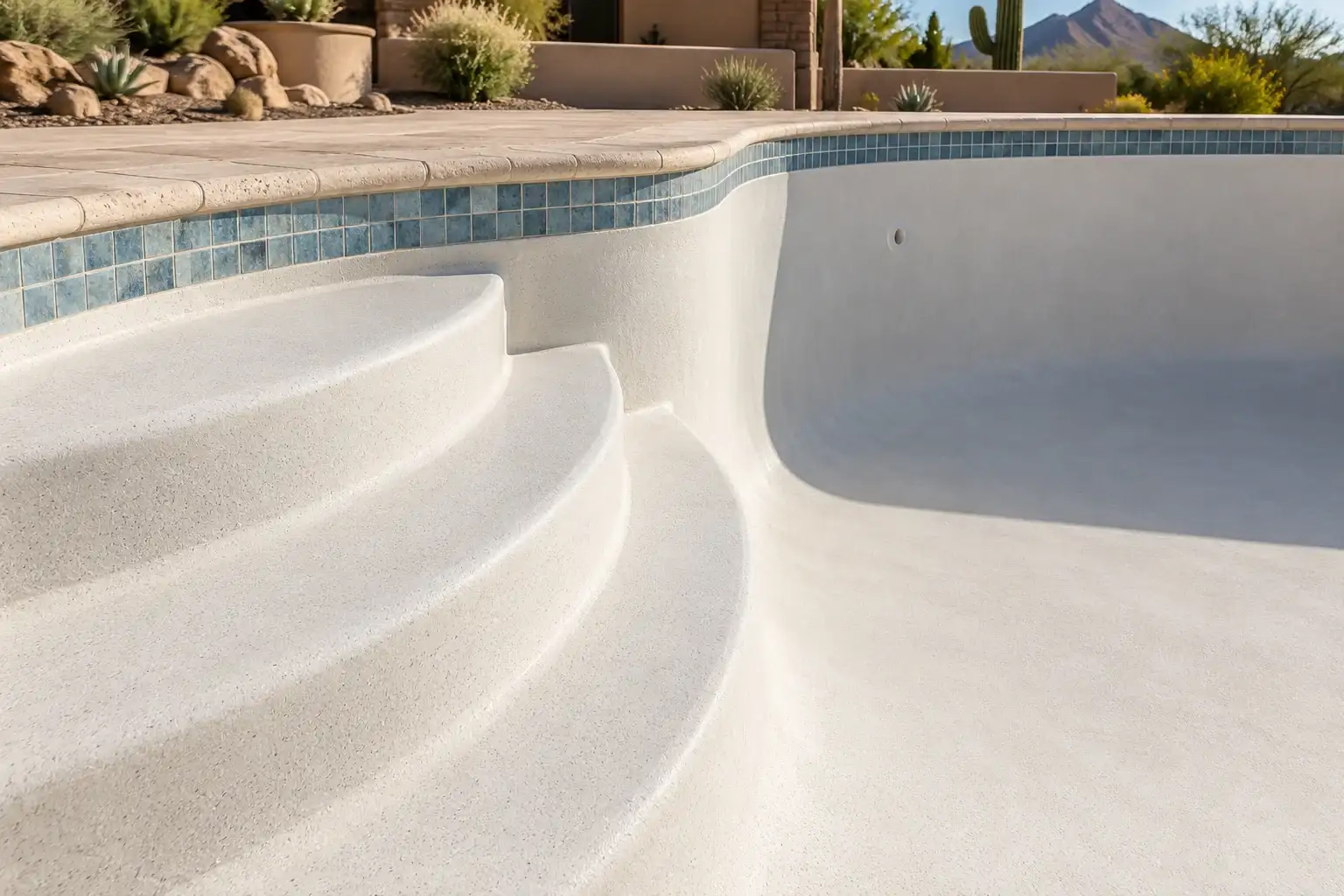
There is also the finish angle. A salt pool that runs high pH and high calcium puts scale on a fresh resurfacing job before its first summer is over. The system is not the problem. The neglect is. On a pool this size, in water this hard, neglect costs real money.
The pattern is predictable: a cell installed in March runs fine until the heat arrives, and the first August algae bloom is the bill.
Signs
Where chlorine fails here
Tablets and heat fight each other. Stabilizer climbs all summer because the tablets never stop adding it, and over-stabilized chlorine stops doing its job even when the test reads fine. Monsoon dust and debris dump a load into the water after every storm, and the chlorine gets spent fast. A pool that was clear in June goes cloudy after the first July blow.
Storage is the other Scottsdale problem. Liquid chlorine loses strength on a hot garage shelf, so the jug you bought in May is not the jug you pour in August. And the chlorine smell people complain about is not chlorine. It is combined chlorine, spent sanitizer hanging around after it did its job, which means the water wants more active chlorine, not less. These are all solvable problems. They are also weekly problems, and they do not take the summer off.
Costs
What it costs and what drives the number
Salt costs more up front: the cell, the controller, the salt, and the wiring. Tablets and liquid cost less to start and keep costing every month. The cell replacement every few years is the number nobody puts in the first quote, and in Scottsdale's hard water that replacement comes around sooner than the brochure suggests. The other driver is the pool itself. A big Scottsdale pool needs a bigger cell and a longer pump run, and both show up on the power bill.
If the pool is getting resurfaced, the chemistry decision matters double, because a new finish wants balanced water through its first cure and its first summer. The cost calculator covers the finish side, and the home page links the guides that explain the rest.
Good to know
What good work looks like in Scottsdale
- Sizing the system to the pool and the season. A cell that is big enough in March is not big enough in July.
- Testing the fill water before anything gets recommended. Scottsdale water is hard, and the cell is the part that pays for it.
- Setting the run schedule around heat and use, because a salt system only makes chlorine while the pump runs.
- Walking you through the weekly test routine either way. Neither system replaces the test kit.
6 questions
Salt Water vs Chlorine: your questions
Still have a question? Call (747) 243-2089 and say what your pool is doing.
Is a salt pool chlorine free?
No. The salt cell makes chlorine from the salt. The difference is how the chlorine gets into the water, not whether it is there.
Does salt water ruin plaster?
Unbalanced water hurts plaster no matter how the chlorine got there. Salt pools tend to run high pH, and the scale that follows is the real risk to any finish, new or old.
Which costs less to run?
It varies with pool size and use. Salt costs more up front and carries a cell replacement every few years. Tablets cost every month. The honest answer needs the pool's numbers, not a brochure.
Why does my salt cell keep scaling?
Because the fill water is hard. Calcium deposits on the plates, output drops, and the cell needs cleaning or replacement more often here than the manual assumes. See how that compares to plain plaster problems in pebble vs plaster, because the water is the common thread.
Can I switch from chlorine to salt?
Usually, if the plumbing and equipment allow it. The old feeder comes out, the cell goes into the return line, and salt goes into the water. The question is whether the pool and the power setup are ready for it.
Does a salt system work in summer heat?
Sized right, yes. The cell runs harder through July and August, which is exactly when undersized systems give up. That is why the season, not the square footage, should size the cell.