Blog · November 7, 2026 · 6 min read
Adding a Tanning Ledge or Bench During a Resurface: What Is Possible in an Existing Pool
Yes, a tanning ledge or a bench can usually be added to an existing Scottsdale pool during a resurface, if the pool has a gunite shell. On a vinyl liner or a one-piece fiberglass pool it generally cannot be done, because the shape is the product and there is no shell to build into. Call (747) 243-2089 or tell us the pool type and what you want the shallow end to do, and we call you back to go through what the shell will take.
Good to know
What a shelf actually is, structurally
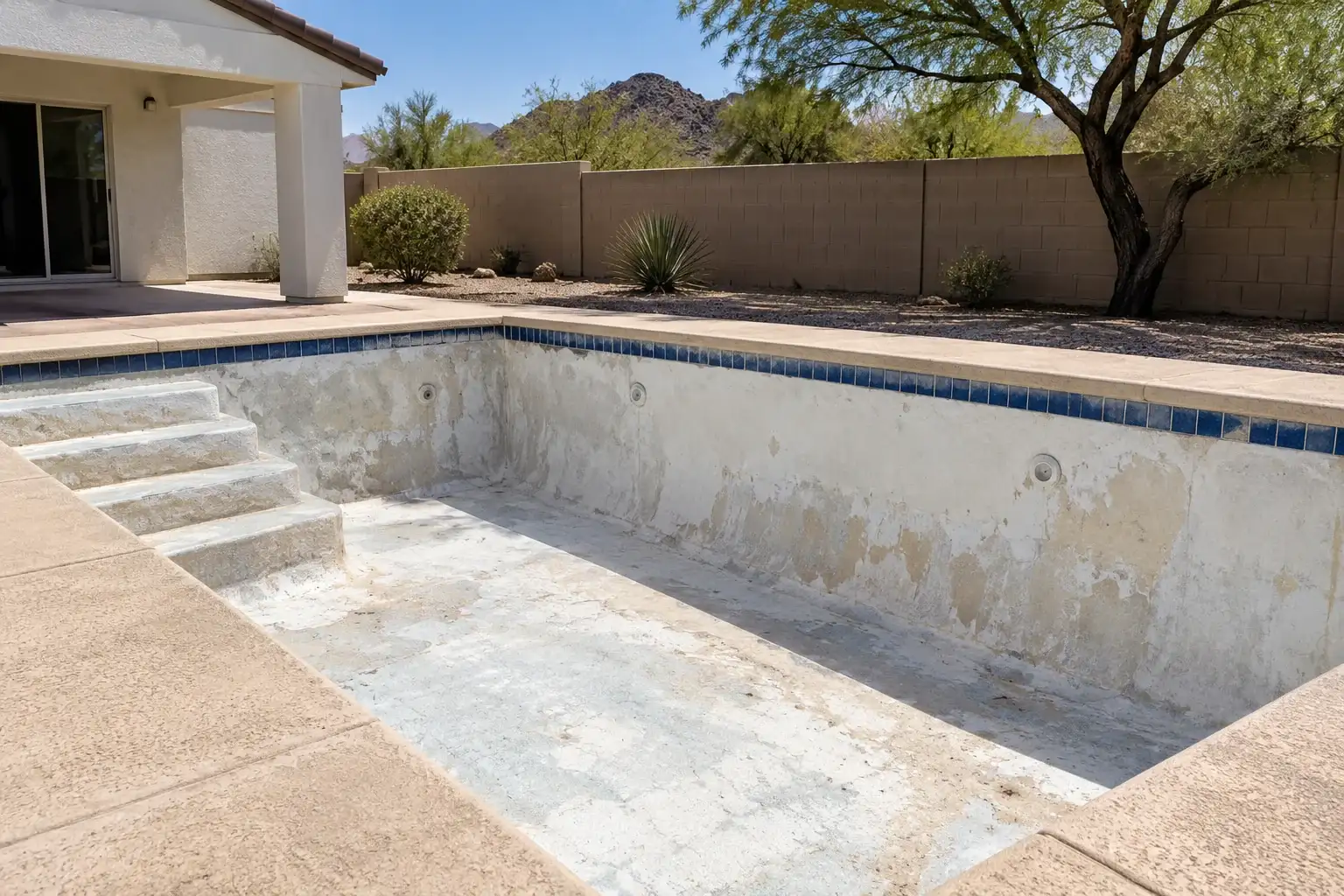
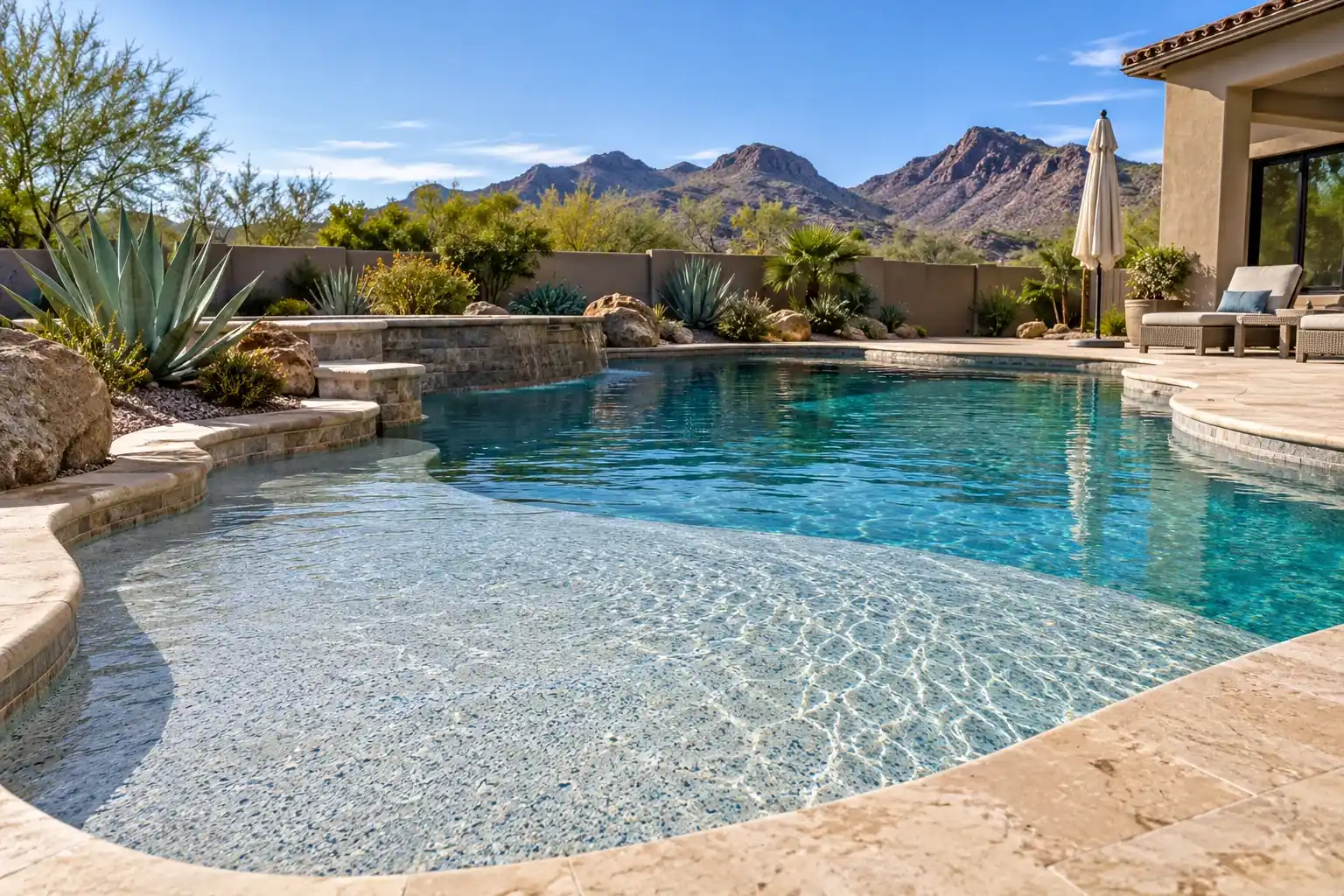
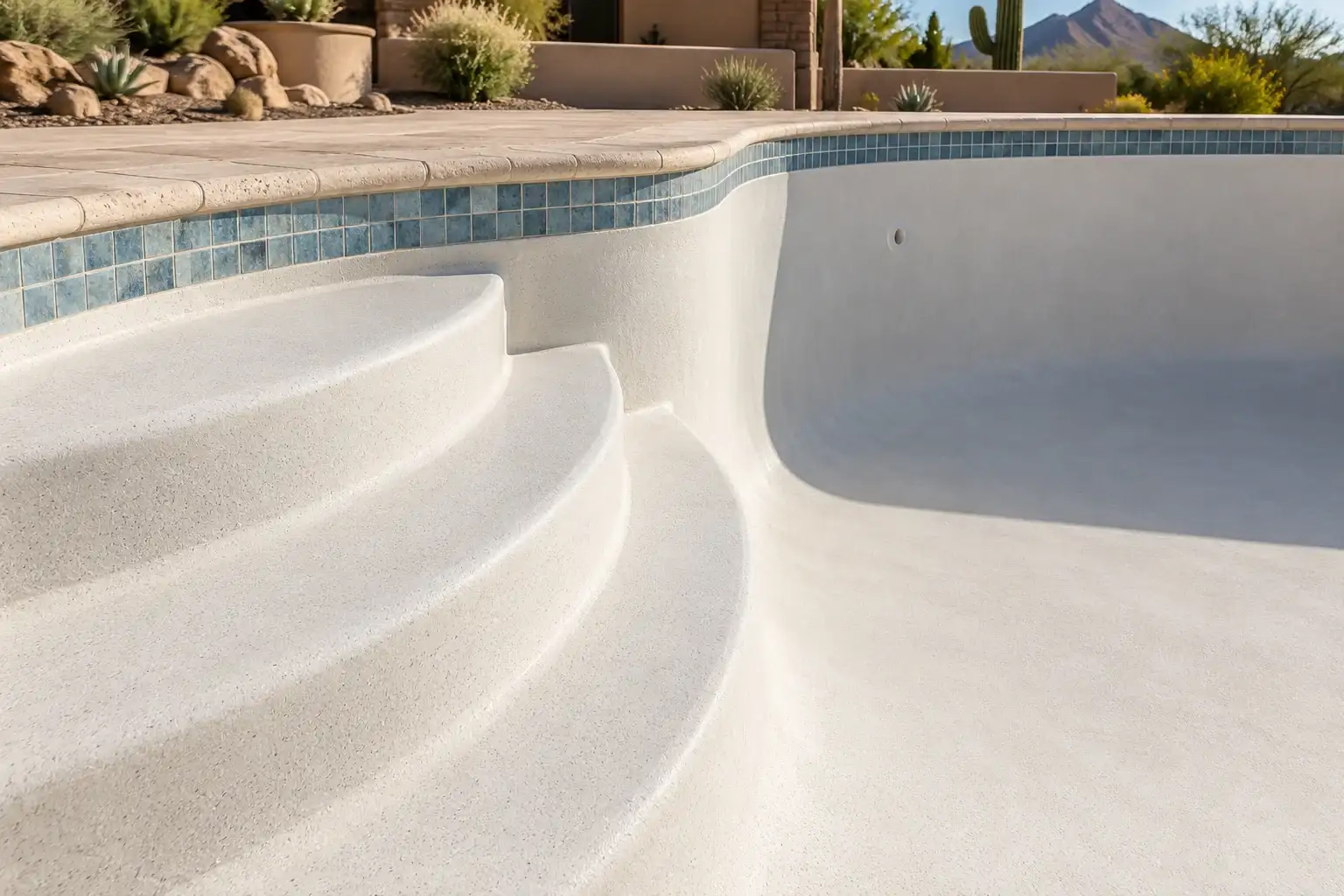
A tanning shelf is not a liner laid over a slope. It is new concrete built into the shell and finished with the same surface as the rest of the pool, which is why the question splits so cleanly by pool type. A tanning shelf is a large shallow area, usually located near the steps, where the water sits a few inches deep (AQUA Magazine). On a new build the shelf is part of the original shell pour. On an existing gunite pool it is added during a resurface, when the pool is already drained, the old finish is off and the shell is exposed.
That timing is what makes it practical. A shelf added to a full pool means draining, cutting into a finished surface and rebuilding around it. A shelf added during a resurface is one more step in a job that was already going to happen, and the finish covers everything at the end.
Compare
Which pools can take one and which cannot
The shell decides, before the budget does. A gunite or shotcrete pool is a concrete structure that can be cut into, keyed and rebuilt, so a shelf or a bench is a normal part of a remodel. A vinyl liner pool has a steel or polymer wall and a liner held by the shape, so there is nothing to build into without changing the shape of the pool itself. A one-piece fiberglass shell is molded, and the shape is what came out of the factory.
| Pool type | Can a shelf or bench be added | What it takes |
|---|---|---|
| Gunite or shotcrete | Yes, during a resurface | New concrete keyed into the shell, then the new finish |
| Vinyl liner | Generally no | The liner follows the wall shape, so the shape has to change |
| One-piece fiberglass | Generally no | The shell is molded and cannot be extended |
| Gunite with a raised spa | Yes, and the spa plumbing is already there to work from | Coordination with the spa and the return layout |
A bench is the smaller version of the same question. A bench in the deep end or along a wall is less concrete and less disruption than a full shelf, and it delivers most of what people actually want, which is somewhere to sit in the water rather than somewhere to lie in it.
Arizona water and sun
Depth and size: what the shallow water decides
The depth is a comfort number and a chemistry number at the same time. Too deep and it is a wading area nobody sits in. Too shallow and the water heats fast and the finish shows every speck. The useful range is the one that puts an adult's legs in the water while they sit on the shelf, with the water a few inches deep over the surface itself, which is also the range where a bubbler works, since bubblers only function in a few inches of water (AQUA Magazine).
Size follows use. A shelf sized for two loungers is a different footprint from one sized for small children to stand on, and the difference matters on a small Scottsdale pool where swim lane is already tight. The shape of the shelf, its footprint and its finish change how the pool gets used and how it is maintained, not only how it looks.
Arizona water and sun
Where the water has to move
A shelf adds shallow volume at an end of the pool that can have the least circulation, which is a condition algae can take advantage of. Warm, still, sunlit water a few inches deep is a place where growth can start, and Scottsdale water at 13 to 17 grains per gallon can leave a mineral line on it.
That makes the return layout part of the design rather than an afterthought. A shelf with a return or a bubbler moving water across it is easier to keep clear. A shelf built into a dead corner collects leaves and grows a film at the waterline. This is the part of the job that gets decided on site, because it depends on where the existing returns sit and whether the spa can be used as a second circuit.
Good to know
What it adds to the schedule
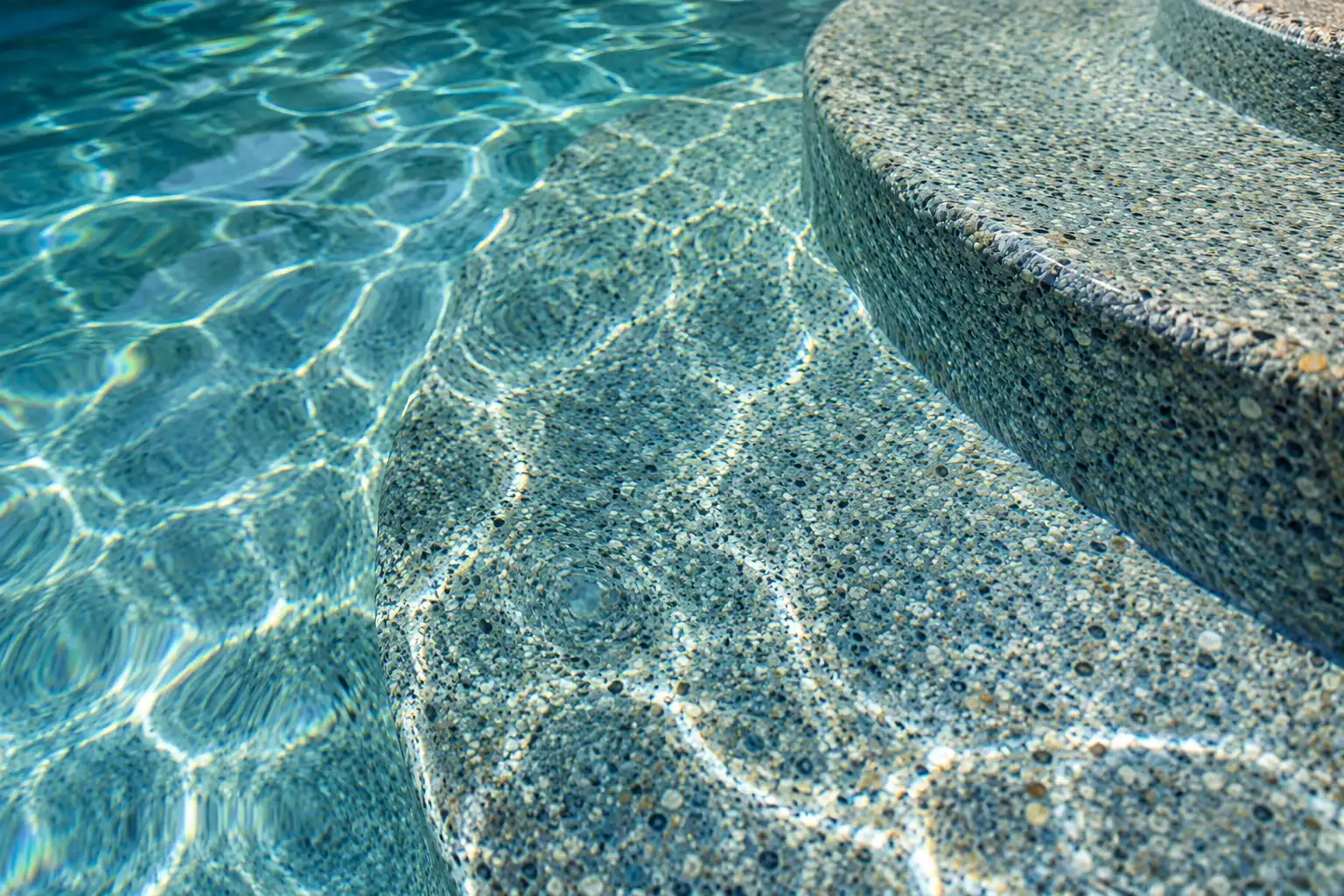
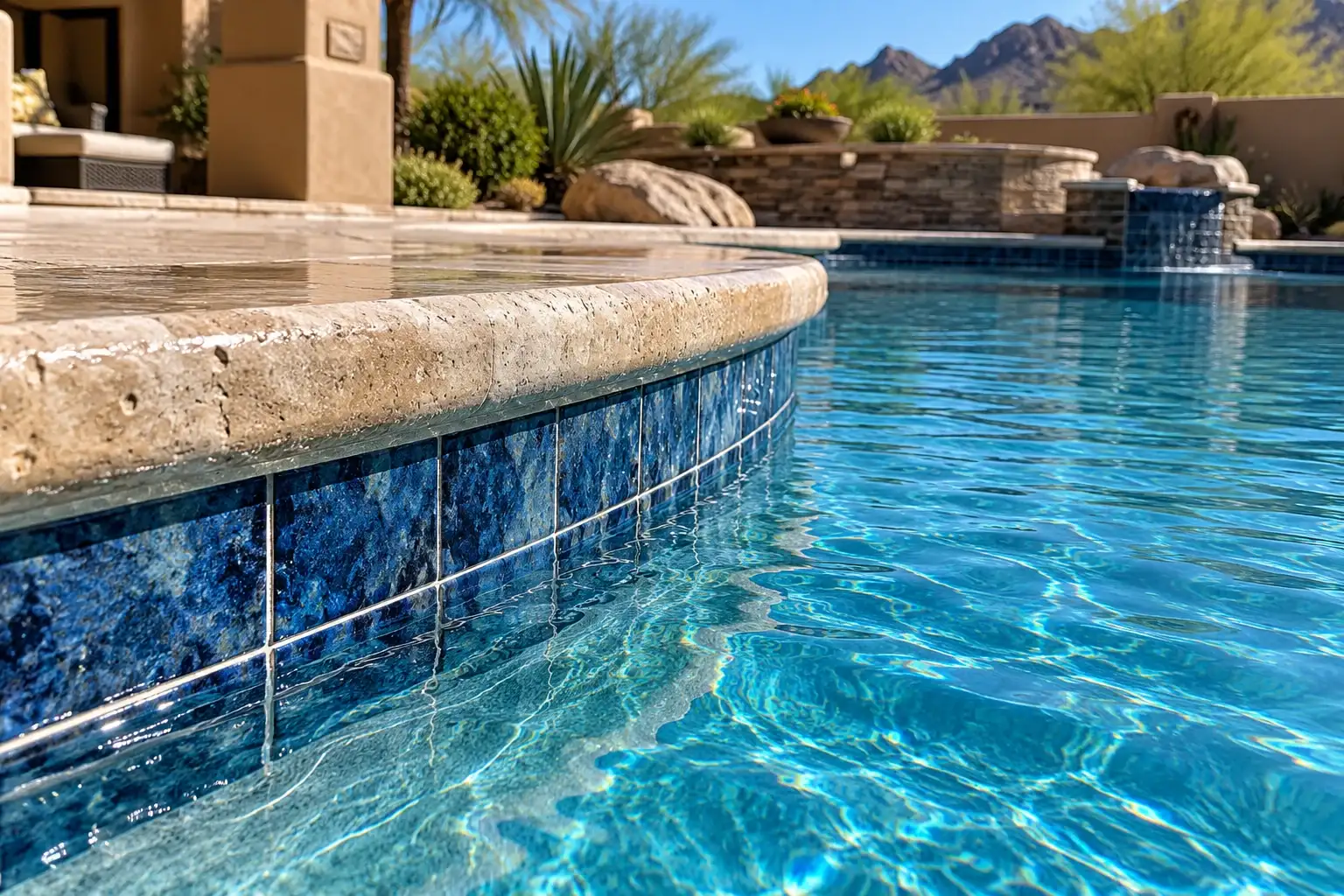
The shelf is built before the finish, so it cures alongside the rest of the shell and takes the same new surface. That means it adds concrete time to the front of the job and nothing to the end of it. After the finish goes on, the whole pool enters the same 28 day window, and the National Plasterers Council is specific about what that month needs: brushing at least twice a day, daily testing of pH, carbonate alkalinity and calcium hardness for 14 days, calcium adjusted slowly and kept from exceeding 200 ppm, cyanuric acid between 30 and 50 ppm, no salt for 28 days, and plaster dust removed with a brush vacuum around day 7.
A new shelf can be the part of the pool most prone to a start-up fault, because it is the newest concrete and the shallowest water. Being strict about that month is what keeps it the same colour as the rest of the pool.
Good to know
What decides it in your pool
Four things: the shell type, the depth at the entry end, where the returns sit, and how much swim lane the pool can give up. A gunite pool with a deep entry end can take a shelf that runs most of the width. A small pool with a shallow entry end may only fit a bench, which is often the better answer anyway.
Setback matters too. The standard setback for a pool in Scottsdale is 2 ft from the property line unless the lot carries an easement (City of Scottsdale), and a shelf that pushes the waterline toward that line is a different conversation. A local pro reads the shell, the plumbing and the setback on site before the shape is drawn. Tell us what the shallow end is doing now and we call you back to talk through the options. Pool remodeling covers the wider scope, pool replastering covers the finish side, and luxury resurface ideas puts the shelf next to the rest of the details.
4 questions
Questions people ask
Still have a question? Call (747) 243-2089 and say what your pool is doing.
Can you add a tanning ledge to a fiberglass pool?
Generally no. A one-piece fiberglass shell is molded, so there is no concrete structure to build into and the shape cannot be extended. A bolt-on ledge product may exist for some shells, which is a different object with a different feel underfoot, not a built shelf.
Is a tanning ledge worth it on a small pool?
It can be, if the shelf replaces an entry area nobody uses rather than eating the swim lane. On a small pool the better version is often a bench along one wall, which gives the same place to sit with far less footprint.
Does a shelf make the pool harder to keep clean?
It can, if it sits in still water. A shelf with a return or a bubbler moving across it is easier to keep clear. A shelf in a dead corner collects debris and grows a film at the waterline, and in hard water it can also collect a mineral line.
How deep is a tanning ledge?
Deep enough that an adult sitting on it has their legs in the water, with a few inches of water over the shelf surface itself. That is also the depth a bubbler needs. The exact number is set on site against the pool's entry depth and how the shelf will be used.
Sources
Sources
- AQUA Magazine, Rise of the Tanning Shelf
- National Plasterers Council, Start-Up Card
- City of Scottsdale, Swimming Pools, Hot Tubs and Spas (opens in a new tab)
- City of Scottsdale, 2026 Water Quality Report (opens in a new tab)
- Pebble Technology International, Customer Support
Last checked: November 2026