Blog · November 18, 2026 · 4 min read
Why a pebble finish fades or stains in the first month
A pebble finish that looked even on the day the pool was filled can show faded spots and stains within the first month. The change is fast enough that it feels like something went wrong in the work itself. Most of the time, the cause sits in the first 28 days after the fill, not in the stone.
Good to know
The 28 day window is when the finish is most exposed
A new finish keeps curing long after the water goes in. About 86% of the cement cures in the first 28 days, and that is the exact window when the surface is most prone to staining, scaling, and discoloration, per the industry startup procedure. What happens in those weeks sets the color more than anything done on the final day of the job. A finish that is left to dust over, or heated too soon, will read as faded no matter how well it was applied.
Arizona water and sun
Heat too soon is the fastest way to fade it
The startup rule is simple: no heater until the plaster dust is gone. The same guide holds chlorine out for the first 48 hours and keeps wheeled cleaners out for 28 days. In Scottsdale the urge to heat a fresh pool comes early, because the evenings drop and the water looks inviting. That early heat drives the cure faster than the surface can take it, and the color is what gives first.
Signs
Stains are usually chemistry, not the stone
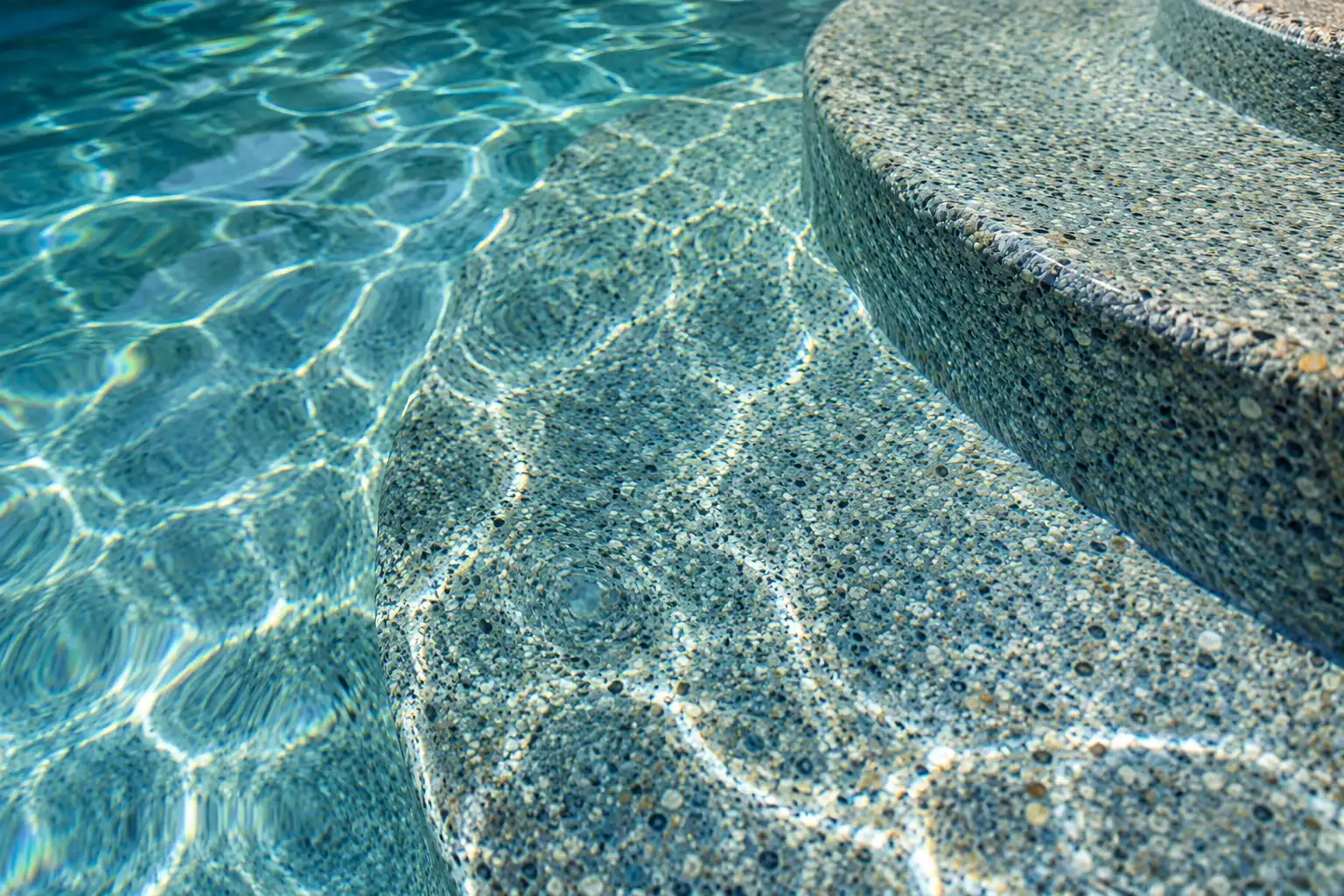
Water that is out of balance right after the fill will stain a new surface fast. The fix is not another coat over the stain. It is the startup routine: brush the surface 2 times daily while it sheds dust, and keep the water balanced, per the industry startup procedure. The finish is built to hold its color. The pigments in pebble finishes are made to be fade resistant, per the finish maker's product page. When spots appear in the first month, they trace back to the water and the heat, not to the pebbles themselves.
Good to know
When the color reads darker than the sample
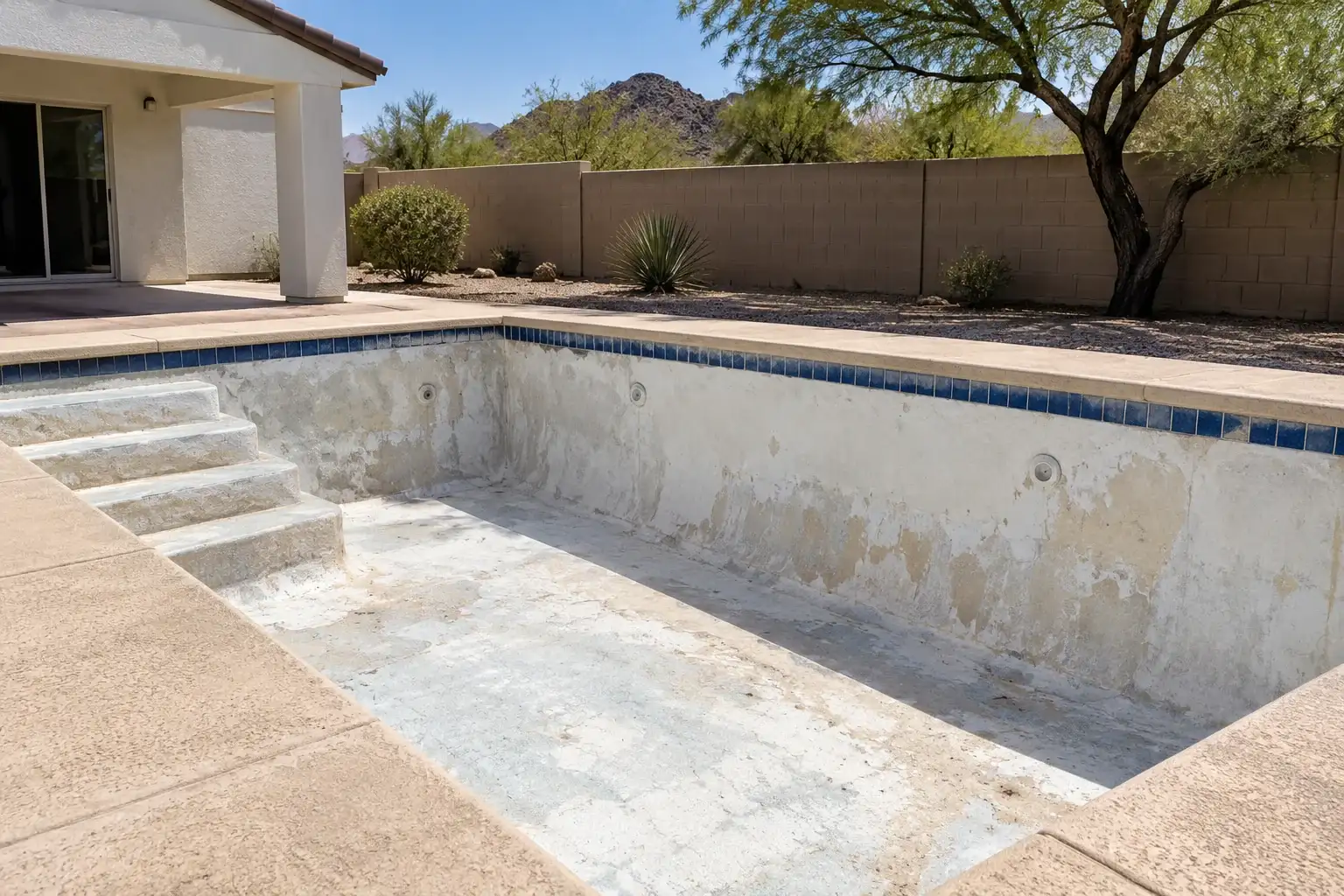
Aggregate finishes can dry to a tone that reads different from the wet sample you picked, and a gray that lands brown is a known effect of how pigment and cement interact. It is rarely a sign that the wrong stone went in. The question is not whether the color shifted on day one, but whether it keeps moving after the startup window closes.
Good to know
What to write down in the first month
The first month is the only evidence you get, so write it down as it happens. Note the fill date, the first day the heater ran, and how often the surface was brushed. Note the water test numbers, and any day the water looked cloudy or the color looked off. Photos help, dated and taken from the same spot each time. When the first month is written down, a later fade can be matched to a specific day instead of argued about from memory.
Costs
When it is worth a second opinion
Even fade that lines up with a too early heater is worth documenting, because the startup was the responsibility of whoever did the work. Patchy fade that does not line up with heat or water is a different matter, and so is spotting that spreads week over week.
To talk through what the first weeks looked like, call (623) 304-1105 and go over the surface with someone who reads startup problems all season.
If the spots are still spreading, do not let another week pass. Call (623) 304-1105 and have the finish and the startup window looked at together.
4 questions
Questions people ask
Still have a question? Call (623) 304-1105 and say what your pool is doing.
Why is my new pebble finish already fading?
Color loss in the first month almost always traces to the startup window, not to the pebbles. About 86% of the cement cures in the first 28 days, and the surface is most prone to staining and discoloration then, per the industry startup procedure. Heat too soon, dust left sitting, or water out of balance all read as fade, when what you are really seeing is a surface that was not protected through the cure.
Does heating the pool too soon cause color loss?
Yes. The startup rule is no heater until the plaster dust is gone, per the industry startup guide. Heat drives the cure faster than the surface can take it, and the color goes first. In Scottsdale this shows up early because the weather invites you to heat a fresh pool within days of the fill. Waiting on the heater is the single biggest thing you control.
Is fading a workmanship problem or a chemistry problem?
Usually chemistry and heat. The pigments in pebble finishes are made to be fade resistant, per the finish maker's product page. When a finish fades in patches that line up with the heater, a missed brushing window, or water that was out of balance, the cause is the startup, not the stone or how it was applied. Even fade that does not line up with heat is worth tracing back to the first month before pointing at the work.
How long should I wait to heat a new pebble finish?
Until the plaster dust is gone. The industry startup procedure keeps the heater off until the dust clears, holds chlorine out for the first 48 hours, and keeps wheeled cleaners out for 28 days. There is no shortcut here. In a Scottsdale summer the dust clears faster, but the rule is about the dust, not the calendar.