Blog · October 30, 2026 · 5 min read
Plaster vs Fiberglass Pool in Scottsdale, AZ
Plaster is the troweled interior of a concrete pool. A fiberglass pool is a prefabricated shell dropped into a hole. Most pools in Scottsdale are plaster, so the comparison is really keeping a concrete pool versus starting over with a shell.
Good to know
The short answer
If you already own a plaster pool in Scottsdale, switching to fiberglass means taking the old pool out and putting a new one in. It is a new build, not a resurfacing. Plaster pools can be any shape and get resurfaced again and again, while a fiberglass shell is smooth, mostly nonporous, and limited to the shapes the factory molds. The right call depends on the shell you have, the soil under the yard, and how much construction you are willing to live through.
Plaster
Plaster pool: what it actually is
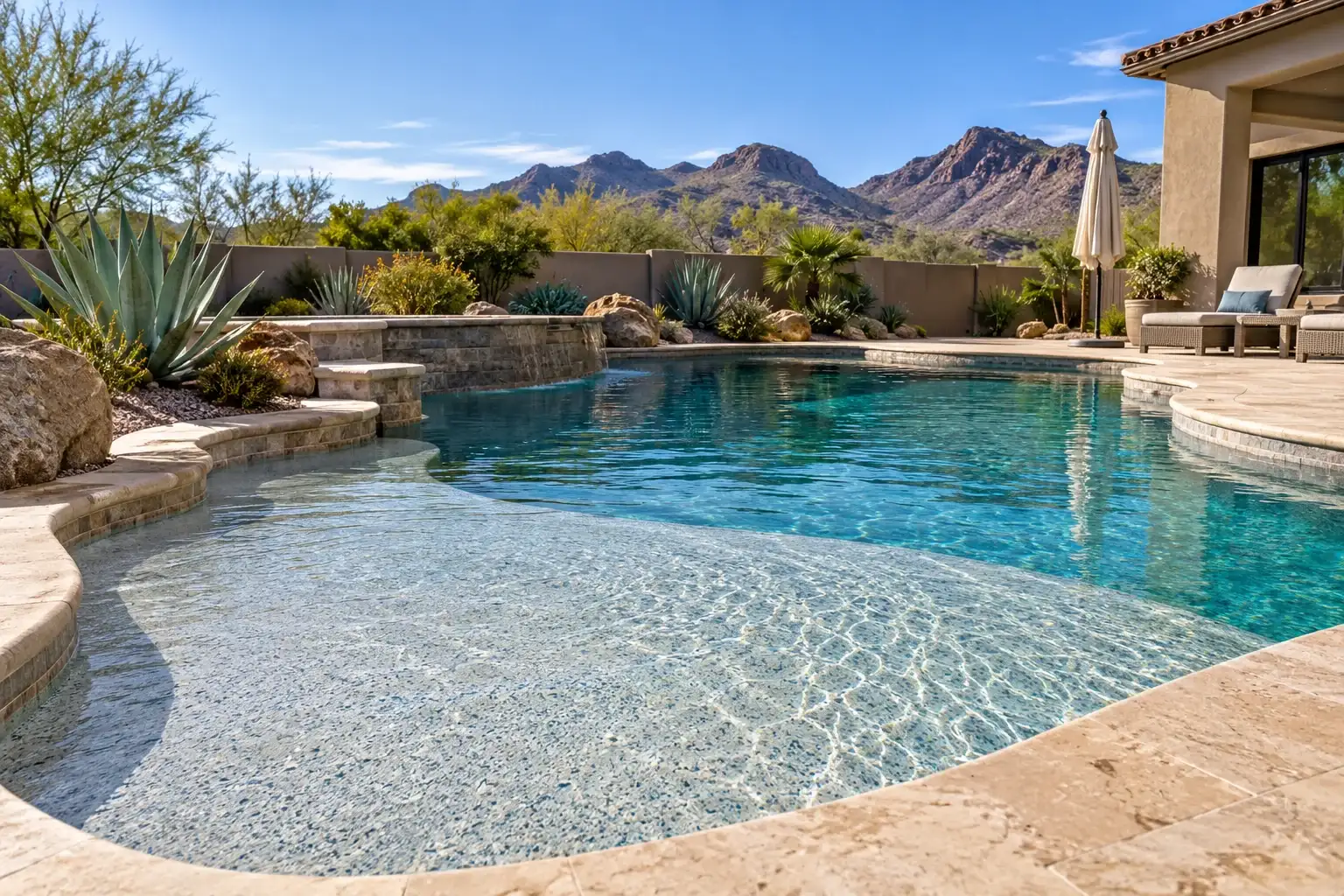
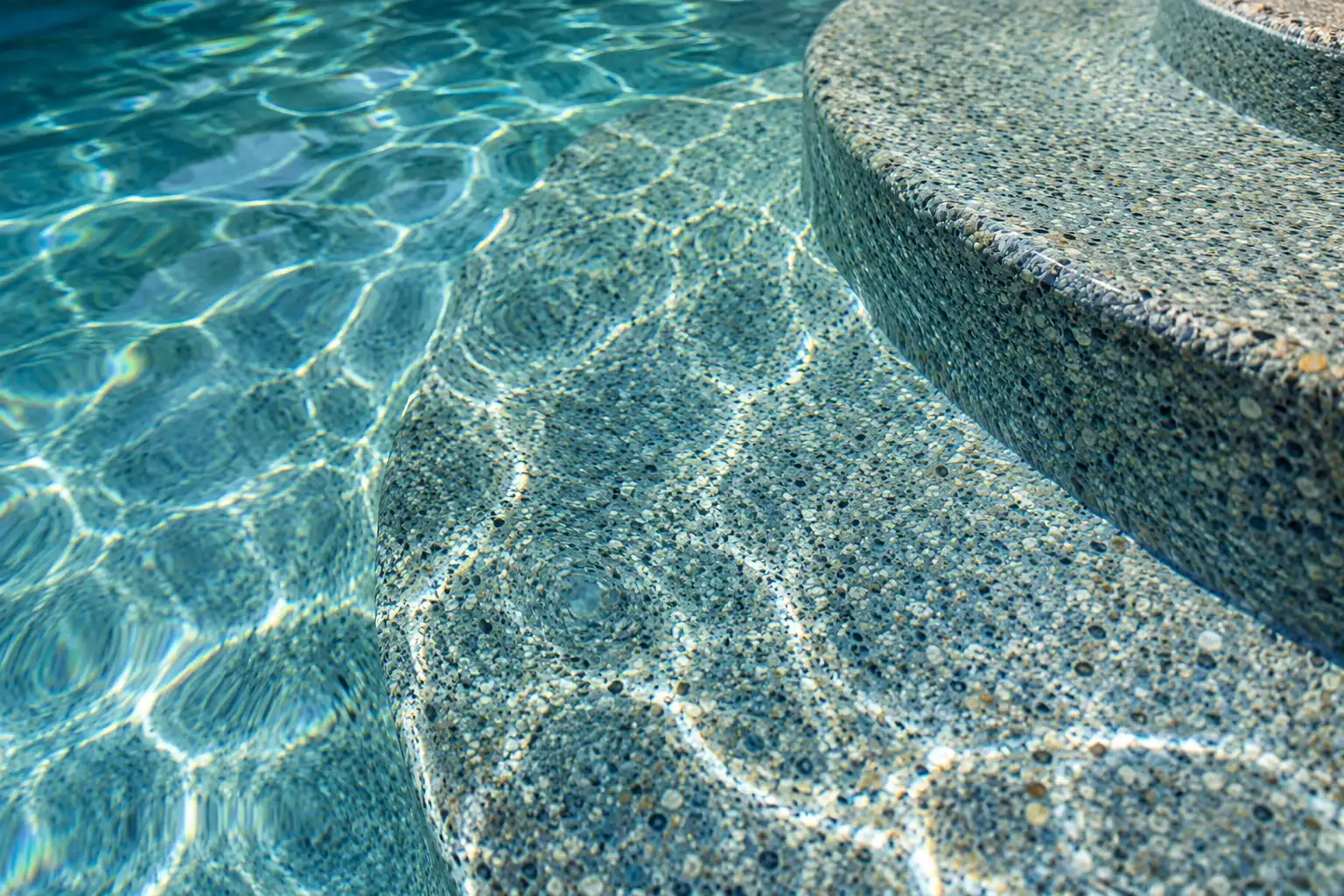
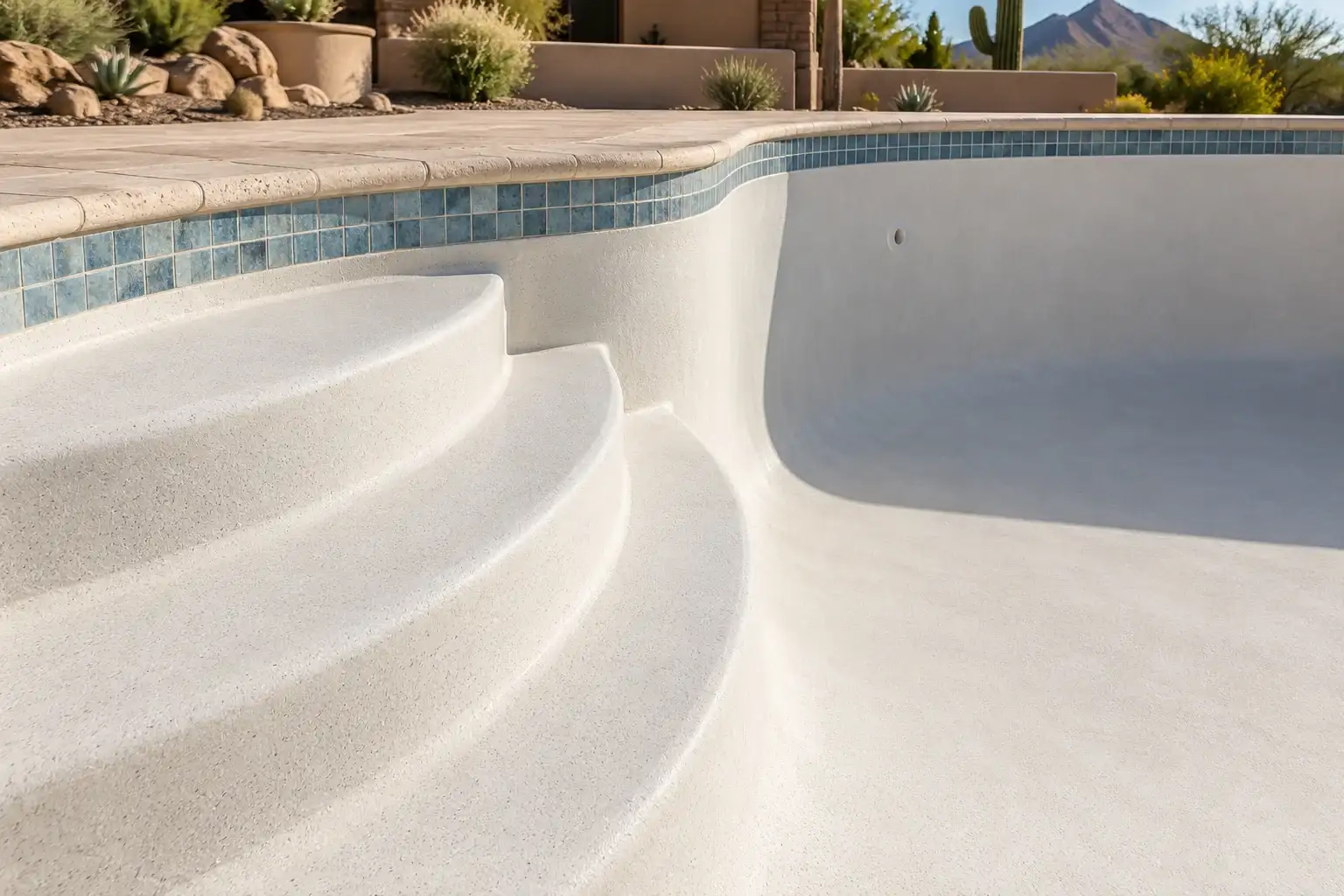
A plaster pool is a concrete shell, shot in place as gunite or shotcrete, with a plaster interior troweled over it. The shell carries the structure and the plaster carries the water, and they are separate jobs. Plaster is porous, which is the whole problem and the whole point. It holds water chemistry on a short leash, and it can be chipped out and replaced when it fails.
Because the shell is shot on site, the pool can be any depth, any shape, and any size the yard and the budget allow. That is why Scottsdale's big custom pools are all concrete. A long lap lane, a beach entry, a raised spa with a spillway: shapes no mold can ship. When the finish wears out, the resurfacing job replaces the interior and the shell stays put.
The maintenance cycle is the honest way to frame it. In Scottsdale the finish wears in visible rounds: etch, chalk, scale, resurface. Each round is a scheduled event if the chemistry gets watched. The alternative, a shell that cannot be resurfaced, is the one thing a plaster pool never runs out of. Even after decades, the concrete under the finish is usually the best asset in the yard.
Good to know
Fiberglass pool: what it actually is
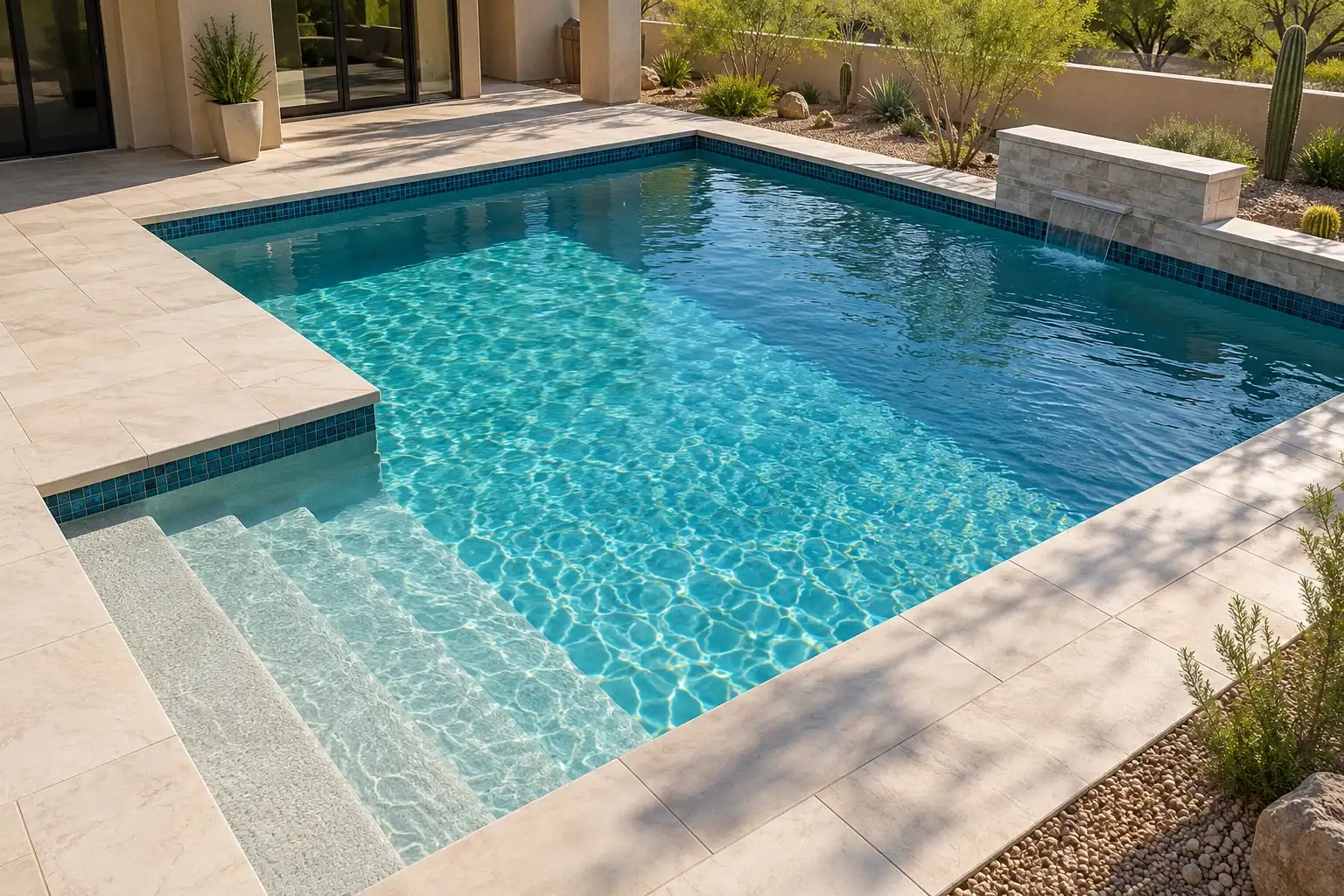
A fiberglass pool is a one-piece shell, molded in a factory from layers of fiberglass and resin with a colored gelcoat surface. It gets trucked to the yard and set into an excavated hole with a crane. There is no plaster to chalk and no tile band to regrout unless you add one. The surface is smooth and mostly nonporous, so scale has a harder time grabbing hold than it does on cement.
The limits are the mold. Shapes, depths, and sizes are fixed, which matters in a town of custom pools. The shell also rides the ground it sits in. It is strong in compression and flexible by design, but where expansive clay swells and shrinks under a Scottsdale yard, the shell moves along with it. When a pool moves, the stress shows at skimmers and corners.
Signs
Where plaster fails here
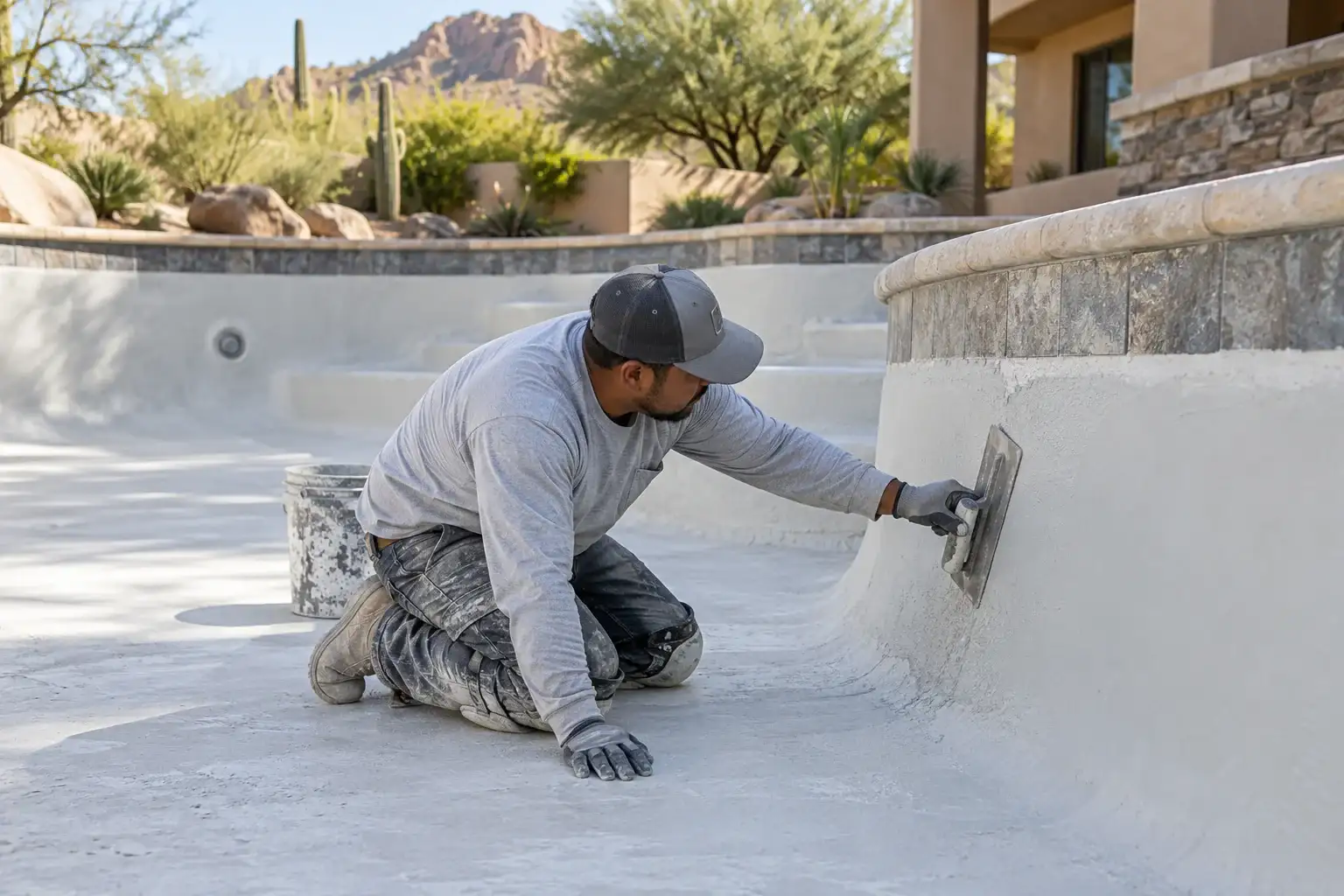
Scottsdale sun and water chemistry are the two things that age a plaster finish fastest, and this town has both. The finish chalks and peels, and the first sign is white powder on the pool floor and rough walls. Hard water leaves its scale line at the tile. Big pools in the ranch-style subdivisions mean more surface area for the sun to work on, and a pool drained in summer heat is a shell at risk.
The cycle is familiar to anyone who has lived with a Scottsdale pool for a decade. The waterline scales, the shallow end chalks, an acid wash buys a season, and then the resurface arrives. What changes is how the finish is treated in between. Chemistry blamed for a bad install is the usual story, when the real cause was prep and cure time on the last job.
The full story on that powder is on the blog. The short version: plaster fails from the surface down, and once it chalks, patching spots just makes a map.
Signs
Where fiberglass fails here
Getting a shell into a Scottsdale yard means excavation, and excavation here often means caliche. That is the cemented calcium carbonate layer that stops water and dulls trenchers, and it turns a dig into a jackhammer job. Plenty of East Valley and North Scottsdale lots sit on it. The dig is where new pool budgets go to die.
Then the gelcoat takes the sun. UV works on the top layer year after year, and a shell facing the afternoon sun fades and chalks at the surface in a way the brochure does not show. Then there is the HOA. Many Scottsdale communities govern what goes into a yard, and a new pool is a design review item in most of them. Approval comes before the dig, not after, and the process has its own calendar. None of that makes fiberglass wrong. It makes it a construction project, and construction in Scottsdale moves at the speed of approvals and jackhammers.
Costs
What it costs and what drives the number
Resurfacing an existing plaster pool costs a fraction of putting in a new pool, and the spread varies with the job. A new fiberglass pool includes demolition of the old shell, haul-off, excavation through whatever the lot gives up, the shell itself, plumbing, equipment, backfill, and the deck and landscaping that get torn up along the way. A resurface includes drain, prep, finish, and refill. One is a week of disruption in the backyard and the other is a season of it.
The cost calculator lines up the resurfacing side. The new-build side has its own set of quotes, its own timeline, and its own approval calendar. Before either one, the home page links the guides that explain the finishes and the prep.
Good to know
What good work looks like in Scottsdale
- Pricing the pool you have before talking about the pool you might buy. Most Scottsdale shells are worth resurfacing, not replacing.
- Factoring caliche and crane access into any new-build conversation, because the dig is where the number changes.
- Putting the HOA question first for any new pool in a governed community. Design review comes before the dig, not after.
- Comparing line for line, so a resurfacing bid and a new build quote can sit on the same table.
7 questions
Plaster vs Fiberglass Pool: your questions
Still have a question? Call (747) 243-2089 and say what your pool is doing.
Can I convert my plaster pool to fiberglass?
Not by resurfacing. The plaster pool comes out and a fiberglass shell goes in its place. It is a new pool wearing the old pool's address.
Which surface lasts longer?
The gelcoat on a fiberglass shell resists chalking and scale better than plaster does. How long either one lasts comes down to the soil, the water, and how the install was done.
Which is cheaper in Scottsdale?
Resurfacing the pool you own is far less than building any new pool. Building new means excavation, and caliche pushes the price of a dig up.
Do fiberglass pools crack in Arizona?
A shell moves with the ground it sits in. Where expansive clay swells and shrinks, the pool moves too, and stress shows at skimmers and corners. Site prep matters more than the shell.
Does a new pool need HOA approval?
In most governed Scottsdale communities, yes. The design review comes first, and the answer shapes the plan. Communities like DC Ranch run a tight process, so nobody should price a pool until the approval question is asked.
Can fiberglass be repaired if the gelcoat chalks?
The top layer can be refinished, but it is not a replaster job. The shell's surface is the finish, so deep damage means the shell itself is the question.
Is fiberglass smoother than plaster?
Yes, and it stays that way longer. It is also limited to the shapes the mold offers, which is the trade in a town built on custom pools.