Blog · October 30, 2026 · 5 min read
Pool Resurfacing vs Replastering in Scottsdale, AZ
Replastering is one kind of pool resurfacing, not a rival to it. On a Scottsdale pool, replastering means a fresh plaster finish; resurfacing can also mean quartz, pebble, new waterline tile, and the prep work underneath.
Good to know
The short answer
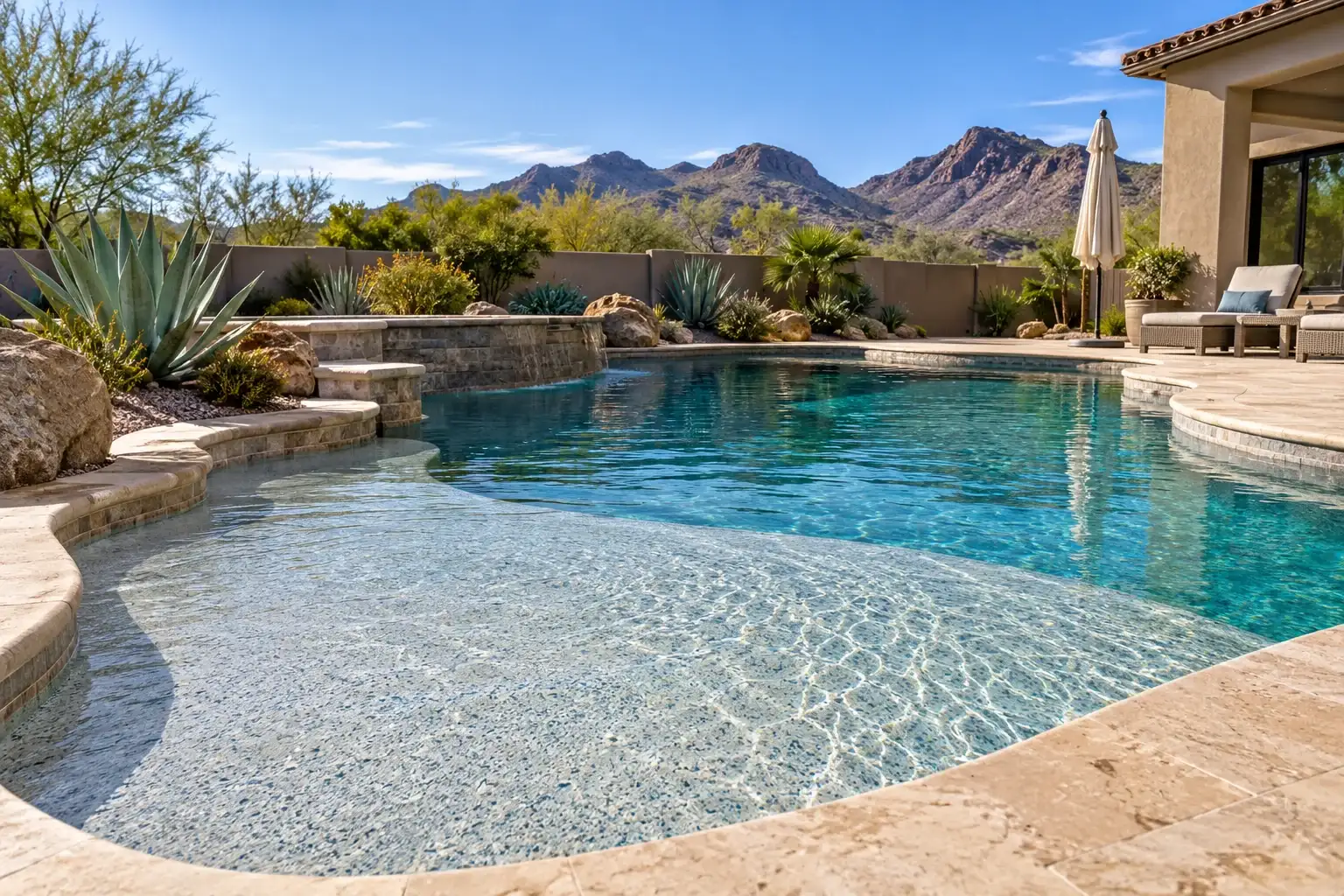
If the finish is chalky and rough and the shell is sound, the two words usually describe the same visit. The worn surface gets removed or keyed up, and a new interior goes on. Replastering is the classic version of that job, white or colored plaster troweled over the old shell. Resurfacing is the wider word, and it also covers quartz, pebble, and the waterline tile and coping that get replaced in the same pass. The right call depends on the shell, the soil under it, and the water chemistry you are willing to run.
Good to know
Pool resurfacing: what it actually is
Resurfacing means taking a pool whose interior has failed and giving it a new one. On a gunite or shotcrete pool, the interior is a cement based layer that sits between the water and the structural shell. That layer wears out years before the shell does. Resurfacing removes the worn layer or bonds a new one to it.
A full resurfacing job in Scottsdale usually reaches past the finish. The waterline tile comes out when it is loose or crusted with scale. Drain covers, return fittings, and the light niche get handled while the pool is empty, because that is the only time they are cheap to reach. The coping and deck edge get looked at too. A new finish poured against a moving coping line cracks at the transition within a season or two.
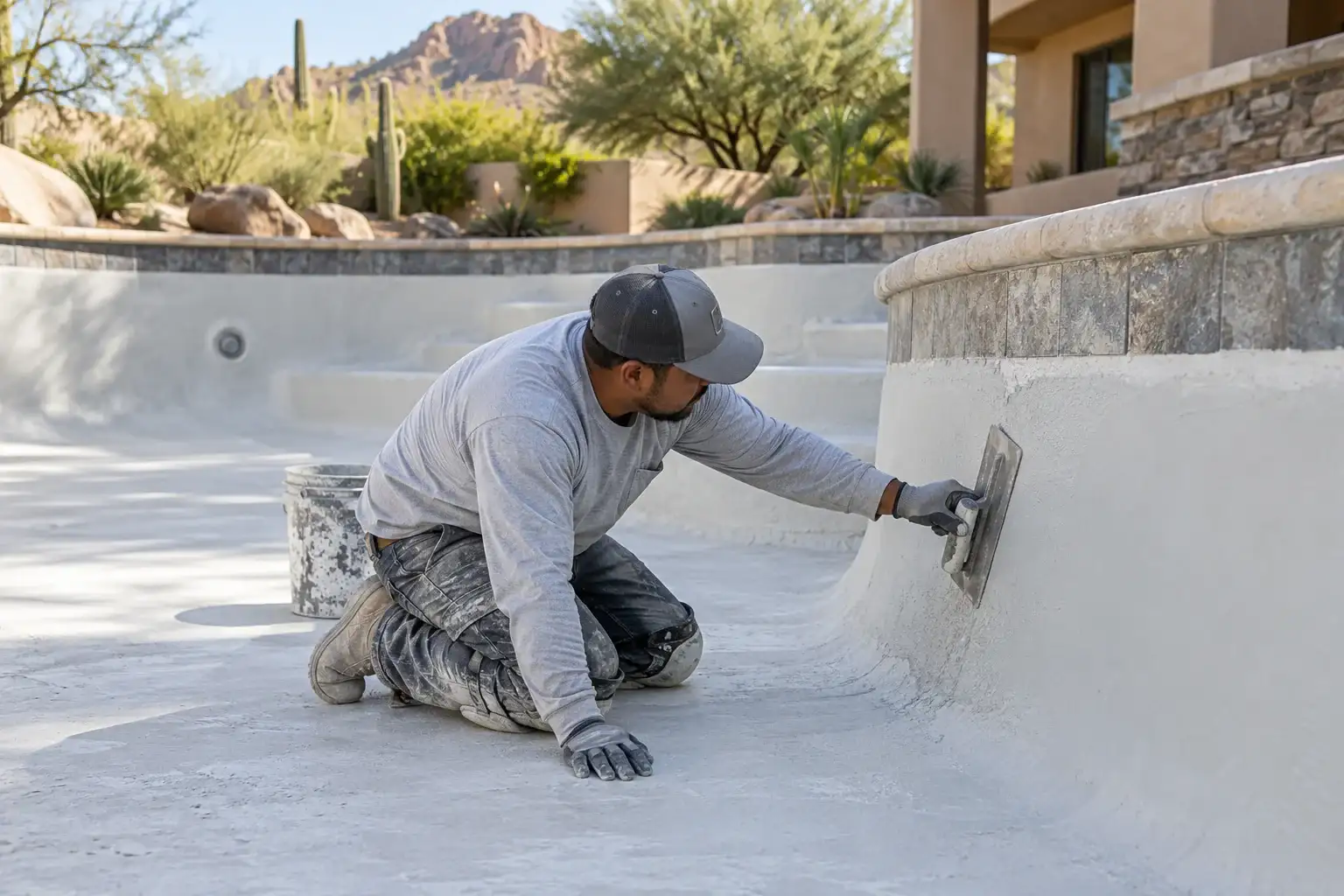
The prep is the part nobody sees and the part that decides the outcome. The old plaster gets chipped out to the shell, or washed and keyed so the new material grips. Hollow spots in the shell get sounded out and fixed before any finish goes down. Then the new interior goes on in one continuous pass, with a cure schedule behind it. Scottsdale heat shortens that cure window. A crew that rushes it, or fills the pool early, hands you a finish that chalks within a year.
Plaster
Replastering: what it actually is
Replastering is the narrow version of the same job. The old plaster comes off or gets prepped, and new plaster goes on. Most often it is white portland cement blended with marble dust, troweled by hand. It is the finish most Arizona pools were born with, and on a Scottsdale pool with its original plaster, the material coming off is older than the equipment that runs the pool.
Plaster is porous and comparatively soft. That softness is what makes it comfortable underfoot, and also what makes it fail. It etches in aggressive water, chalks when the chemistry swings, and shows every stain a hard water line or a monsoon dust load can leave. It is also the least costly interior material, which is why it is still the default bid on many jobs. For the texture side of the same decision, see pebble vs plaster.
Replastering a pool without touching the tile or coping costs less in the moment. It is also the version of the job that disappoints most often, because the leak that lived in the tile line, not the plaster, is still there when the water goes back in.
Signs
Where pool resurfacing fails here
Scottsdale pools are big. A backyard in DC Ranch or Gainey Ranch can hold a pool that swallows the national typical twice over, and the surface area scales with it. Big pools take more material, more labor, and a longer pour window. When a crew stretches that window across a June afternoon, the first section sets before the last section goes on. The seam shows later as a color change, and the owner blames the chemistry. Quartz vs pebble is its own question, and the finish choice moves the price along with the scope.
Full resurfacing jobs also grow when the scope is honest. Tile that looked fine from the deck comes off loose once the water is down. The pool is already drained, so the sensible move is to do the tile now, not two years after the new finish is in. Cheap bids skip this step, and the skipped step is the one that fails.
Signs
Where replastering fails here
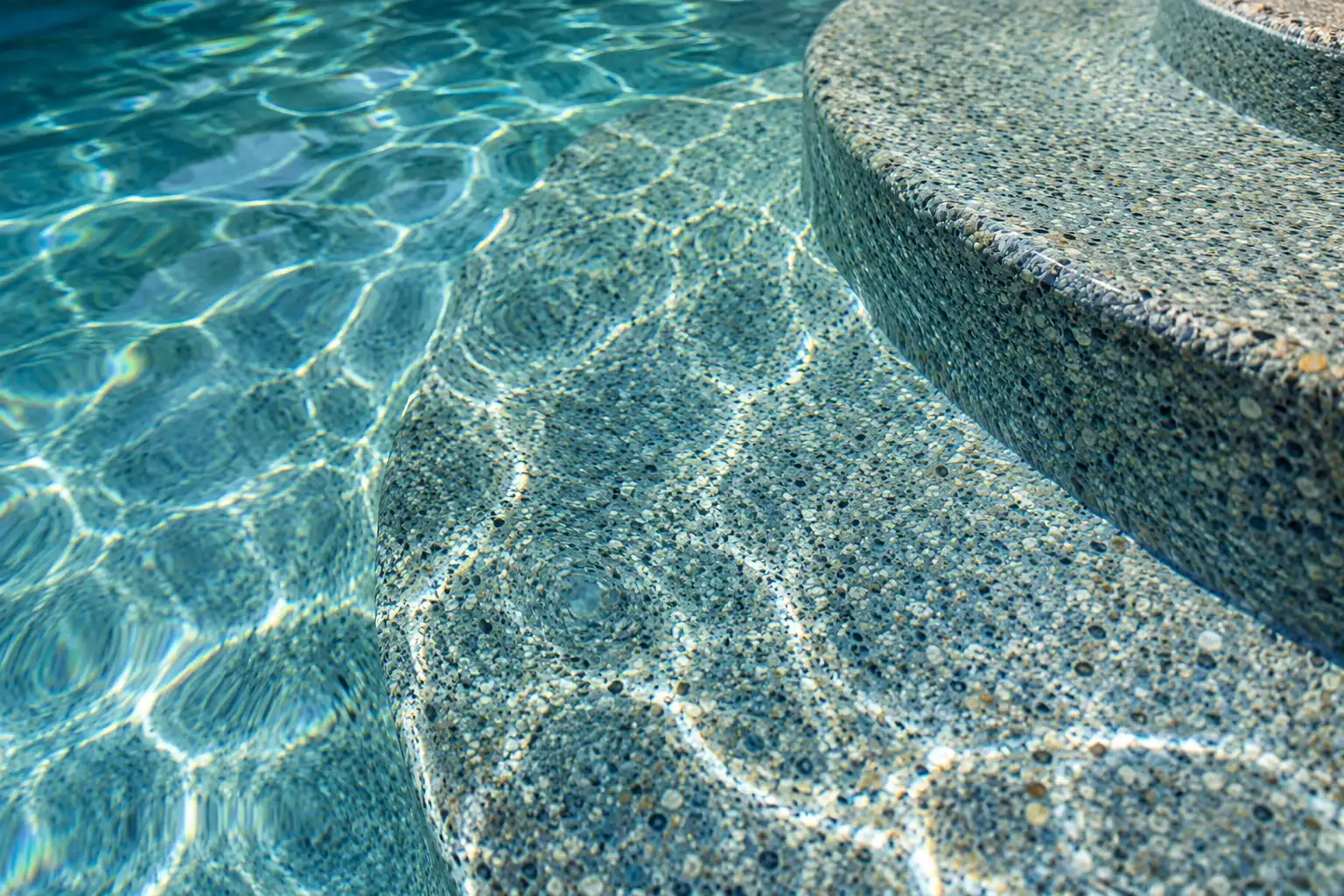
Sun and water chemistry eat plain plaster faster in Scottsdale than the national average assumes. The finish goes chalky, the walls go rough, and the first sign is white powder settling on the pool floor. It is the most common failure call in this trade here.
A replaster over poor prep fails even faster. Moisture trapped in a damp shell blisters the new plaster in its first summer. If the old plaster was chalking because the water was aggressive, the new plaster chalks too, because the water did not change. Replastering fixes the surface, not the water. In Scottsdale's hard, hot water, that distinction is the whole game.
Costs
What it costs and what drives the number
The number spans a wide range, and a few drivers set it. Surface area is the big one, and Scottsdale pools are large. Finish choice moves it, with plain white plaster at the low end and pebble or quartz higher. Prep method matters, because a full chip out costs more than a wash and key, and it lasts longer. Tile, coping, and fittings add to the bill, and so does the drain and refill, which Scottsdale's water use rules make something you plan for instead of an afterthought.
If a bid comes in far below the others, read the scope. The difference is usually prep, tile, or both. The cost calculator walks through the same drivers in order, and the home page links every guide on this site if you want the whole picture first.
Good to know
What good work looks like in Scottsdale
- Starting from the shell, not the finish. A sounding pass finds hollow spots before any material goes down.
- Writing the scope down, tile and coping included, so the number on the bid is the number at the end.
- Timing the work around Scottsdale's water use rules and the monsoon. A pool drained in July has risks of its own.
- Matching the finish to the water you actually fill with, not to a brochure photo.
6 questions
Pool Resurfacing vs Replastering: your questions
Still have a question? Call (747) 243-2089 and say what your pool is doing.
Is replastering the same as resurfacing?
Replastering is one type of resurfacing. Resurfacing is the broader job and can include quartz, pebble, tile, and coping work.
How do I know if I need a replaster or a full resurfacing?
Look at the tile and coping. If the interior is failing and the tile is loose or scaled, a full resurfacing costs a little more now and saves a second drain later.
How long does resurfacing take?
The pool gets drained, the old surface comes off, the new one goes on in a day, and then the finish cures before the fill. The best time to resurface guide explains why the cure is the part you should not rush.
Can you replaster over old plaster?
Sometimes, with proper prep. The old surface has to be sound and clean, and it has to be keyed so the new material grips. Over a chalky or blistered surface, new plaster has nothing solid to hold.
Does resurfacing fix a leak?
Only if the leak is in the finish. A leak in the plumbing, skimmer, or light niche is a separate job, and a good crew finds it while the pool is empty.
What does resurfacing cost in Scottsdale?
It varies with pool size, finish, and prep method. The drivers are the same across the Valley, but the pool sizes in Anthem and North Scottsdale push the numbers toward the high end.