Blog · November 6, 2026 · 5 min read
Is a pebble pool finish rough on feet?
A pebble pool finish feels textured on feet because small stones sit at the surface, and the feel runs from mild to coarse depending on the stone size and the blend. Plaster feels smoothest, quartz sits in the middle, and a pebble finish feels the most textured of the three. Some texture is normal, and you can plan around it. Here is why the surface feels the way it does, what changes how rough it feels, and what pool owners do when it feels like too much.
Signs
Why is a pebble pool finish rough on feet?
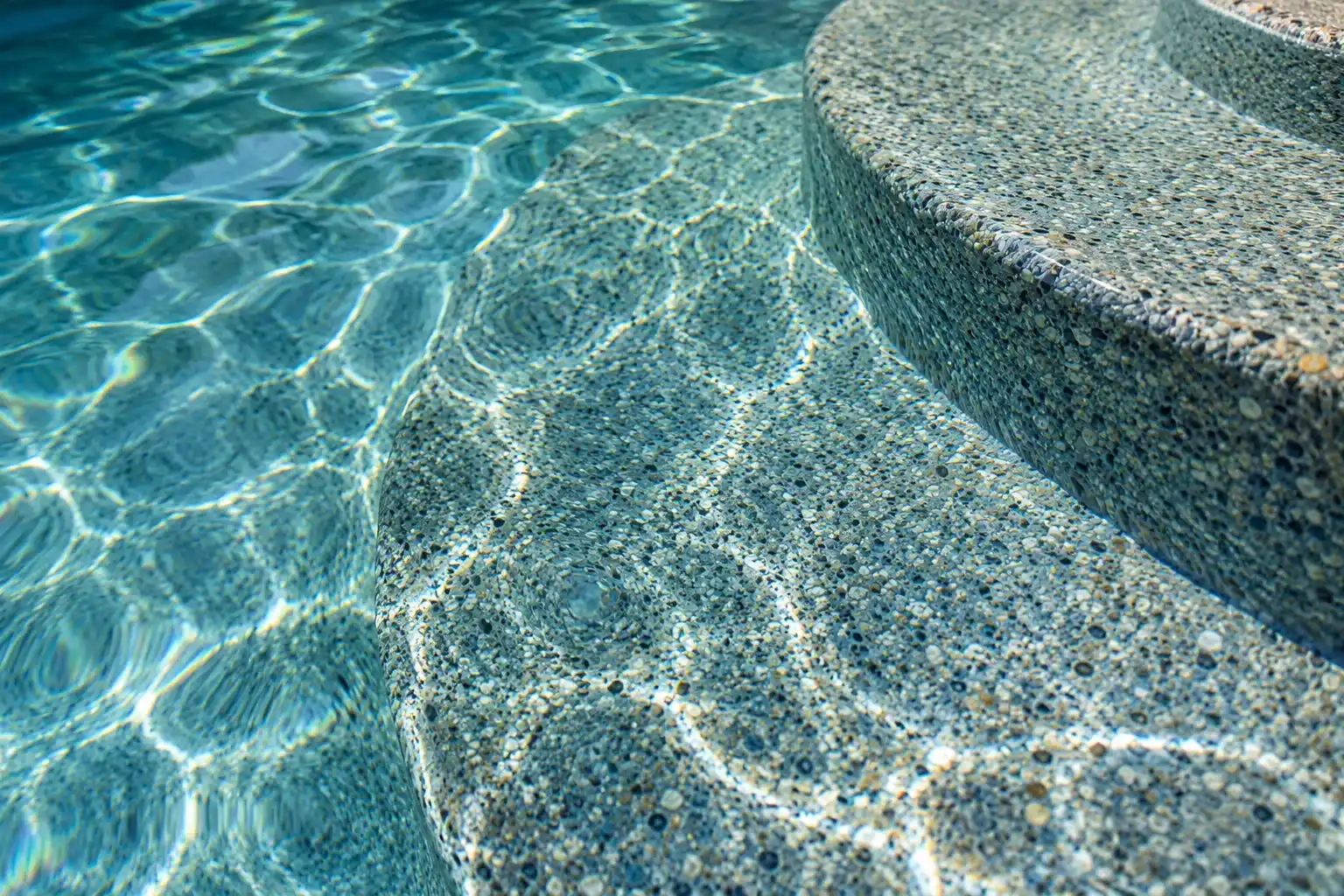
A pebble finish is small natural stones exposed at the surface instead of a smooth troweled coat, so every stone is a small bump under a bare foot. You notice it most on the steps, benches and shallow end, where feet spend the most time.
That texture is partly on purpose. The CDC's 2024 Model Aquatic Health Code asks for a slip resistant finish on pool floors less than 3 feet deep and on stairs (CDC, 2024 Model Aquatic Health Code (opens in a new tab)). Maricopa County asks for grip and comfort at public and semipublic pools: footing surfaces must be slip resistant, and their roughness must not cause injury or discomfort to users' feet during normal use (Maricopa County Environmental Health Code, Chapter VI (opens in a new tab)).
Both codes cover public pools, not backyard pools. They still show the trade you are making: more grip means more texture, and more texture means more feel underfoot.
Signs
What makes a pebble finish feel rougher or smoother?
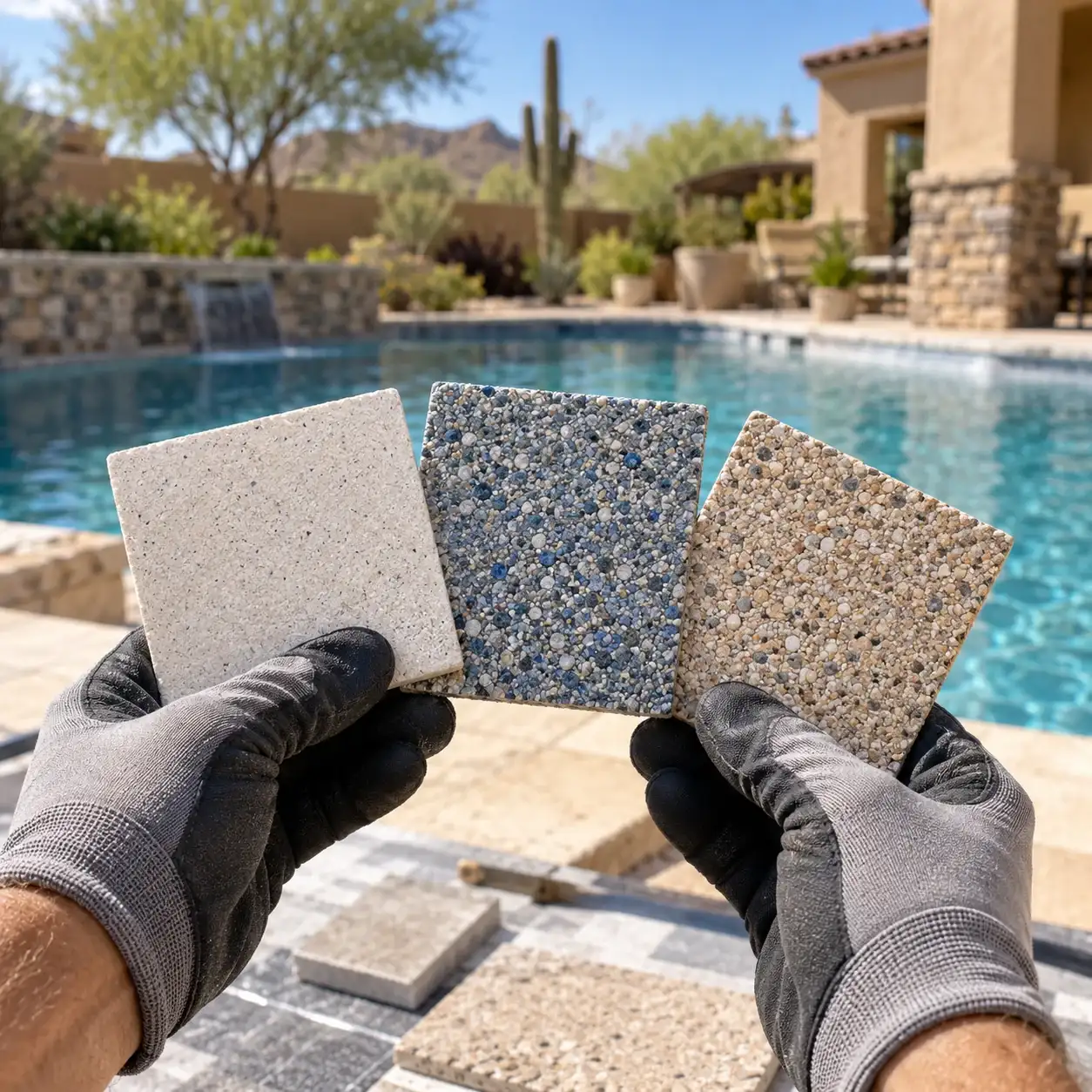
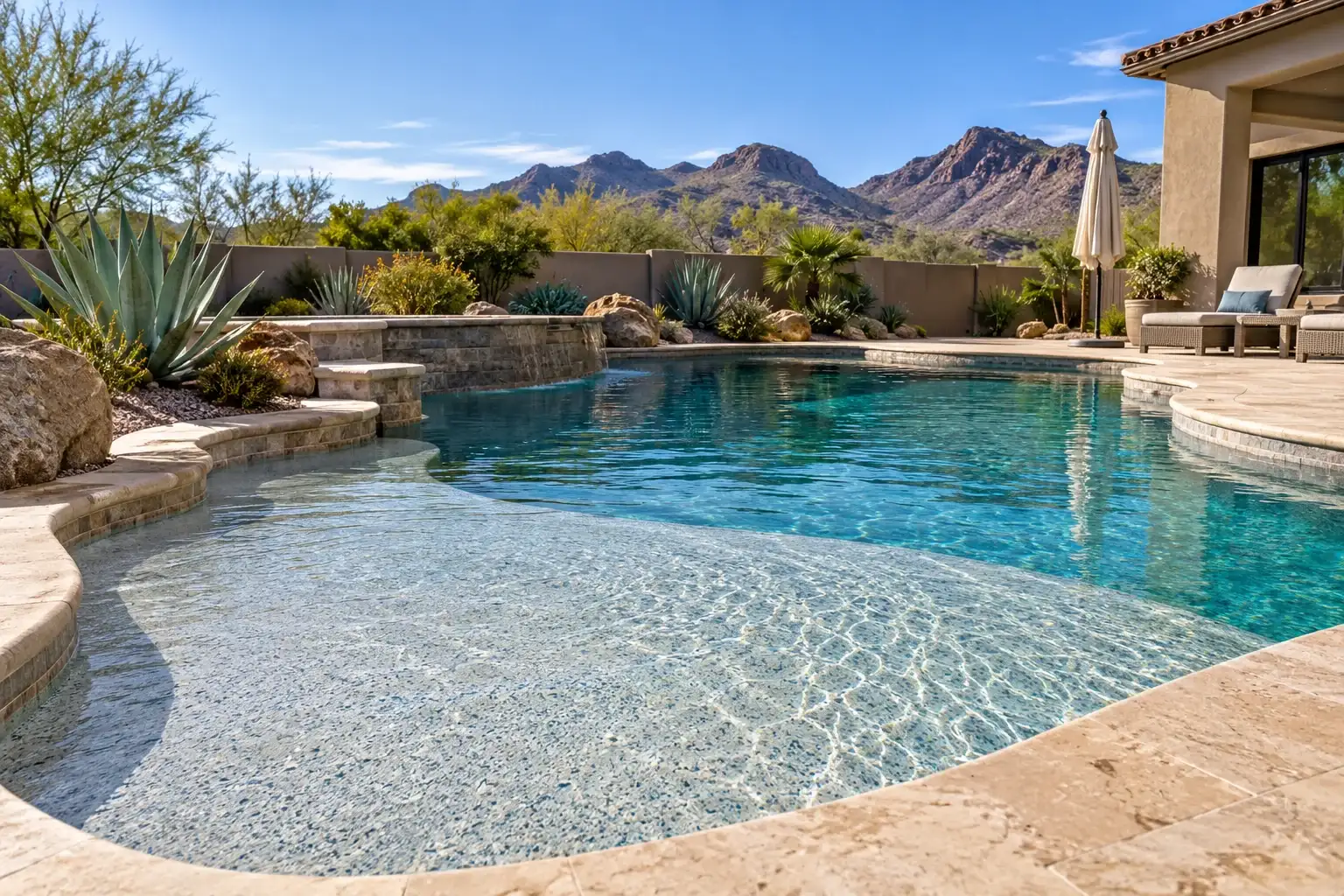
Stone size and blend matter most. Pebble style finishes come in a range of aggregate sizes, from a finer exposed pebble to a coarser, more heavily textured surface, and finer blends feel softer underfoot than coarser ones.
2 other things change how it feels:
- Where you stand. Steps, benches and the shallow end get the most bare foot time, so they decide whether the finish feels rough to you.
- What sits on top. Scale from hard water can add its own roughness, covered below.
The blend is chosen before the finish goes in, so it is the one factor you control up front.
Pebble finish
Does a pebble finish feel different in the first weeks?
It can, because a new finish is still curing and the start-up water care shapes the surface.
The Scottsdale pool resurfacing guide says new plaster, quartz and pebble finishes all need a specific chemistry start-up and a regular brushing schedule while the surface cures. Skipping that step can lead to staining or an uneven finish. The weeks after the fill are covered in new pool plaster start-up.
Brushing matters on a textured finish for another reason. A Los Angeles County Department of Public Health study guide for pool service workers lists rough finishes among the things that stimulate algae growth, and it says algae create a slipping hazard (LA County Public Health, pool service study guide (opens in a new tab)).
Pebble finish
How does a pebble finish compare with plaster and quartz underfoot?
Plaster feels smooth, quartz feels smooth to lightly textured, and a pebble style finish feels textured. Cost and lifespan run in the same order, so smoother usually means a lower cost and a shorter life.
| Finish | Feel underfoot | Material cost per sq ft | Typical life |
|---|---|---|---|
| White plaster | Smooth | About $4 | About 10 years (5 to 10 on average) |
| Quartz finish | Smooth to lightly textured | Between plaster and pebble | No published figure |
| Pebble style finish | Textured | About $10 | 20 or more years |
Costs and lifespans come from a national 2026 cost guide, which lists no separate quartz figure.
Smooth does not always stay smooth. High calcium levels in pool water can form scale, and the Los Angeles County guide says scale results in rough plaster surfaces. Scottsdale tap water runs 13 to 17 grains per gallon depending on the zone (City of Scottsdale 2026 Water Quality Report (opens in a new tab)), so a smooth plaster surface can pick up roughness over time.
Signs
What can you do about a pebble finish that feels too rough?
Start by working out what kind of rough it is, because the options differ. A finish in its start-up weeks is a different case from scale on the surface or a finish that is wearing out.
New finish
give it the full start-up period and keep to the brushing schedule.
White crust or a rough film
have the pool water tested, since the Los Angeles County guide says high calcium can form scale that makes plaster surfaces rough.
Pitted or gritty even right after a brush
the finish may be wearing. The same guide says low calcium water can etch and pit plaster.
The stone texture itself is the problem
the choice to revisit is the finish at the next resurfacing, a finer blend, quartz or plaster.
None of this promises a result. How a finish responds depends on the finish, the water chemistry and how the pool is kept.
Pebble finish
How do you pick the right pebble texture before the job?
Say how much texture bare feet can tolerate when the project is planned. The blend is one of the choices to talk through before the project is priced, and it can shift labor time and finish detail.
Think about who uses the pool and where. A family that swims daily puts different wear on a surface than a pool used mainly for looks and the occasional dip.
Longevity belongs in the same conversation. A pebble finish can last 20 or more years against about 10 for plaster, per a national 2026 cost guide, so the texture you pick is one you may live with for a long time. Resurfacing vs replastering shows how the jobs differ.
4 questions
Questions people ask
Still have a question? Call (747) 243-2089 and say what your pool is doing.
Is a pebble finish too rough for bare feet?
Some texture is normal, since the stones are exposed at the surface rather than troweled smooth. Finer blends feel softer underfoot than coarser ones, and the blend is chosen before the finish goes in.
Does a pebble finish get smoother over time?
It can feel different after the first weeks, as the surface cures and the start-up brushing is done. A finish that stays gritty or pitted after brushing points to scale or wear instead.
Is quartz smoother than a pebble finish?
Quartz feels closer to plaster underfoot than a pebble style finish does. The crystals add color and surface hardness without the coarser, exposed stone texture. See the quartz pool finish page for the details.
Can hard water make a pool finish feel rough?
It can. Scale from high calcium levels can leave plaster surfaces rough, per the Los Angeles County guide, and Scottsdale tap water runs 13 to 17 grains per gallon. A water test shows whether scale is part of the picture.
Keep reading
- Pebble style pool finish: for blends, cost and the job steps.
- Quartz pool finish: for a finish closer to plaster underfoot.
- Resurfacing vs replastering: for what each job covers.
- Pool resurfacing cost: for the published price ranges by finish.
- Pool resurfacing cost calculator: for a range built from your own pool.
- New pool plaster start-up: for the first weeks after the fill.