Blog · October 30, 2026 · 5 min read
Tile vs Plaster Waterline in Scottsdale, AZ
The waterline is the strip where pool water meets air, and where hard water leaves its scale line. Tile protects that strip with a cleanable glazed surface. Plaster through the waterline means the finish itself takes the abuse.
Good to know
The short answer
A tile band is armor for the one part of the pool that takes chemistry from both sides: water below, evaporation above. Plaster run through the waterline is cheaper on day one, because it is just more finish, but the scale line, the sun, and the evaporation all land on the softest material in the pool. On a Scottsdale pool with hard water, that strip fails first no matter what covers it. The right call depends on the finish, the grout, and what is behind the tile when it comes off.
Tile and coping
Tile waterline: what it actually is
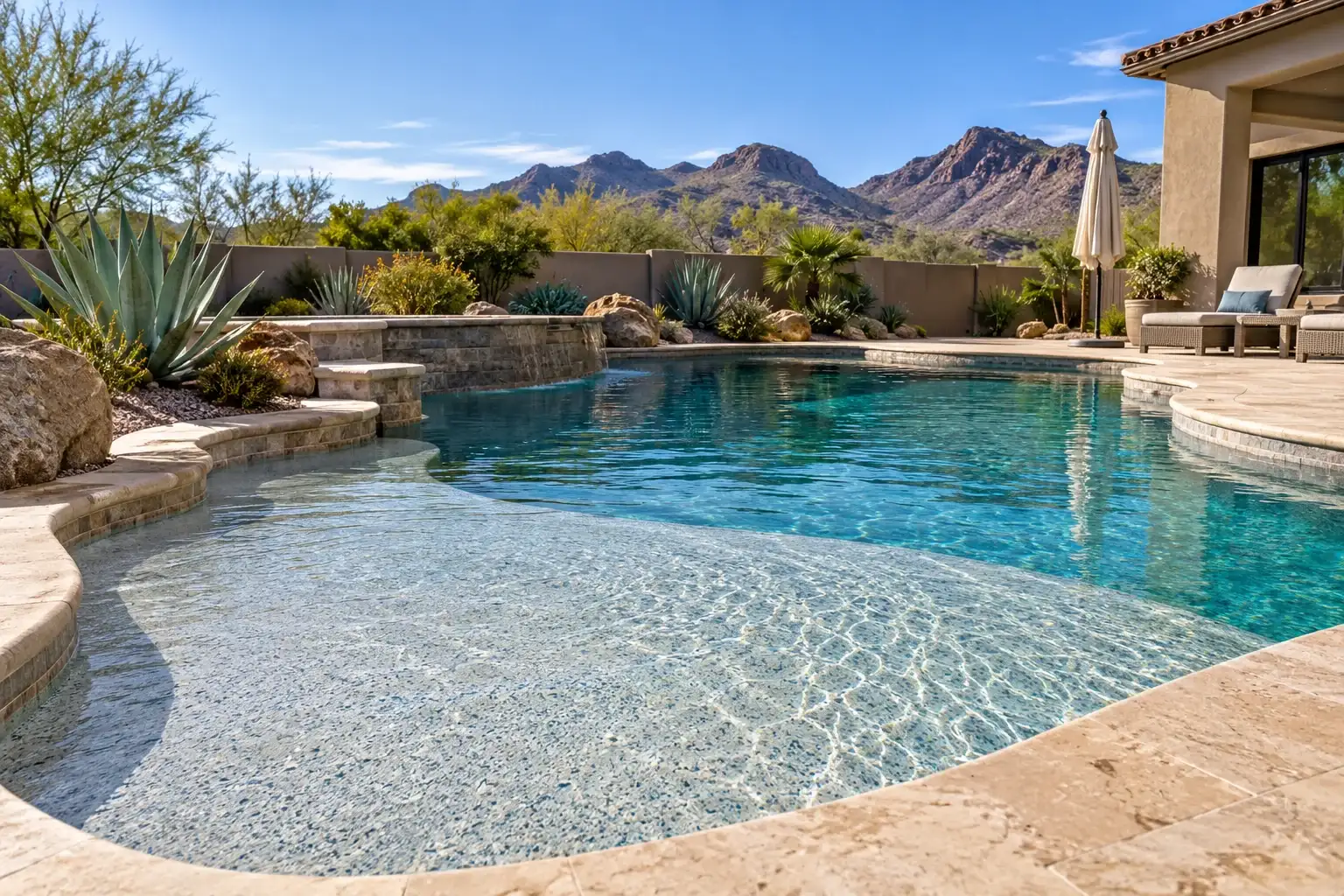
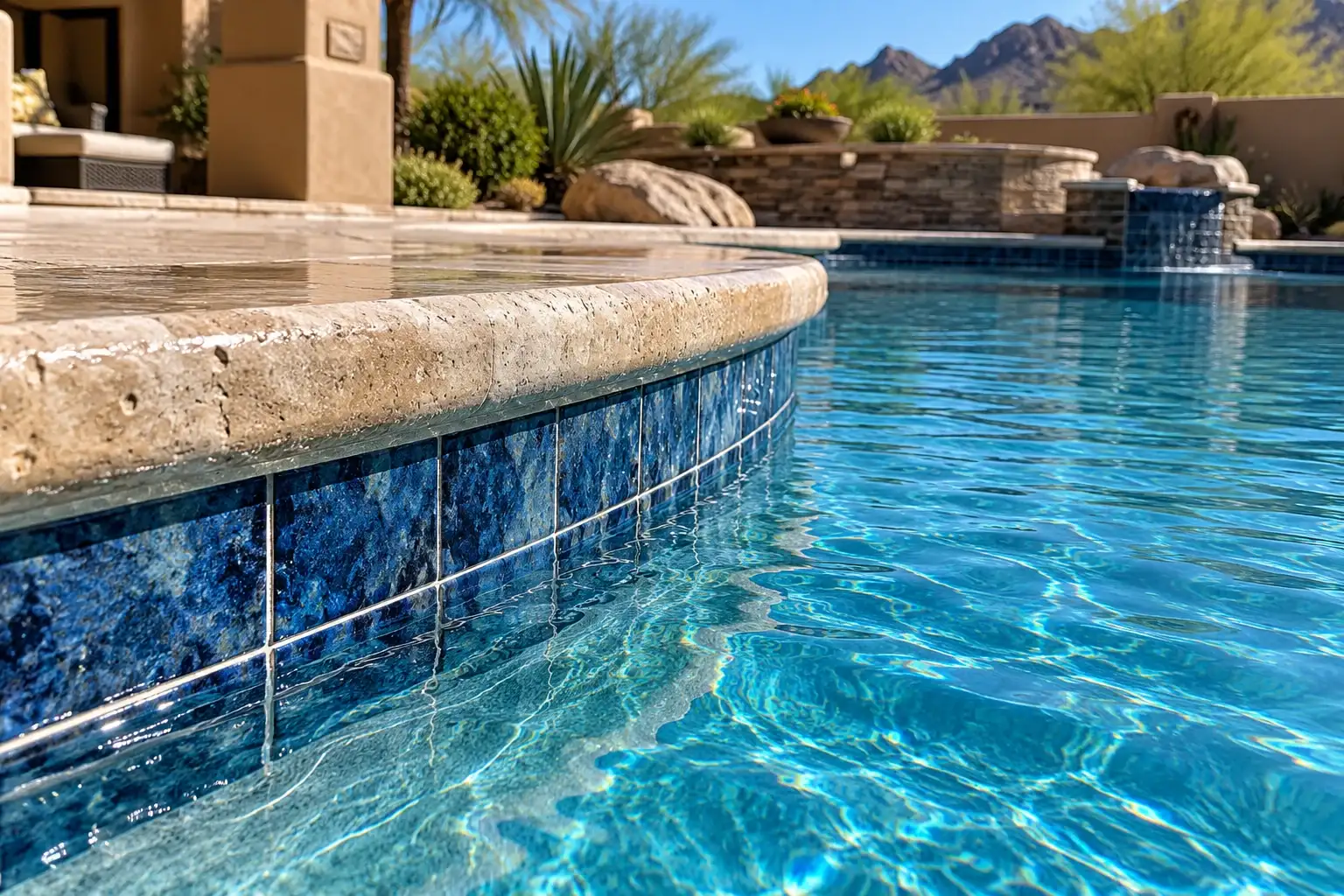
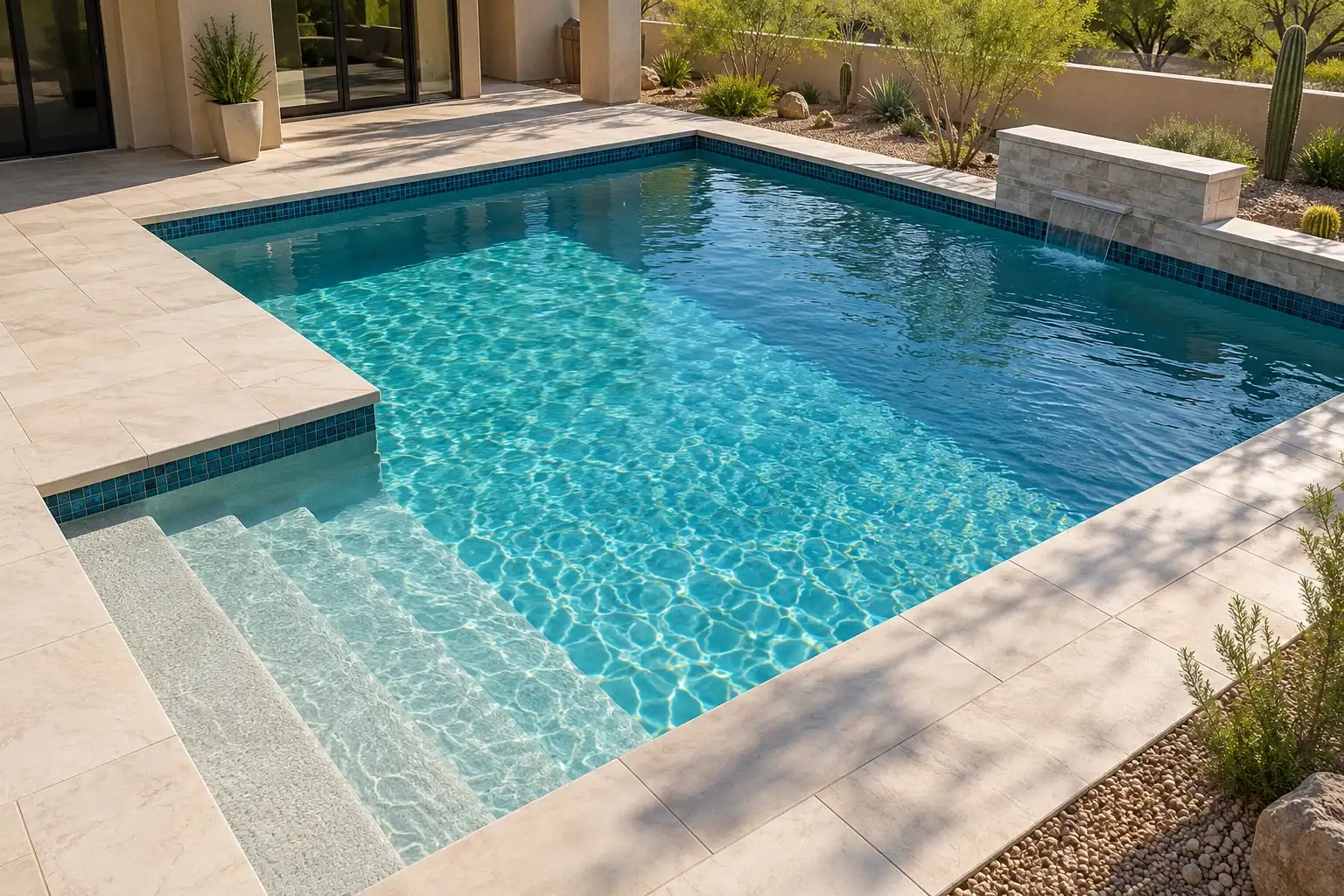
Waterline tile is a band of glazed ceramic or glass tile set in grout around the top of the shell, usually six inches of tile above and below the water line. The glaze is the point. It is a smooth, nonporous surface that scale cannot soak into, and it is the one part of the pool built to be wiped clean.
The tile is only as good as its grout and its backing. Grout is cement based, so it scales and erodes like cement does, and the tiles themselves sit against the bond beam at the top of the shell. When grout goes, water gets behind the tile. When the backing shifts, the tile lets go in sheets. A tile band with failed grout is not armor anymore. It is a leak waiting for the next resurface to find it.
The order of failure is worth memorizing, because it is the same on nearly every Scottsdale pool. Grout erodes first, then a tile or two lets go, then the band behind them stays wet while the pool runs, and the shell behind the tile starts to go soft. By the time the interior is due for resurfacing, the tile decision is no longer optional. It is the first line of the scope, and everything else hangs off it.
Plaster
Plaster waterline: what it actually is
A plaster waterline is no waterline at all. The plaster runs continuous from the floor up to the coping, and the strip where the water sits is the same material as the rest of the pool. On a new build it saves the cost of the tile, the setting, and the grout, and plenty of Scottsdale pools were done this way.
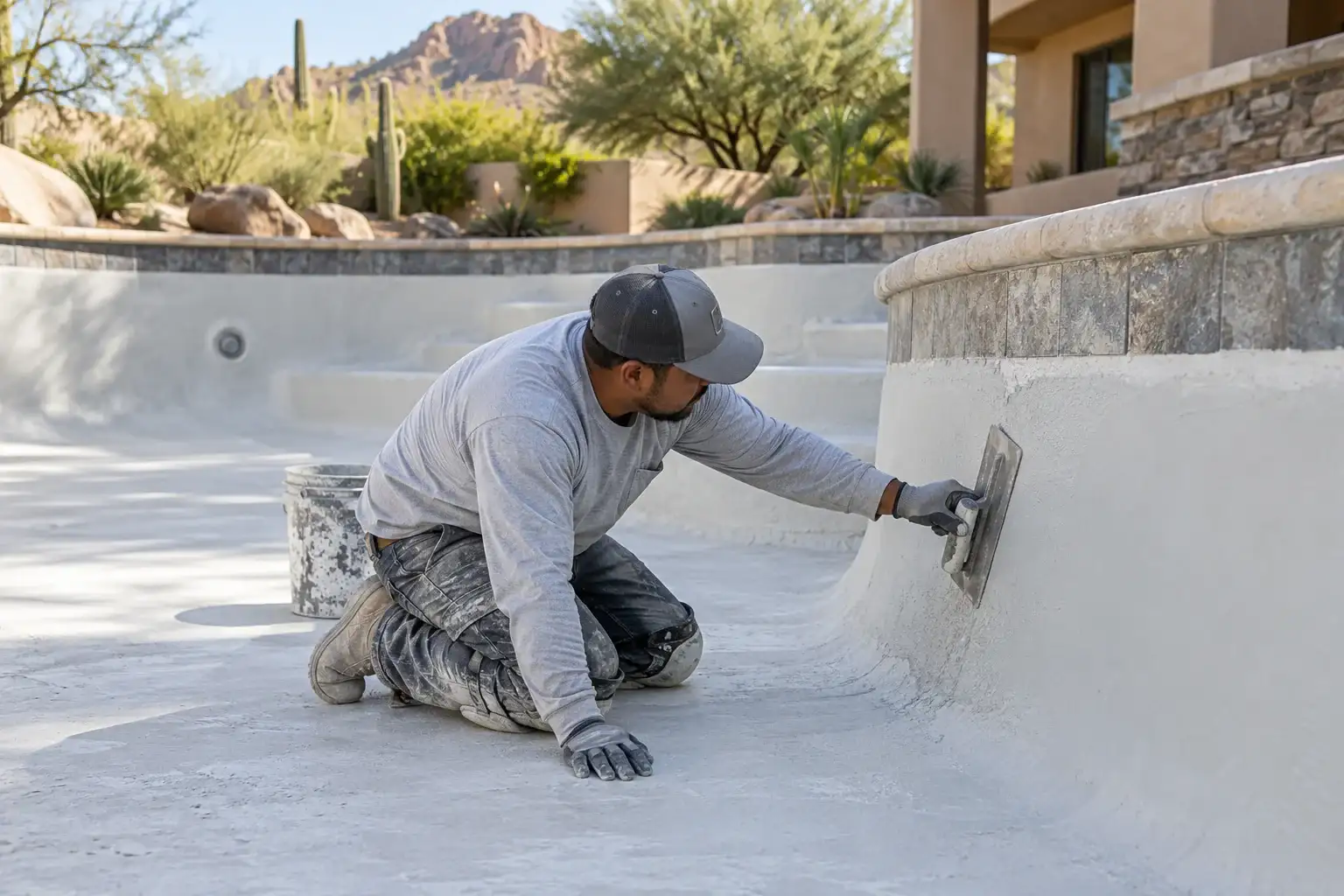
The trade shows up in the first hard water season. The plaster at the line gets etched by the chemistry and crusted by the scale, and there is no glazed surface to wipe. The only fix for a failed plaster waterline is the same fix as a failed floor: new material. A resurfacing job can add a tile band where there was not one, which is exactly what most owners choose once they have lived with the alternative.
Signs
Where tile fails here
Hard water is a tile band's permanent opponent in Scottsdale. Every summer, evaporation at the waterline concentrates the minerals in the fill water, and the scale line on the tile and grout grows by the week. Scale on glazed tile is a cleaning problem. Scale in the grout is a structural one, because the grout erodes under the scrubbing and the chemistry, and then the tiles start moving.
When the tile is loose and the owner resurfaces anyway, the new finish meets the same leak. The interior looks new, the tile still moves, and the water finds the gap behind it. That is the classic Scottsdale sequence, and it is why the tile has to be part of the resurfacing scope instead of an afterthought. Monsoon debris adds its own small insults: dust and blown grit settle at the line and get ground in by the brush.
Signs
Where plaster waterline fails here
Plaster at the waterline fails the way plaster fails everywhere, just faster. The strip sits in the hottest water in the pool, where evaporation concentrates everything the fill water brought in, and the sun hits it from the moment the water drops. It etches, it chalks, and the white powder that shows up on the floor starts at the line.
The cosmetic part is the easy part. A rough, chalked waterline band is also a surface that holds scale, grows stains, and grates against arms and backs. Owners who skipped the tile to save money end up paying for the tile on the next resurface, because by then the line is the ugliest part of the pool. The acid wash question comes up here too, and the answer is the same: cleaning the line does not replace the material the line lost.
Costs
What it costs and what drives the number
Tile adds to a resurfacing bid, and the amount varies with the band's length and the tile itself. A big Scottsdale pool has a long waterline, so the tile share is not trivial. Grout choice, removal of the old band, and the condition of the bond beam all move the number. The comparison that matters is not tile versus no tile on day one. It is tile now versus a second drain and another round of work when the plaster line fails.
The cost calculator treats the tile as its own line, because it deserves to be. And the home page links the guides that explain the finish side of the same job.
Good to know
What good work looks like in Scottsdale
- Sounding the tile before the finish goes down, because a band that moves is a leak that a new interior will not fix.
- Treating the bond beam as part of the tile job. The tile is only as good as what it sits on.
- Pricing the tile into the resurfacing scope from the start, so the second drain never has to happen.
- Specifying grout and tile for hard water, not for the showroom wall, because Scottsdale water is the real test.
6 questions
Tile vs Plaster Waterline: your questions
Still have a question? Call (747) 243-2089 and say what your pool is doing.
Do I have to replace the waterline tile when resurfacing?
Not always, but usually it makes sense. If the tile is sound and the grout is whole, it can stay. If it moves or has failed grout, the new finish will outlive it, and the second drain costs more than the tile.
Can I add a tile band to a pool that never had one?
Yes, and it is common on the resurface. The old plaster at the line comes off and the tile goes on before the new finish meets it.
Why does the tile get a white crust?
Hard water. Evaporation at the waterline concentrates the minerals in Scottsdale's fill water, and they deposit as scale. On glazed tile it wipes off; in the grout it digs in.
Is glass tile better than ceramic at the waterline?
Glass is denser and takes scale better than ceramic, but the grout fails the same way either way. The tile type matters less than the grout and the prep behind it.
Does a plaster waterline save money?
It saves the tile cost on day one. The scale and etching land on the finish instead, and the fix later is new material plus the tile you skipped. See the cost calculator for how the numbers stack.
What does loose waterline tile mean?
Usually failed grout or a shifting backing, and it means water is getting behind the tile. On a pool due for resurfacing, loose tile is a reason to move the job up, not to postpone it.