Blog · October 30, 2026 · 5 min read
Acid Wash vs Resurfacing in Scottsdale, AZ
An acid wash strips a thin layer off tired plaster with diluted acid. Resurfacing puts on a whole new surface. On a Scottsdale pool, the difference is how much plaster is left to spend.
Good to know
The short answer
An acid wash buys time. It dissolves the top skin of the plaster, the part holding the stains and the chalk, and leaves a cleaner, brighter surface behind. It also spends finish life, because that skin is plaster you do not get back. Resurfacing replaces the whole interior and resets the clock. On a sun-thinned Scottsdale pool, the wash is sometimes the right move and sometimes the last move before the finish gives out. The right call depends on the shell, how much plaster remains, and what the water rules let you do with the drain.
Good to know
Acid wash: what it actually is
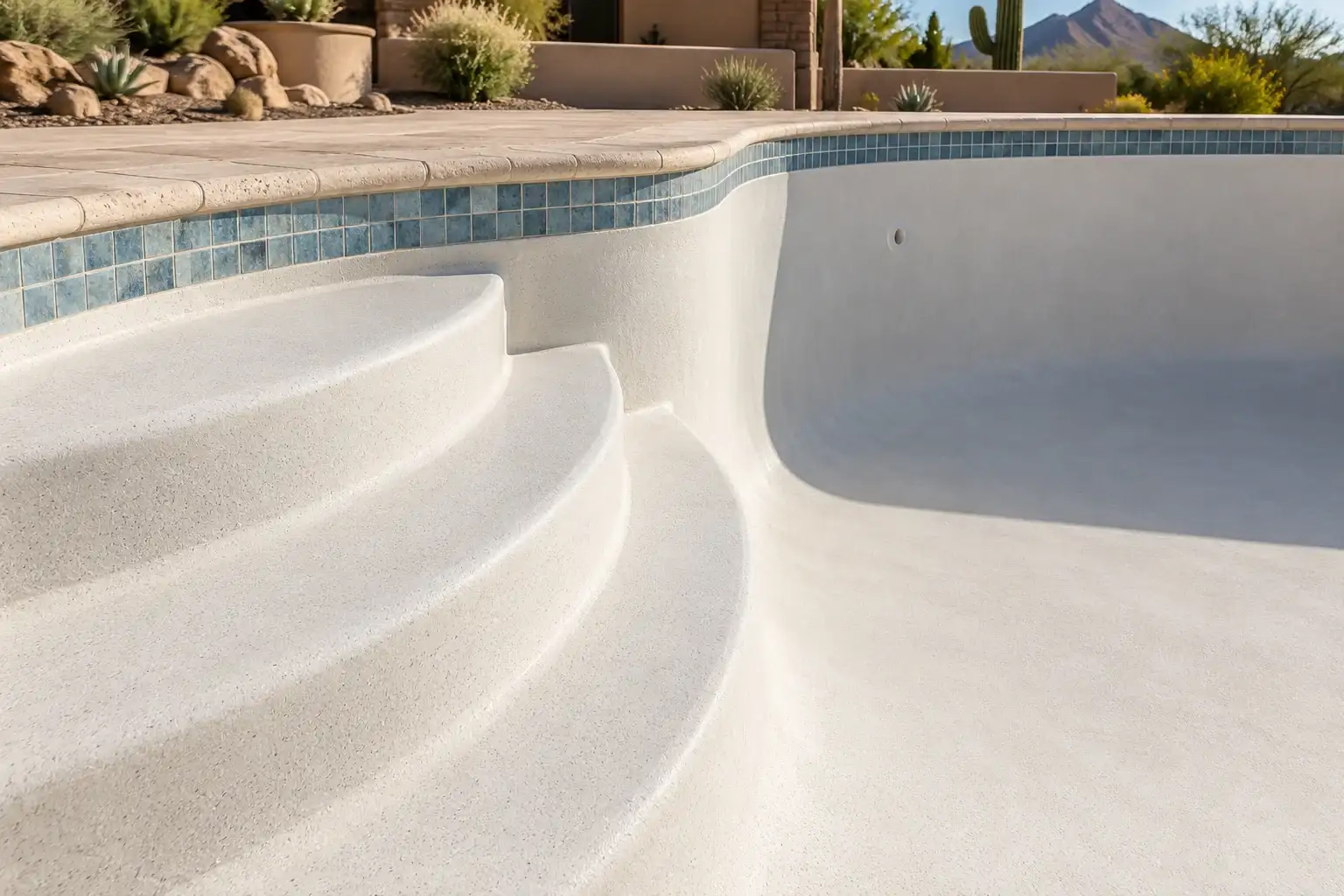
An acid wash starts with a drain. The pool comes down, and diluted muriatic acid gets brushed over the plaster, usually in sections, so it eats a controlled layer off the surface. The acid dissolves the cement paste on top, the part that has been etched by water and stained by hard water minerals and monsoon dirt. What sits underneath is fresher plaster, brighter than the layer that came off.
Then the acid gets neutralized and rinsed, and the pool gets refilled and rebalanced. The finish is the same plaster it always was. It is just thinner now. Each wash removes a slice of the material that separates the water from the shell, and a plaster finish only has so many slices in it. On a pool with a healthy, thick finish, that trade is fine. On a Scottsdale pool where the sun has been eating the surface for a decade, the wash can be the thing that pushes the plaster past saving.
The rinse matters as much as the wash. Acid that is not neutralized keeps working after the pool refills, eating the finish below the waterline. The rinse water has to go somewhere legal, and in Scottsdale that disposal is part of the water use story, not a detail to skip. A wash done unevenly leaves bright patches that stay visible for the rest of the finish's life. All of it argues for treating a wash as a real procedure with a real sequence, not a splash and a rinse.
Good to know
Resurfacing: what it actually is
Resurfacing does not clean the old surface. It removes or prepares it and puts new material on. The old plaster gets chipped out to the shell, or washed and keyed so the new finish bonds, and then a fresh interior goes on: plain plaster, quartz, or pebble, usually with the waterline tile and fittings handled in the same pass.
The reset is the point. A new finish is full thickness, with fresh paste on the surface, and it gets a proper cure before the fill. The trade is the scope. Resurfacing costs real money and empties the pool for longer, and in Scottsdale the drain, the cure, and the refill all have to work around the city's water use rules and the calendar. The difference between resurfacing and replastering is mostly about how much of that scope you take on.
Signs
Where acid wash fails here
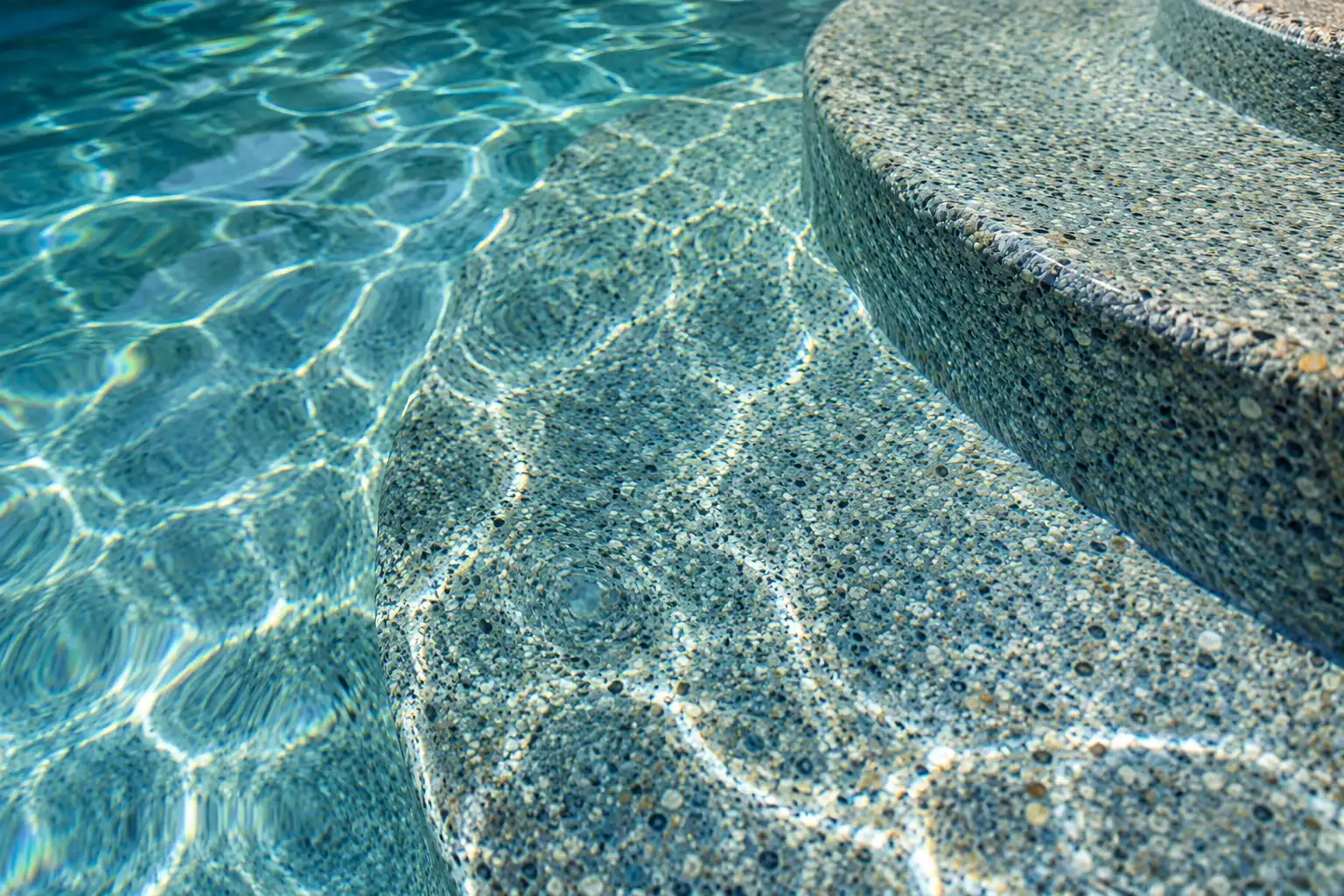
Scottsdale sun thins plaster before the wash ever touches it. The surface chalks and roughens year after year, and by the time an owner asks for a wash, the finish is already closer to the shell than the installer ever intended. Aggressive washing on thin plaster goes too far: the acid exposes the aggregate under the paste, and the floor turns sandpaper that no chemistry smooths.
The drain is the second problem. A pool drained in summer heat sits with its shell exposed to air that bakes it, and a shell that dries out can crack. Monsoon adds its own threat: ground water rising under a drained pool pushes on the shell, and popping is a real risk when the season turns. And in Scottsdale, the drain and refill are not a private matter. The water use rules make a full drain something you plan and justify, not something you do on a weekend whim.
Signs
Where resurfacing fails here
Resurfacing fails when prep gets skipped, and prep gets skipped on the cheap bids. Moisture trapped in a damp shell blisters a new finish in its first season. A shell with hollow spots gets covered over, and the finish cracks along the hidden damage. Chemistry gets blamed later, but the cause was under the finish the whole time.
The other failure is scope. Tile that was failing before the resurface is still failing after it, because the interior job moved the leak instead of stopping it. The waterline question deserves its own answer before any finish goes down. None of these are reasons to skip resurfacing. They are reasons to read the prep and the tile into the scope.
Costs
What it costs and what drives the number
A wash costs a small fraction of a resurface, and the spread between them varies. The wash is labor, acid, neutralizer, and a drain and refill. The resurface is material, prep, finish, tile, and the same drain and refill, plus a cure window. Finish choice moves the resurfacing number, with plain plaster at the low end and pebble or quartz above it. Surface area multiplies everything, and Scottsdale pools are large.
The honest comparison is not price. It is time. A wash buys a season or two on a finish that is already failing, and then the resurface still comes. The cost calculator stacks the drivers up so the two numbers can sit side by side.
Good to know
What good work looks like in Scottsdale
- Measuring the plaster before anyone touches it. A wash on a thick finish is maintenance; on a thin one it is demolition.
- Timing the drain around Scottsdale's water use rules and the monsoon, and sometimes the answer is to wait.
- Pricing the wash against the resurface that follows it, so the cheap fix is a real comparison, not a surprise.
- Looking at the tile and the shell while the pool is down. The wash is never the only thing a drained pool reveals.
6 questions
Acid Wash vs Resurfacing: your questions
Still have a question? Call (747) 243-2089 and say what your pool is doing.
Does an acid wash remove stains?
It removes what sits in the surface layer, which covers most hard water scale and mineral staining. Stains that have soaked deep into the plaster come back, because they live below the layer the acid can safely eat.
How often can a pool be acid washed?
A few times over a plaster finish's life, and fewer if the washes are aggressive. Each wash thins the surface, and Scottsdale sun is already doing the same job from the top.
Is acid washing safe for pebble and quartz?
With care, yes, but the aggregate changes the math. The wash exposes more of the stone, which changes the texture and the look. The quartz vs pebble guide explains what the surface is before anyone puts acid on it.
Why does my pool need draining for a wash?
The acid works on the plaster surface, not through water. The pool comes down, gets washed and neutralized, and gets refilled. In Scottsdale, that drain has to respect the city's water use rules.
When is resurfacing the better call?
When the plaster is thin, chalking, or rough all over, when the tile is failing, or when the shell shows hollow spots. A wash cleans a surface. It does not give back the plaster the sun took.
How long does each option last?
A wash buys a season or two. A resurface resets the finish to full thickness and lasts many times longer, depending on the water chemistry and the prep. The best time to resurface guide covers the timing half of that equation.