Blog · November 14, 2026 · 5 min read
Why Is There White Powder on My Pool Floor in Scottsdale, AZ?
You brush it off on Tuesday and it is back on Thursday. A fine white powder settles in the corners and along the seams of the pool floor, the walls feel like fine sandpaper, and the water tests normal. That combination is not a mystery in Scottsdale. It is usually one of two things, and the two things want opposite fixes.
Good to know
Two powders, two different problems
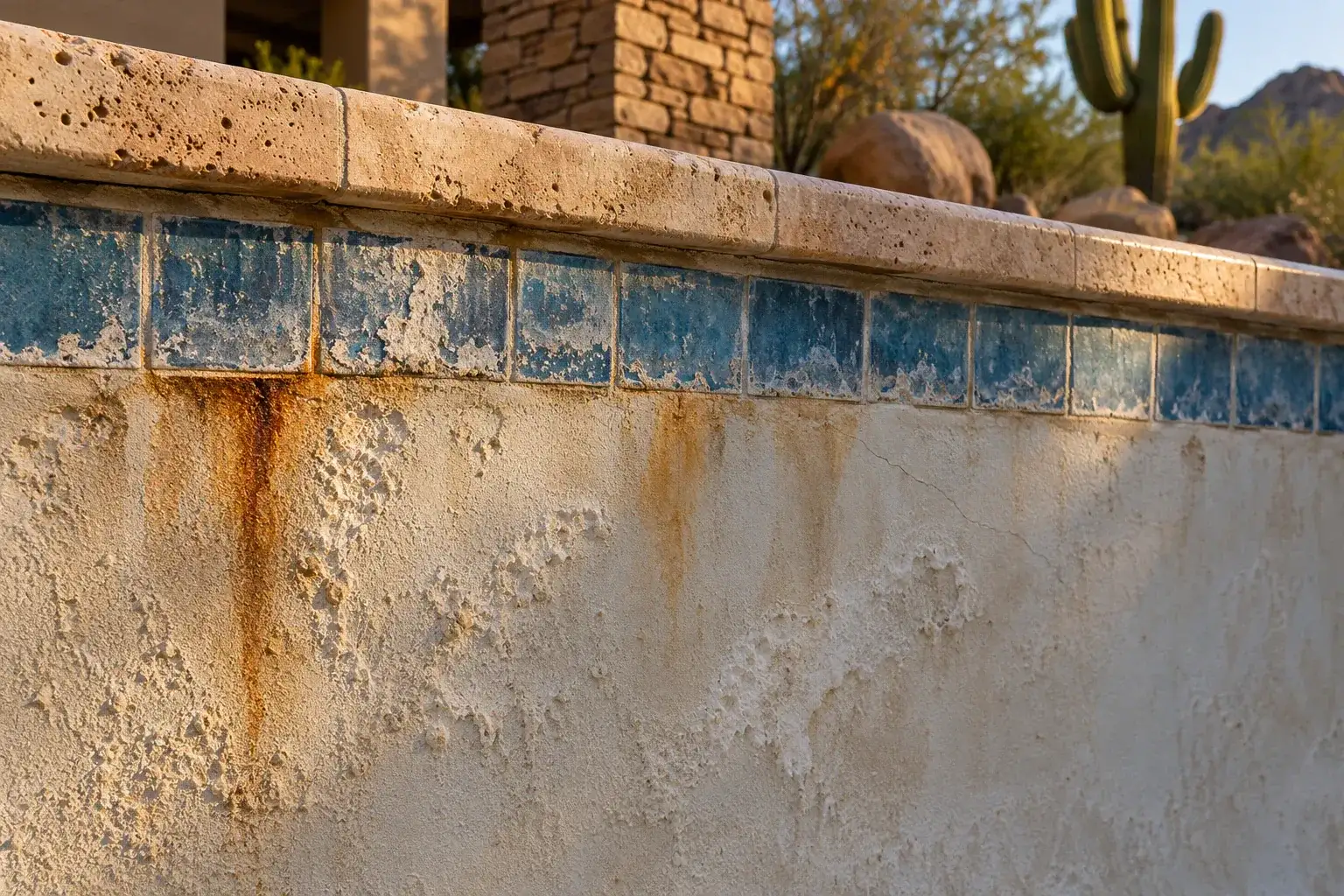
The first powder is scale, and it comes from the water. Scottsdale fill water is hard, full of dissolved calcium, and every summer the heat evaporates water while the calcium stays behind. As the water concentrates, calcium precipitates out and falls to the floor as a fine white dust, or crusts onto the tile at the waterline. This powder is chemistry. Fix the water and the powder stops.
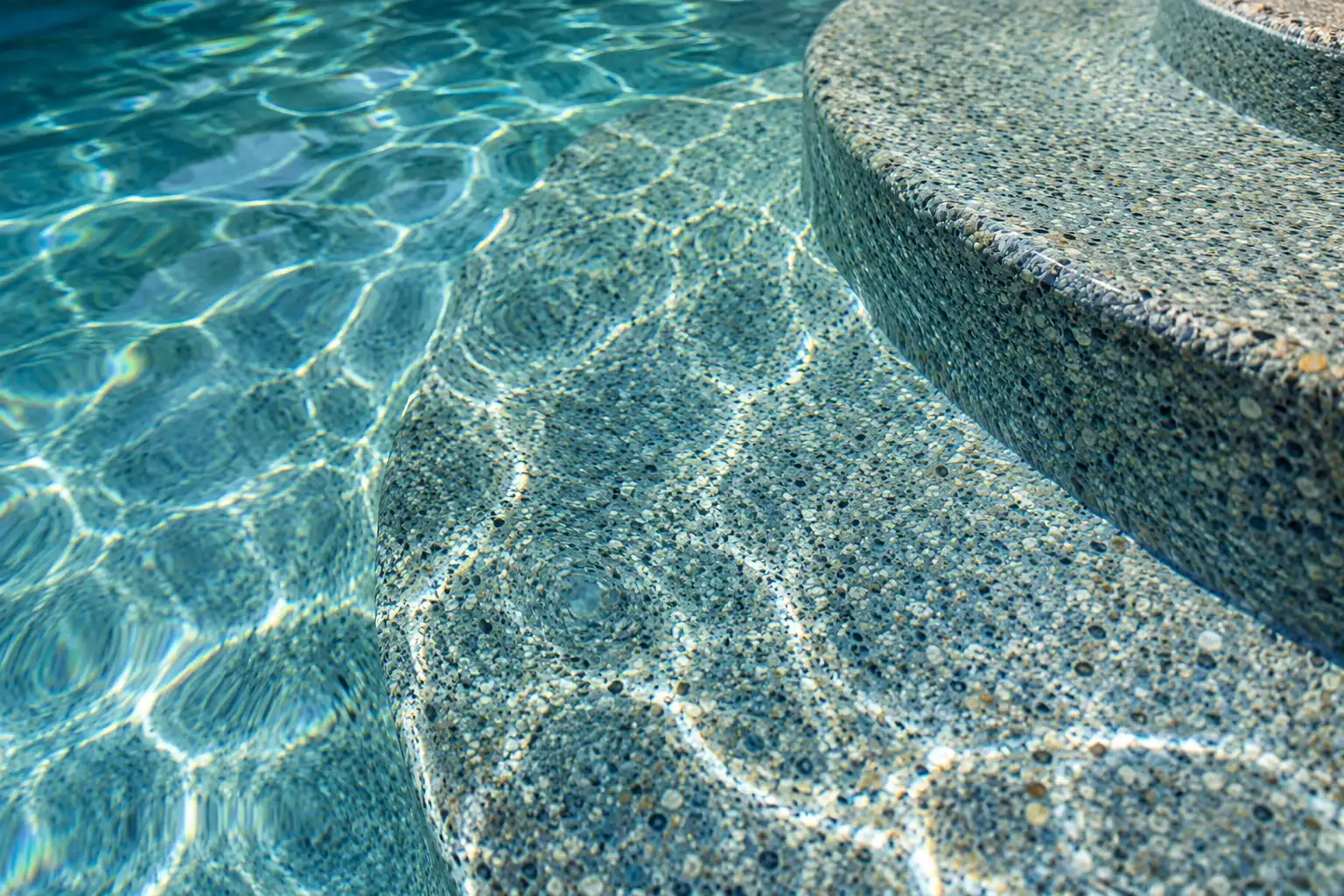
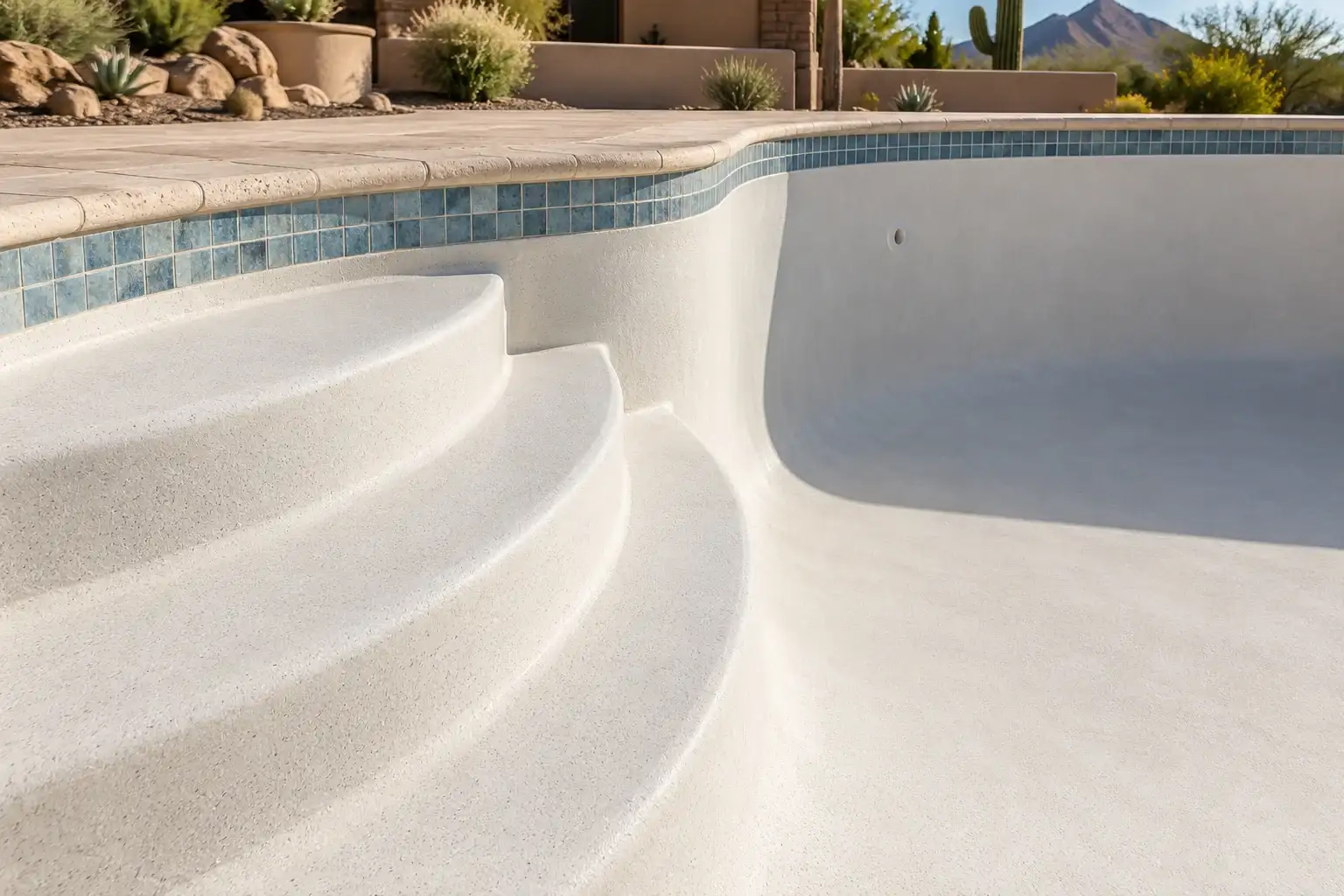
The second powder is chalking plaster, and it comes from the finish itself. Plaster is porous and slightly soluble, and when the water chemistry goes aggressive, it slowly dissolves the cement paste at the surface. The surface turns rough, releases a white dust, and loses material year after year. This powder is the finish dying. Fixing the water helps at the margins, but the plaster keeps shedding until it is replaced. The two look similar from the deck and could not be more different as problems.
The tell is where the powder shows up. Scale favors the shallow end and the steps, where the water is warmest and evaporation is fastest. Plaster chalk shows up everywhere, because the whole finish is shedding, not just the warm water. The corners of the floor collect both, because circulation is weakest there and whatever falls stays.
Good to know
Why Scottsdale makes both worse
Every driver of white powder lives in this climate. The heat runs the evaporation, which concentrates the water and forces scale. The sun bakes the plaster surface, which ages it faster than the national average assumes. The fill water arrives hard, so the calcium budget starts high before a single drop evaporates. And the monsoon season does not help: each storm dumps dust into the pool, the chlorine spends itself on it, and the chemistry swings that follow are exactly the swings that etch plaster.
A pool in McCormick Ranch or Gainey Ranch adds surface area to the equation. The bigger the pool, the more evaporation area at the waterline, the more plaster exposed to the sun, and the more powder every week. Homeowners here fight this with a brush and a test kit every summer. The question is whether the powder is coming from the water or from the walls.
There is a third Scottsdale factor people forget: the pool runs nearly year round. A mild winter keeps the pump going and the chemistry cycling while other parts of the country have their pools covered. That extra season of heat, evaporation, and water movement every year is the difference between a finish that lasts and one that chalks early.
Compare
How to tell which powder you have
Take a sample. Pinch some between your fingers. Scale feels gritty and crusty, like fine sand, and it sits heaviest where the water is shallowest. Plaster chalk feels silky, almost like flour, and it settles everywhere at once.
Then look at the walls. Brush a section and watch what happens. If the walls are smooth and the powder only falls out of the water column, that is scale, and the water is the project. If the walls are rough, like sandpaper, and the brushing kicks up a white cloud, that is the plaster shedding, and the finish is the project. The tile line tells the same story: a crusty white band above the water means the water is precipitating, and a chalky, etched band means the finish is dissolving into it.
Then test the water, or have it tested, with numbers, not strips that change color in the sun. Calcium hardness, pH, and alkalinity are the three that matter here. Hard water wants balanced chemistry and a plan, not another jug of something from the shelf. See how that chemistry decision interacts with the salt vs chlorine choice, because the system and the water have to agree.
Good to know
What to check before you buy anything
Check the age of the finish first. A plaster interior that is old has already given up surface material to the water, and no chemical will give it back. If the walls are rough everywhere, not just at the waterline, the powder is plaster dust and the finish is at the end of its line.
Check the fill water. Whatever the city delivers sets the calcium budget for the whole season, and a pool topped off all summer with hard water concentrates further with every evaporation cycle. Check the brushing schedule. Scale that is brushed weekly stays powder in the filter; scale left alone becomes the crust on the tile.
Then check the chemistry and the cure history. If the pool was resurfaced and the finish was filled early or cured in the heat, the chalking can start in the first year. That is not your water's fault. It is a prep and cure problem wearing your water's clothes. The industry's habit of blaming chemistry for a bad install is exactly backwards, and this is the failure where it shows.
Upkeep
When chemistry fixes it and when it does not
If the powder is scale, chemistry fixes it. Balance the water, keep the calcium in range, brush the floor and walls, and the powder stops forming. A drain and refill or a partial drain resets the numbers when they drift too far, though in Scottsdale any drain has to respect the city's water use rules, which makes it a planned event rather than a weekend chore.
If the powder is plaster chalk, chemistry only slows the funeral. You can balance the water perfectly and the plaster still sheds, because the material itself is spent. An acid wash strips the chalky skin off and buys a season, but it also thins the finish further. At some point the honest answer is a resurfacing job, and in Scottsdale that answer usually arrives with a waterline tile discussion attached.
Good to know
The sequence that actually works
Start with the test kit, and write the numbers down. Hard water management is a weekly habit here, not an annual service. Brush the walls and floor before the powder gets a chance to crust, because powder that stays in suspension reaches the filter and leaves. Watch the fill water, and top off the pool with a plan, because every refill adds more calcium to the budget. And if the finish is the source, stop spending on chemicals and start pricing the resurfacing that actually ends the cycle. For the pool that keeps powdering regardless of chemistry, the cost calculator puts the endgame number next to the weekly chemical spend.
The cleanest test of all is the timeline. If the powder started years into the finish's life, it is scale, and chemistry will hold it. If the pool was resurfaced recently and the powder arrived with the first summer, the install is the suspect: prep, cure, or fill, and no bucket of chemicals will overturn that verdict.
Costs
What it costs to make it stop
Balancing the water costs test reagents and time. A service visit to reset the chemistry costs a modest fee. An acid wash costs a fraction of a resurface, and a resurface costs what it costs, driven by pool size, finish choice, and prep. The expensive path is the middle one: buying chemicals every week for a finish that is already gone. That is where the powder tax really gets paid.
The cost calculator lines up the resurfacing drivers so you can see the endgame before the summer chemicals budget gets spent on the way there.
Good to know