Blog · November 12, 2026 · 5 min read
Pool plaster stains: what causes them and what they mean
Pool plaster stains come in 4 kinds: metal stains, organic stains, scale and mottling on new plaster. Many trace back to the water, but stains that return or come with roughness, pitting or flaking point to a plaster finish that is wearing out. Color and location tell you a lot about the cause. Here is what each kind looks like, what is usually behind it, and how to tell a surface problem from a finish at the end of its life.
Signs
What kinds of pool plaster stains are there?
Pool plaster stains fall into 4 groups: metal, organic, scale and new plaster mottling. Each one looks different, and the look is the first clue.
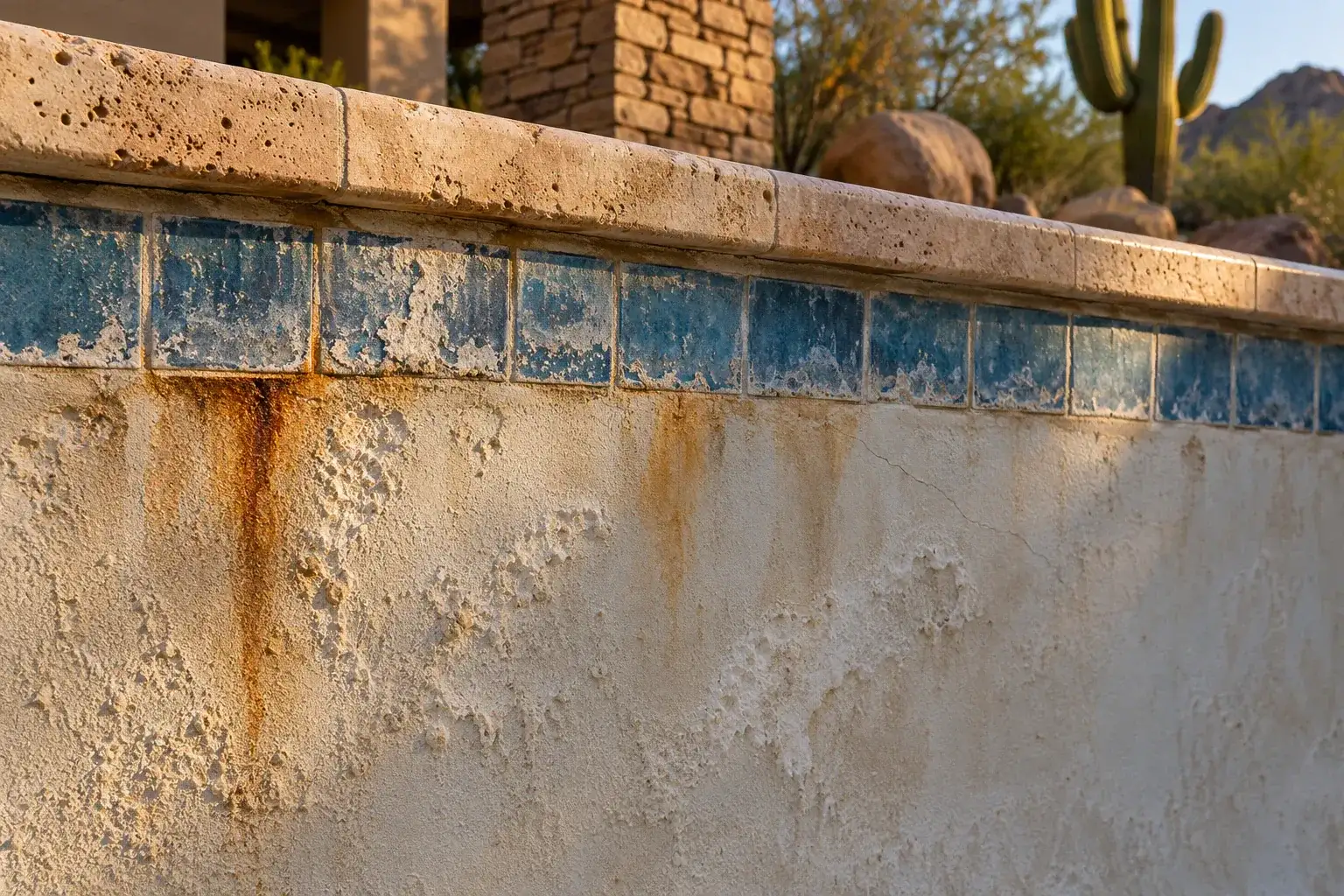
Metal stains
blue-green, red or brownish-black marks. Extension guidance on household water links copper to blue-green stains, iron to a red color or stain and manganese to a brownish-black color (Alabama Cooperative Extension System (opens in a new tab)). That page covers drinking water, not pools, so read the colors as a rough guide.
Organic stains
dark green, brown or black patches, often where leaves, debris or algae sat.
Scale
a white or gray crust or rough film that builds from calcium in the water.
Mottling on new plaster
cloudy, patchy or uneven color in the first weeks after the pool is filled.
Signs
What causes metal stains on pool plaster?
Metal stains come from dissolved metals that settle on the plaster, and low pH water is one documented way copper gets there.
A Los Angeles County Department of Public Health study guide says excessive acid and low pH can leach copper from the recirculation piping and heat exchanger, which can cause bluish-green staining of the plaster (LA County Public Health, pool service study guide (opens in a new tab)). It also says to test for copper when pool water has been acidic for a long time.
For you, that means a metal stain sits on the surface but its source is the water or the equipment, so a mark can come back if the source is not found.
Signs
What causes organic stains and algae marks on plaster?
Organic stains come from leaves, debris and algae, and rough or scaled surfaces are linked to more algae growth.
The Los Angeles County guide lists rough finishes and scale formation among the things that stimulate algae growth, along with hot weather, sunlight, heavy use and too little disinfectant. It also says algae create a slipping hazard, not just a stain.
For you, a patch that keeps returning in the same spot is worth checking for roughness underneath.
Plaster
What is scale on pool plaster, and why is it common in Scottsdale?
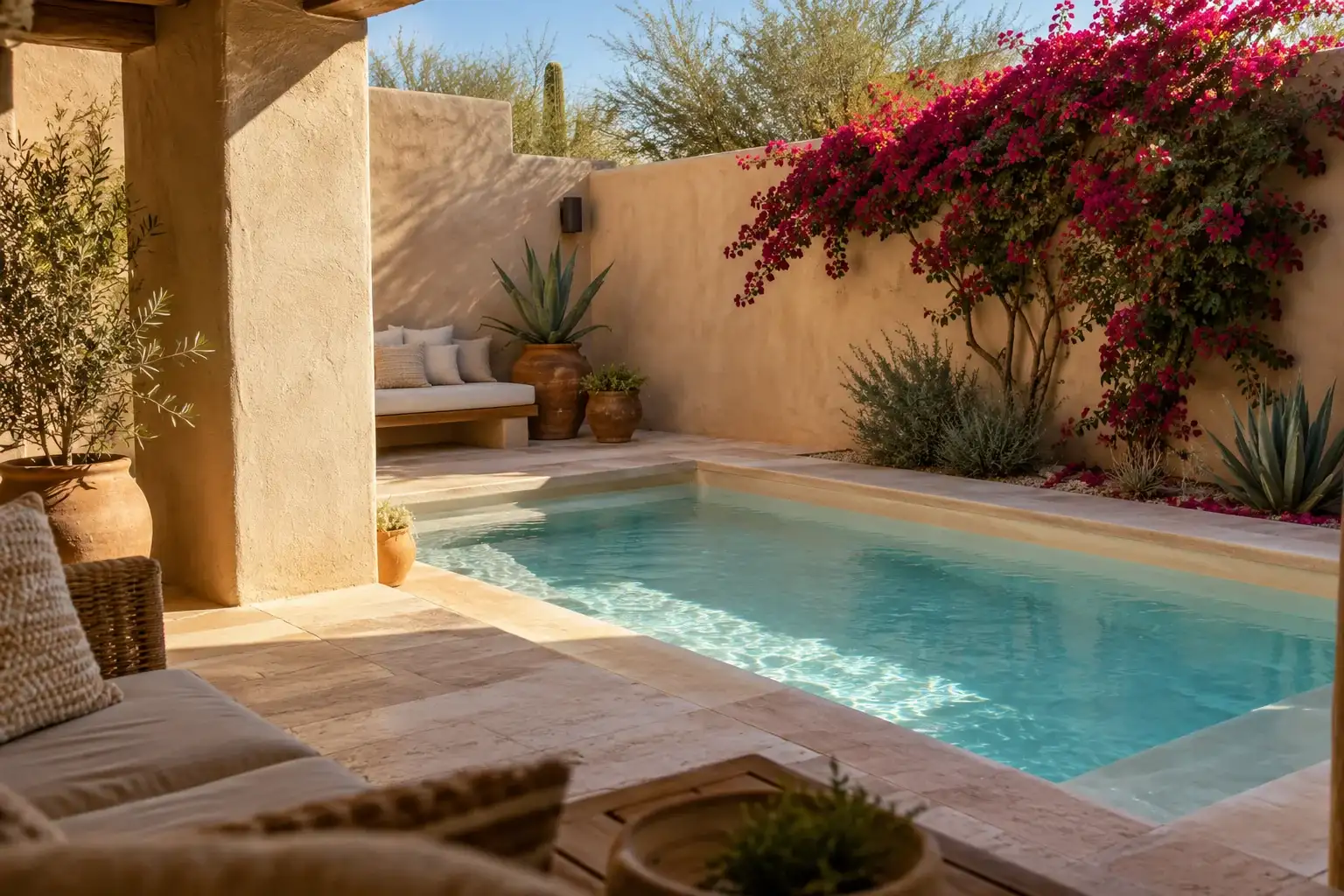
Scale is a calcium carbonate deposit, and it feels rough. The Los Angeles County guide says high calcium levels may lead to scale, which results in rough plaster surfaces, and that a saturation index above +0.5 means the water may form calcium deposits and may stain pool plaster.
Scottsdale tap water is hard. The City of Scottsdale 2026 Water Quality Report (opens in a new tab) puts hardness at 13 to 17 grains per gallon, or 215 to 290 ppm, depending on the zone, from naturally occurring minerals.
Hard water carries more dissolved calcium and magnesium, and that mineral content can contribute to scaling. The same crust shows up on waterline tile, covered in pool tile calcium buildup.
Plaster
Why does new pool plaster show mottling or discoloration?
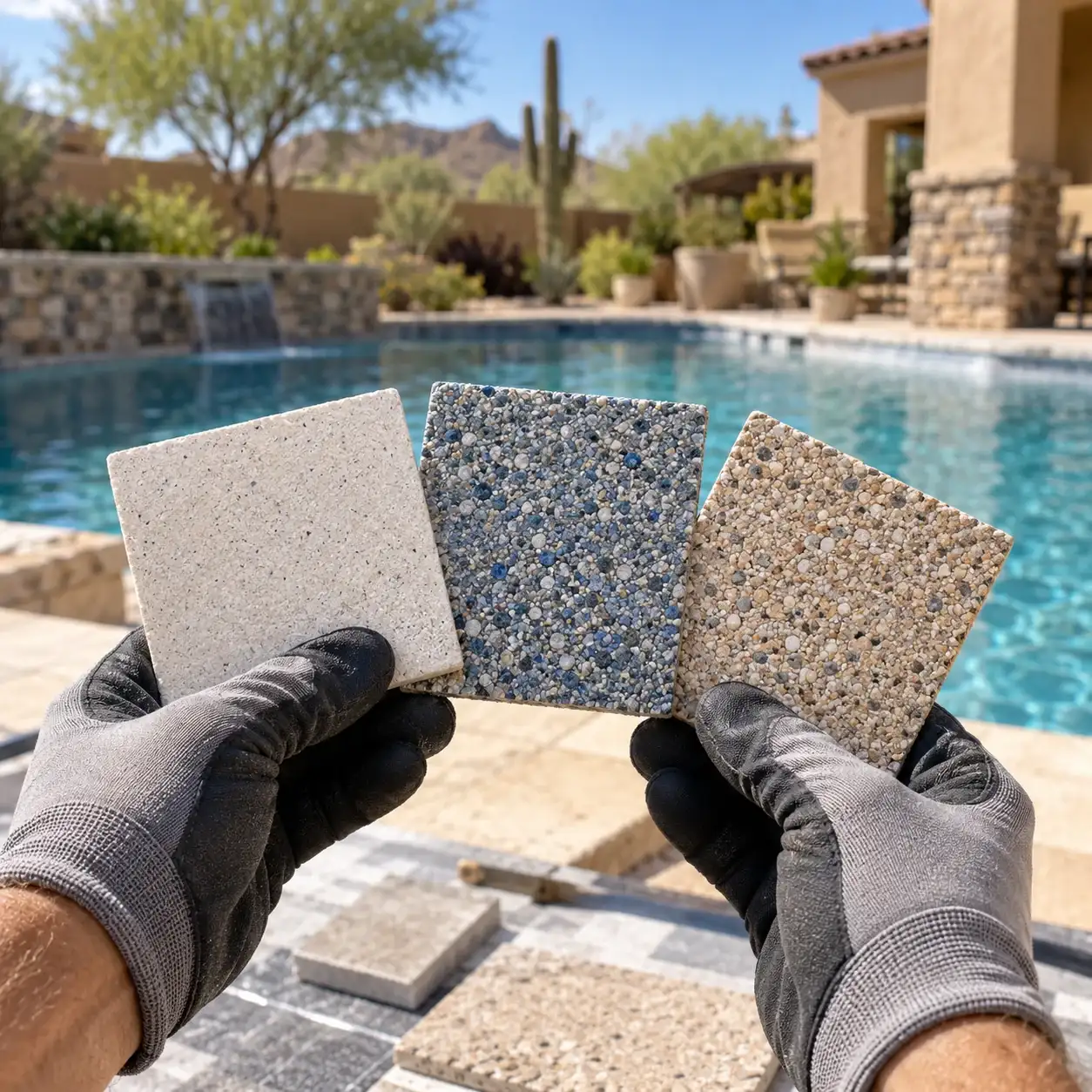
Mottling is patchy or cloudy color on new plaster. A finish maker's data sheet ties color uniformity to the mix batches, the application, the start-up, the cure of the cement binder and the water chemistry after it.
The Scottsdale pool resurfacing guide says new plaster, quartz and pebble finishes all need a specific chemistry start-up and a regular brushing schedule while the surface cures, and that skipping it can lead to staining or an uneven finish. The weeks after the fill are covered in new pool plaster start-up.
Signs
Which pool plaster stains are surface problems, and which mean the finish is worn out?
A stain is a surface problem when it sits on a smooth, sound finish and has a cause in the water. It points to a worn finish when it comes with roughness, pitting, flaking or bare spots, or when it keeps coming back.
| What you see | What it usually points to |
|---|---|
| Color only, finish smooth and intact | A surface stain. Look at the water and the equipment. |
| White or gray crust, rough film | Scale from calcium. Look at the water balance. |
| Etched or pitted plaster | Wear. The Los Angeles County guide says low calcium water can etch and pit plaster. |
| Flaking, chipping or bare spots down to the shell | A worn finish. |
| Stains that return after cleaning, on a finish near 10 years old | A worn finish. Plaster lasts about 10 years (5 to 10 on average), per a national 2026 cost guide. |
When the signs add up to wear, the options are pool replastering or a longer lasting finish such as a quartz pool finish. How often to resurface a pool in Arizona gives the finish by finish timeline.
5 questions
Questions people ask
Still have a question? Call (623) 304-1105 and say what your pool is doing.
Can pool plaster stains be removed?
It depends on the kind of pool plaster stain. A mark on a sound surface may fade once the cause in the water is found, while stains tied to etching, pitting or flaking tend to return because the finish itself is worn.
What do blue-green stains on pool plaster mean?
Blue-green usually points to copper. The Los Angeles County guide says low pH water can leach copper from the piping and heat exchanger and stain the plaster that color, and a water test for copper shows whether that is the source.
Is new pool plaster discoloration normal?
Patchy color can show on new plaster. A finish maker's data sheet ties color uniformity to the start-up, the cure and the water chemistry, so the start-up water care and brushing schedule matter. The start-up post goes through those weeks.
What is the white crust on pool plaster?
White or gray crust is usually scale, a calcium carbonate deposit. The Los Angeles County guide says high calcium levels can form scale and rough plaster surfaces, and Scottsdale tap water runs 13 to 17 grains per gallon.
Do pool plaster stains mean it is time to replaster?
Stains alone rarely settle it. Stains that come with roughness, pitting, flaking or bare spots, or that keep returning on a finish near the 10 year mark, point to wear. See pool replastering for the job itself.
Keep reading
- Pool replastering: for the plaster job and its cost drivers.
- Quartz pool finish: for a longer lasting finish that stays close to plaster underfoot.
- New pool plaster start-up: for the first weeks after the fill.
- How often to resurface a pool in Arizona: for the finish by finish timeline.
- Pool resurfacing cost: for the published price ranges by finish.
- Pool resurfacing cost calculator: for a range built from your own pool.